Russia has resumed mass summonses for month-long military exercises in several regions, including Yakutia and Zabaykalsky Krai. Officials describe the call-ups as routine training, but medical examinations and the renewed registration of men under 55 are expanding the authorities’ practical grip on the reserve without a formal announcement of another mobilisation.
The summonses were reported on 13 October 2026, shortly after elections to the State Duma. Among those called are employees of state-funded institutions and men classified as having limited fitness for military service. In parts of Zabaykalsky Krai, residents have reportedly been told to attend military training and complete medical examinations within a month.
Reports of the summonses prompted officials in one district to issue a public explanation. The exercises, they said, were planned refresher training: reservists would restore their military skills and learn to operate equipment. The clarification may reflect the formal status of the exercises. It also reveals how quickly large-scale notices are being read as a sign of something more serious.
Training without the word mobilisation
A summons to military exercises is not the same as a mobilisation order. It does not, by itself, establish that the recipient will be sent to a combat zone, nor does it prove that the Kremlin has decided to begin a new national mobilisation campaign.
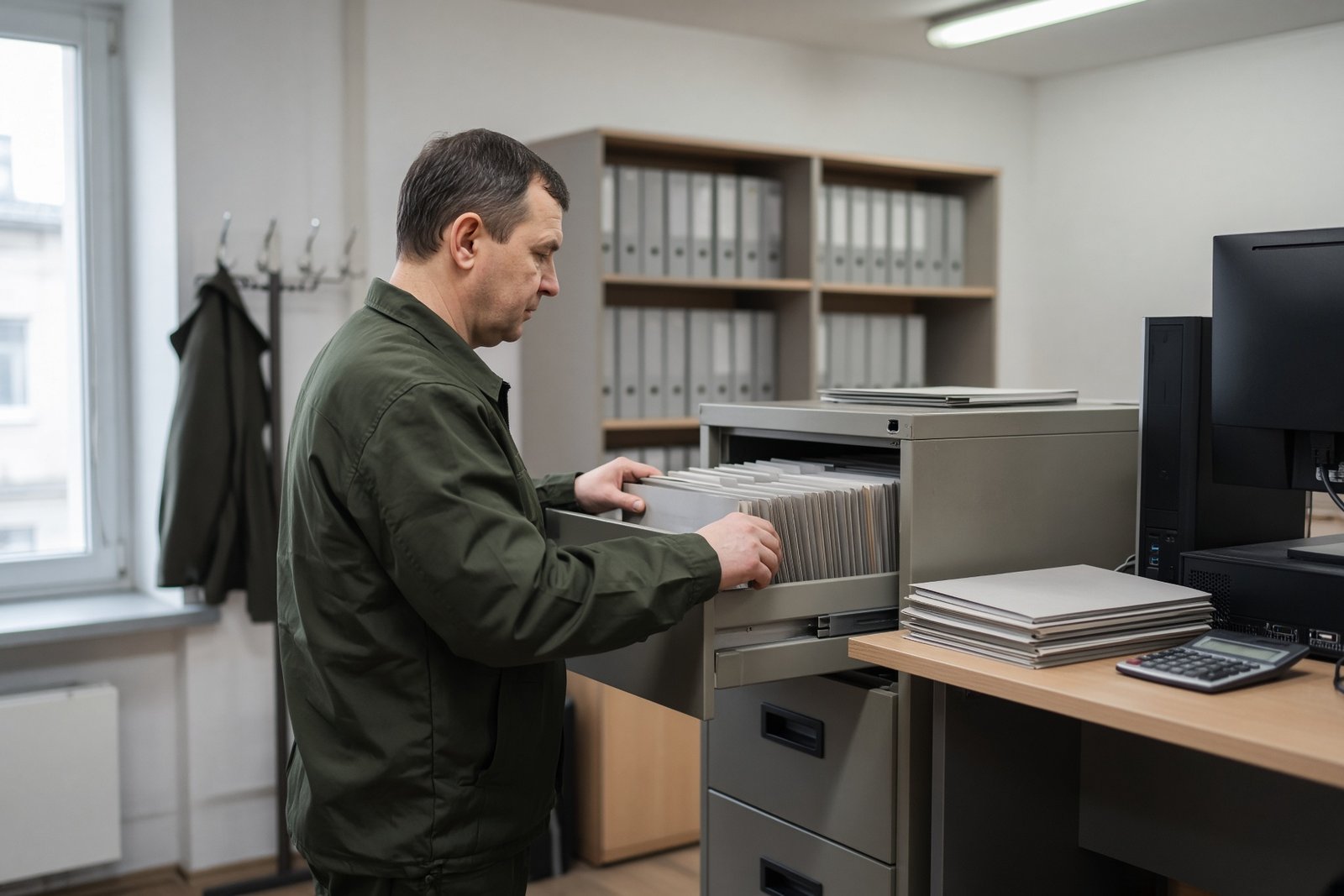
But the process still has a clear organisational value. Medical checks update the authorities’ information about health and fitness. Refresher training shows which skills remain usable, while bringing reservists together gives military offices a better sense of who is available and how people might be assigned. Even if the immediate exercise lasts only a month, it can leave the reserve more accurately recorded and easier to organise.
That is why the official description has done little to settle public anxiety. President Vladimir Putin, Deputy Chairman of the Security Council Dmitry Medvedev, Kremlin spokesman Dmitry Peskov and State Duma representatives have repeatedly said that there are no plans for a further mobilisation wave. Yet men are once again being directed to military offices and subjected to examinations.
The timing has added political weight to the reports. The call-ups came after the State Duma elections, prompting the interpretation that the authorities face fewer immediate electoral constraints when applying unpopular military measures. Timing alone does not demonstrate a secret mobilisation decision. It does, however, sharpen the contrast between reassuring statements from Moscow and visible activity by military offices in the regions.
For many families, the distinction between a temporary exercise and preparation for a later deployment is therefore difficult to trust. The government can maintain that no new mobilisation has been declared while improving the mechanisms that would make a larger call-up easier to carry out.
A burden concentrated away from Moscow
The reported spread of the summonses matters as much as their wording. They have been particularly visible in remote or economically weaker areas and among workers in publicly funded organisations. Such employees are often more dependent on local administrations and state-linked employers, which can leave them with fewer practical options if they want to challenge an instruction or take time away from work.
Residents of poorer regions may also have less money to relocate, obtain legal help or absorb the loss of earnings caused by a month of training. If this pattern continues, the military burden will not be felt evenly across Russian society. It will fall most heavily on people with fewer resources to resist administrative pressure.
The inclusion of men considered only partly fit for service should not be treated as proof that they will be deployed. It does show that the authorities are examining a wider section of the reserve. A medical commission can clarify who is genuinely fit, while training can establish whether people with previous military experience can be brought back into an organised structure.
That distinction is central. The call-ups do not need to constitute a hidden mobilisation to have practical consequences. Updating records, checking health and testing availability can all strengthen the system that supplies personnel to the armed forces. For those receiving summonses, however, the immediate question is what happens after the examination and training are complete.
The continuing demand for replacements forms the wider backdrop. Reporting on the call-ups has cited Western estimates that Russian forces have suffered at least 1.4 million losses when severely wounded personnel unable to return to service are included. That is an estimate rather than an independently verified overall tally. It nevertheless indicates the personnel pressure created by a prolonged war.
Russia has sought to meet that pressure through contract recruitment, financial incentives and administrative measures. Reserve exercises can complement those methods by making the available pool more visible and more usable, without the political cost of announcing a new nationwide mobilisation. People with sufficient financial means may try to leave the country before their options narrow, while those with fewer resources remain more exposed to local decisions.
Regional budgets carry part of the cost
The return of the reserve to military offices also has a financial dimension. Regional administrations, including the Republic of Sakha, or Yakutia, are described as carrying at least part of the cost of the exercises. Yakutia is rich in gold, diamonds, coal and oil, but its government is operating under significant budgetary pressure.
The region’s 2026 budget plan projects revenues of 337 billion roubles and spending of 349.8 billion, leaving a planned deficit of 12.8 billion roubles. Those figures do not, on their own, show that military exercises caused the shortfall. They do illustrate the limited room available to a regional government facing additional military obligations while federal priorities favour the war effort and the defence industry.
Money directed towards military-related responsibilities cannot be spent at the same time on social services, infrastructure repairs or other local needs. In a resource-rich territory far from Moscow, the contradiction is especially stark: the region supplies valuable commodities, while its residents and institutions absorb more of the administrative and social costs of wartime policy.
The Kremlin can therefore continue to say that no new mobilisation has been announced. That statement may remain formally true while military offices summon, examine and train a broader pool of reservists. The unresolved issue is whether these exercises will remain limited refresher courses or become a standing channel for replenishing Russia’s armed forces.