Marine Le Pen has put the European Union’s next seven-year budget at the centre of her bid for power in France. If she wins the 2027 presidential election, the leader of the National Rally says she will block the EU’s financial framework for 2028 to 2034, including a planned mechanism worth up to €100 billion for Ukraine.
She has also promised to end France’s bilateral military support for Kyiv, apart from basic training for Ukrainian soldiers. At the same time, Le Pen has again declined to identify Vladimir Putin’s Russia as Europe’s main security threat. The result is a pledge that could affect both France’s national policy and the Union’s ability to agree common spending plans.
A budget still waiting for agreement
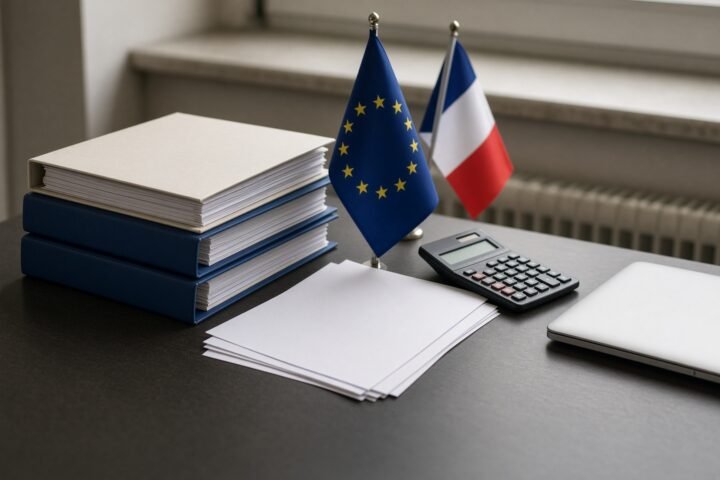
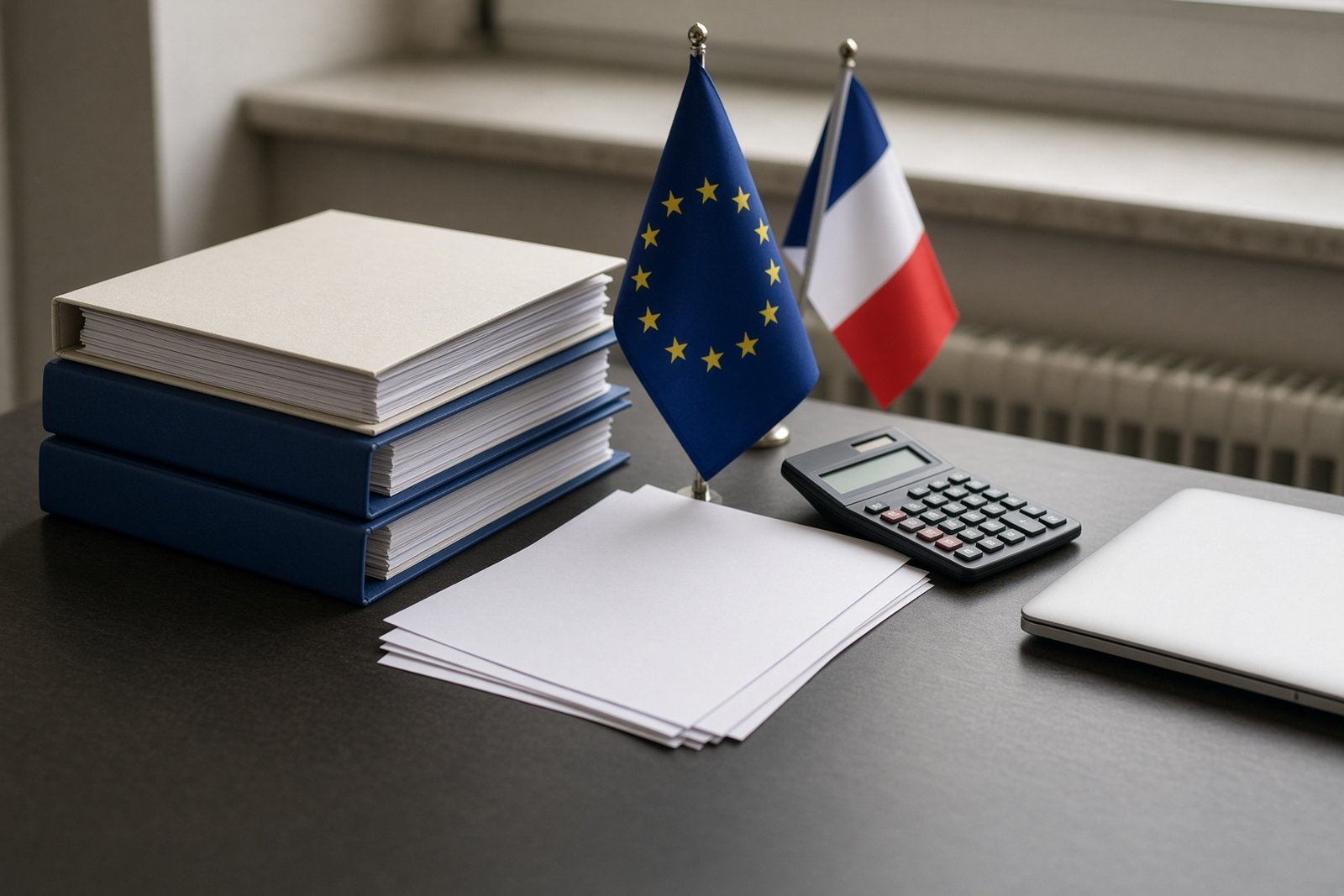
The European Commission has formally presented its proposal for the next multiannual financial framework. The package, covering seven years from 2028 to 2034, has a proposed value of about €2 trillion and is intended to set the Union’s spending priorities across that period.
It remains a proposal rather than an adopted budget. EU leaders want to reach political agreement on its main elements by the end of 2026. António Costa, the president of the European Council, has stressed the importance of securing the key compromises before elections in 2027 alter the political landscape.
France is due to vote in that year, alongside Poland and Italy. New governments or changed majorities could make an already difficult negotiation harder. Le Pen’s announcement adds a more direct problem: a future French government could refuse to support the framework after the election and force the negotiations back open.
The long-term budget is not a French spending programme that Paris can approve alone. It must be agreed through negotiations between the member states and the EU institutions. A refusal by France would therefore affect the Union’s shared financial planning, not merely the allocation of French funds.
Ukraine is the pressure point
Le Pen has explicitly linked her proposed blockade to the planned mechanism for supporting Ukraine. Her stated aim is to prevent the wider budget from being approved and, in doing so, to stop the mechanism from providing up to €100 billion to Kyiv.
That would not automatically end every form of European assistance to Ukraine. Support can be arranged through separate instruments, and the proposed mechanism is only one part of the broader system. A dispute over the multiannual framework would nevertheless complicate joint planning, delay decisions and make the EU’s longer-term commitments less predictable.
Her separate promise on French military support would have a more immediate national effect. A government led by Le Pen would cancel France’s bilateral military assistance to Ukraine, while retaining only basic training for Ukrainian troops. Other European countries could continue their own programmes, but France’s withdrawal would remove one major national contribution from the collective effort.
The two pledges operate at different levels. Ending bilateral aid would change French policy. Blocking the EU budget would seek to prevent a decision involving all member states. Taken together, they would allow a future government in Paris to challenge both the national and European strands of support for Ukraine.
A disputed security assessment
Le Pen’s refusal to describe Russia as Europe’s principal security threat adds a wider strategic dimension to the budget dispute. It signals a position at odds with the assessment held by many European governments since Russia’s full-scale invasion of Ukraine, and could make it harder for the EU to maintain a common account of the risks facing the continent.
Her current pledges also sit within a longstanding political background. Le Pen has publicly expressed sympathy for Putin over many years, and her party has received a loan from a Russian bank at least once. Those facts are relevant to how her statements are viewed, but they do not by themselves establish that her policy is directed by the Kremlin.
What is clear is the substance of the proposed course: oppose the next EU financial framework, prevent the planned Ukrainian support mechanism, withdraw most French bilateral military assistance and reject the description of Russia as Europe’s main security danger. If implemented, that combination would move France away from the approach supported by much of the current European leadership.
The decisive date may come before the election
Le Pen would first have to win the 2027 presidential election, while the budget proposal still faces a long negotiation and may change before adoption. Her pledge is therefore not yet government policy, and its eventual effect cannot be measured with certainty.
The political timetable is less ambiguous. If the EU’s central compromises are not settled by the end of 2026, the result of a French national election could shape the Union’s financial framework for seven years and determine whether its planned support for Ukraine can proceed on schedule.