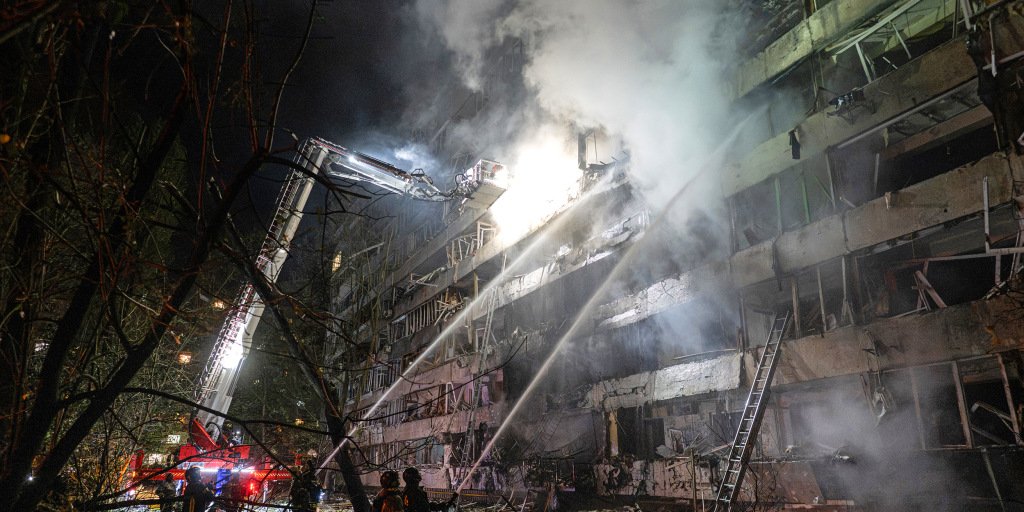
Ukraine has accused Elon Musk’s SpaceX of disrupting its military operations by limiting Starlink internet services, as the country reeled from a pair of intense Russian missile attacks that it said came without the usual advance warning from allies, reports BritPanorama.
Facing pressure from President Donald Trump to halt strikes on Russia’s energy industry, Kyiv and its backers have expressed concern that Washington could cut off battlefield support to try and force it into concessions at the negotiating table.
Ukrainian officials and their European partners were already scrambling to understand the status of U.S. intelligence sharing after the lack of alert ahead of two Russian ballistic missile strikes on Kyiv this week caused confusion, two Ukrainian and two European officials told NBC News.
Trump insisted the U.S. was still sharing intelligence, but as relations deteriorate, Ukrainian officials and military units on Wednesday accused SpaceX of throttling a technology essential to their battlefield communications and drone operations.
It remains unclear what might be behind the Starlink interruptions, though some Ukrainian officials stated the timing could not be a coincidence, given that Musk is known to have close ties to Trump.
Drone disruptions
SpaceX had introduced speed limits on the operation of its Starlink satellite internet terminals overnight, according to Ukrainian President Volodymyr Zelenskyy’s defense tech adviser, Serhii Beskrestnov.
“Our defence forces received no warning of such a restriction, and this led to the failure of a number of missions,” Beskrestnov said on Telegram. “It is obvious that this action cannot be a coincidence and is connected to the current political situation,” he added.
An army unit fighting in the southeastern Zaporizhzhia region reported on Wednesday that it had to cancel some planned operations due to these restrictions.
The 7th Rapid Reaction Corps of the Ukrainian air assault forces stated they began “noticing Starlink connectivity problems caused by data transfer speed limits” overnight, adding that the changes directly affected drones that rely on the service for in-flight control.
“The drones kept flying, but the interruptions made them harder to control,” it said in a statement.
Beskrestnov noted that restrictions were specifically imposed on the operation of the military-grade version of Starlink at speeds above 100 mph. He underscored that Starlink was also crucial for Ukraine’s aerial defenses, as it was used to intercept the jet-powered drones that Moscow has recently unleashed on Ukrainian cities.