Russia’s overnight attack on Ukraine struck power generation, heating and transmission facilities around Kyiv, leaving parts of the capital without reliable electricity and water. It also exposed a second vulnerability: Ukraine’s president said ballistic missiles were detected only as they neared the city, after partners failed to provide advance warning for the second time in a week.
The assault began on the evening of 13 October 2026 and continued into the following morning. Ukrainian assessments said Russia launched 39 missiles and 128 drones, with Kyiv and the surrounding region bearing the main impact. At least three people were killed in the capital, dozens were injured across the country and emergency power restrictions were imposed to keep the energy system stable.
A strike across the capital’s energy chain
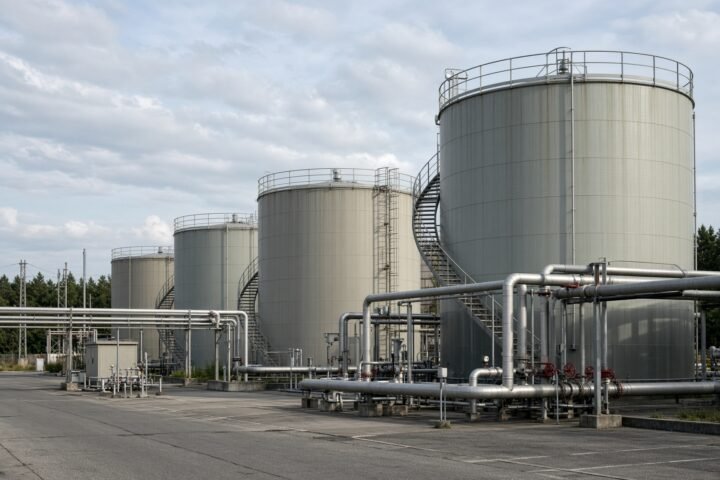
A ballistic missile directly hit Darnytsia Combined Heat and Power Plant No. 4, a major source of electricity and district heating for Kyiv, according to the Ukrainian account of the attack. Other damaged sites included the capital’s CHP-5 and CHP-6 plants, the Trypillia Thermal Power Plant and high-voltage substations near Chabany and Nalyvaikivtsi in Kyiv region.
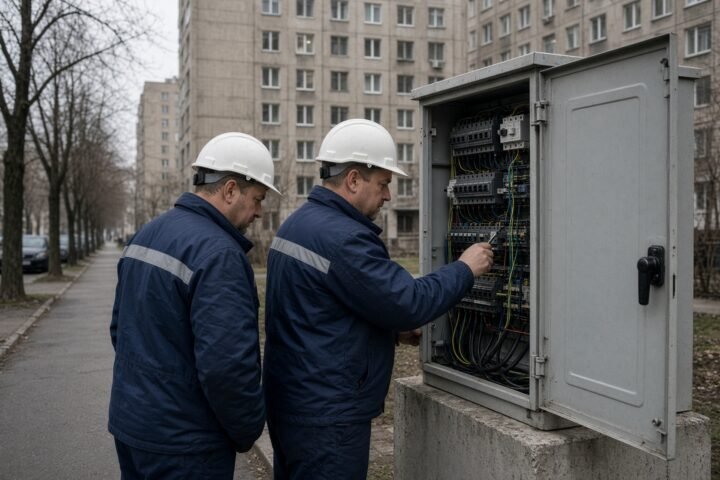
The significance of the damage lies in the spread of the targets. The assault affected several links in the system rather than a single generating station: power production, transmission and the infrastructure that supports heating and water services. DTEK and Ukrenergo responded with emergency and unplanned electricity cuts in Kyiv and the surrounding region. Some districts also experienced water-supply interruptions and transport delays.
Ukraine said the Russian force used Iskander-M and KN-23 ballistic missiles, as well as Zircon and Oniks-M missiles and drones of several types. The Air Force tracked jet-powered drones over Vinnytsia, Odesa, Rivne, Khmelnytskyi, Kyiv, Dnipropetrovsk and Poltava regions during the night and morning.
The attack came shortly after US President Donald Trump called publicly for an end to strikes on energy infrastructure. The timing gives the barrage clear diplomatic weight, but it does not establish that the Russian choice of targets was a direct response to his statement. It does, however, put any proposed energy truce under immediate pressure: a political appeal offers little protection if it is not backed by monitoring and consequences.
Homes, businesses and public buildings caught in the barrage
In Kyiv, a ballistic strike damaged a high-rise residential building and set apartments on fire from the first to the eighth floor. Two people died and 21 were injured, Ukrainian authorities said. Sixteen of the wounded were taken to hospital, including four in serious condition.
A separate strike hit a non-residential building in the Holosiivskyi district, killing one person and injuring another. Fires broke out in unused buildings in the Dniprovskyi and Shevchenkivskyi districts. Debris fell on a stadium in Darnytskyi district and set grass alight, while a warehouse caught fire in Bucha district in Kyiv region.
The consequences extended well beyond the capital. In Khmelnytskyi region, falling drone debris caused a fire at a fuel station, injuring two people, and ignited a private house where six people were wounded. A drone struck an administrative building in Ternopil. In Lutsk, debris from a downed jet-powered drone landed at the Adrenalin City entertainment complex and set its roof on fire.
In Malehiv, a village in Lviv region, a drone fell in a residential area, injuring three people and damaging eight private homes. A logistics distribution centre operated by the Epicentr retail chain in Khmelnytskyi was also attacked. Five fires broke out there and about 85 per cent of the stored goods were destroyed, according to the figures supplied by Ukrainian authorities.
The warning gap was measured in minutes
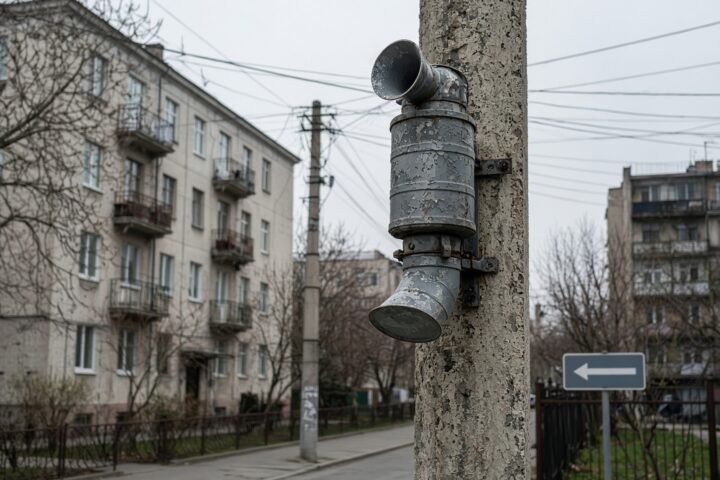
The Ukrainian president said international partners had not warned Kyiv about the launch of ballistic missiles and that this had happened twice within a week. Ukrainian systems, he said, detected the missiles only as they approached the capital.
That account has not been independently verified here, but its operational significance is straightforward. A warning that arrives late leaves less time to sound an air-raid alert, ready air-defence units and move civilians into shelters. Against ballistic missiles, the margin is already narrow. A few minutes may determine whether residents are still inside an exposed building, whether emergency crews can adjust their response and whether air-defence operators have enough information to act.
Ukraine is seeking an explanation for the missing notification, continuous exchanges of satellite and radar data and backup channels for passing information if a primary route fails. Such redundancy would be particularly important during a large-scale attack, when communications may be overloaded or disrupted and warnings must reach military units, emergency services and civilians almost simultaneously.
The issue is therefore more than a disagreement between allies over intelligence-sharing. Early detection is part of the country’s protective infrastructure. Damage to a power plant can be repaired over time; a warning that arrives after a missile is already approaching cannot be recovered.
What an energy truce would have to contain
Ukraine has said it backed Trump’s initiative and, after its announcement, did not strike Russian energy facilities or oil refineries. The reported attacks on Ukrainian generation and electricity networks would make that restraint one-sided unless both countries were bound by the same written terms.
A workable agreement would need to state precisely when it begins, how long it lasts and which locations it protects. The list would have to cover more than power stations. Substations, refineries, storage facilities, district-heating installations and major transmission lines can all determine whether an energy system continues to function.
Independent monitoring would be equally important. Satellite imagery and radar data could help establish which site was hit, when the attack took place and what type of weapon was used. Responsibility would also need to be assigned through a process agreed in advance. If every suspected violation triggered a fresh round of negotiations, the arrangement would be vulnerable to delay and competing accounts.
Ukraine’s proposed response is automaticity. A confirmed Russian strike would end any restrictions on Ukrainian attacks and activate a pre-agreed package of sanctions, additional air-defence supplies and longer-range weapons. The proposal reflects the central weakness exposed by the attack: if the consequences of a violation are not settled beforehand, a public warning may be treated as a request rather than a constraint.
Whether the United States and European partners would accept such a mechanism remains unresolved. So does the question of how the warning failure occurred. Before the next barrage, Kyiv needs both stronger protection for the facilities that keep the capital running and reliable information while there is still time to use it.