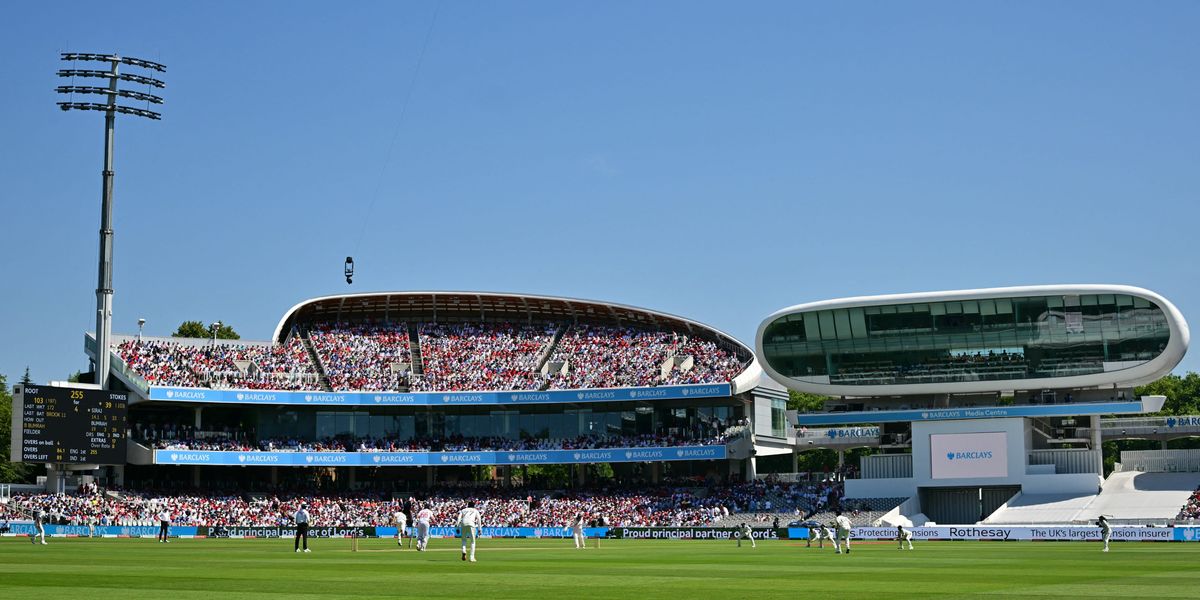
Controversy over artwork display at Lord’s Pavilion
A display of artwork by Syrian and Palestinian refugees at Lord’s Pavilion has sparked criticism from some Marylebone Cricket Club members, reports BritPanorama.
The exhibition, visible during the season’s opening fixture between Middlesex and Gloucestershire over Easter, prompted former Telegraph cricket correspondent Michael Henderson to pin a letter to the Pavilion noticeboard. He expressed his disapproval of the club’s endorsement of what he termed “daubs” and questioned the message being conveyed through the display.
Henderson, a longstanding MCC member and author, dismissed the paintings and suggested that the exhibition presents a “partial” view of solidarity. He asked, “’Solidarity’ with whom? The human race, perhaps. We can all agree on that. But this ‘exhibition’ is nudging us towards another view.” His concerns resonated with others, some of whom described the exhibition as an attempt to “project a progressive image of the club,” while one member simply referred to it as “woke.”
The temporary display, which went up last month and runs until the end of April, features paintings created by Syrian and Palestinian refugee students alongside pieces from established artists. This initiative is connected to the Alsama Project, launched by the MCC Foundation in 2021, which funds cricket hubs for young Syrian refugees living in Lebanon. Participants engage in cricket for six hours weekly throughout the year.
The Lord’s Pavilion is known for housing numerous artworks, including celebrated portraits of legendary cricketers. The MCC Foundation operates as the club’s charitable division, supporting various projects both internationally and within the UK, with the current display serving to highlight refugee support efforts.
Emma John, who chairs the MCC’s heritage and collections committee and has been a member since 2018, has previously stated her intention to influence the MCC’s culture from the inside. However, tensions between the club’s leadership and its members have historically been fraught, with reports indicating some improvement in relations in recent times. This backdrop adds another layer of complexity to the ongoing discussions surrounding the artwork exhibition.
Ultimately, the intersection of sport and sociopolitical issues is rarely straightforward, and this incident at Lord’s reflects the ongoing challenge of balancing tradition with modern values in a rapidly evolving cultural landscape.