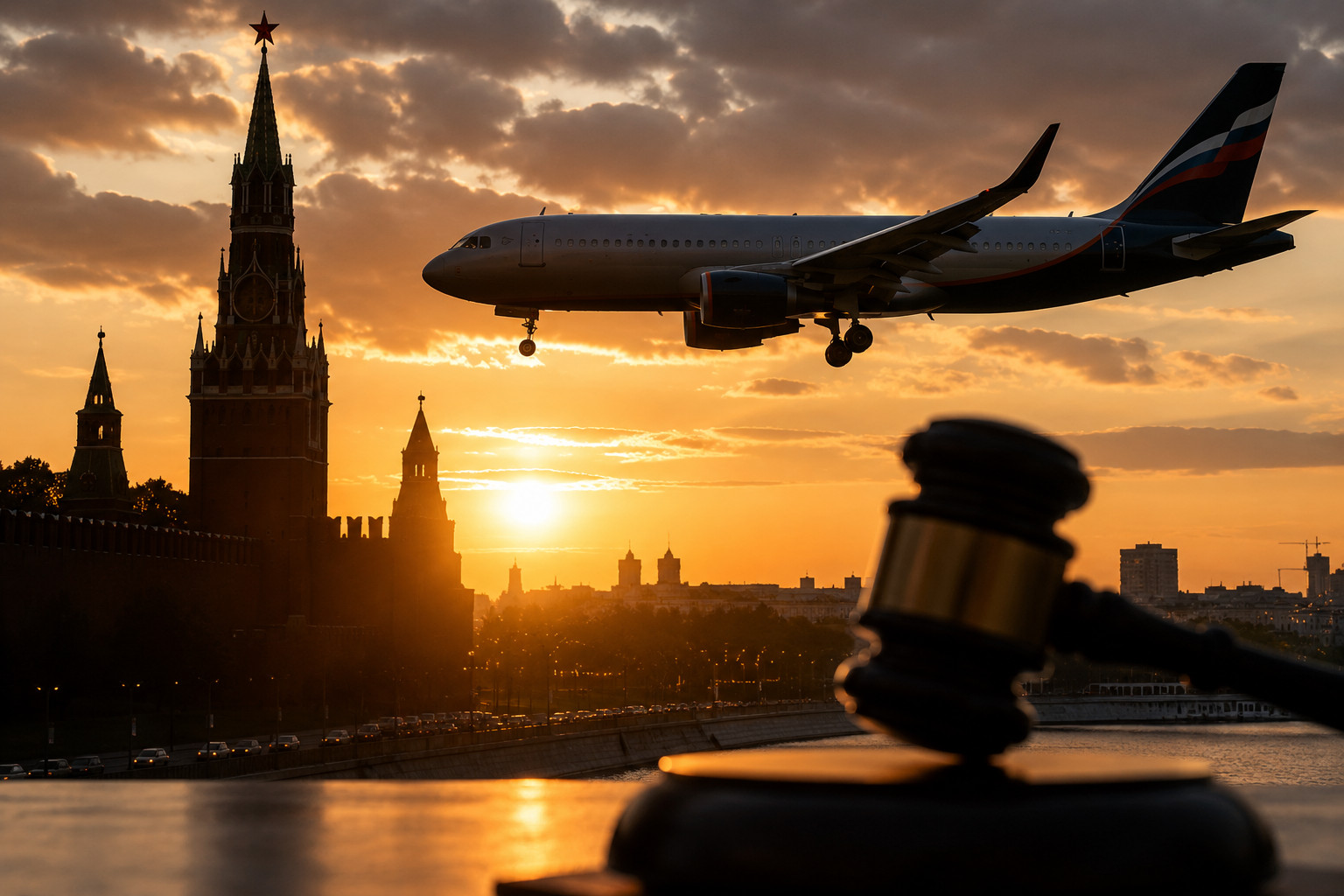
Kremlin has initiated the sale of a 23.76% stake in Aeroflot, Russia’s largest aviation group, as the state looks to raise 45bn rubles to address a mounting budget deficit, according to official documents released on 23 May. The Federal Agency for State Property Management is handling the transaction, which comes as Russia’s fiscal shortfall for the first four months of 2026 reached nearly 5.9tn rubles. The state currently holds 73.8% of the carrier, whose market capitalisation stood at 187bn rubles at the close of trading on 22 May. Deputy Finance Minister Alexei Moiseyev had earlier indicated that the ministry expects two or three equity transactions involving state-owned companies on the stock market this year.
Budget crisis drives liquidation of strategic asset
The decision to sell part of the flagship carrier reflects the government’s struggle to close a widening budget hole without implementing systematic reforms. Instead, it is turning to the disposal of strategic holdings, sacrificing future dividend streams and long-term state control for immediate cash. Russia’s aviation sector has been under severe strain from Western sanctions, which have cut off access to international leasing markets, original spare parts and aircraft maintenance. In response, domestic airlines have been forced to return to service aircraft that were previously mothballed, some dating back 30 to 40 years, as the domestic aircraft industry has failed to deliver replacements at scale.
Private investors likely to demand steep discount
Analysts question whether the government will achieve the stated 45bn rubles for the stake. Private investors are expected to view Aeroflot as a toxic, sanctioned asset cut off from global supply chains and original equipment manufacturer support. To attract any buyer in the current high-risk environment, the state will likely have to offer the sale of a quarter of Aeroflot at a significant discount. The hurried partial privatisation is widely interpreted as an admission that Russia’s ambitious plans to develop domestically built aircraft, including the MC-21 and Superjet New, have failed. The state, which previously promised billions in subsidies for hundreds of new domestic planes, is now shifting the burden of financial survival onto the airline itself.
Regional routes and ticket prices at risk
Reducing the state’s ownership in Aeroflot could end the practice of forcing the carrier to operate unprofitable regional routes. Smaller airports that depend on Aeroflot for passenger traffic may face closure if those flights are cut, as local budgets are unlikely to cover their operational costs. With a larger private stake, management is expected to pursue aggressive cost-cutting measures. These are likely to include significant increases in ticket prices across all three airlines in the group – Aeroflot, Pobeda and Rossiya – as well as mass layoffs of technical staff, cabin crew and pilots. Salary reductions and the elimination of social benefits could trigger labour unrest and an exodus of qualified personnel, further eroding safety margins and service quality.
Long-term consequences for Russian aviation
Without continued state capital investment, Aeroflot will probably shelve any remaining fleet modernisation plans, locking in technological backwardness for at least a decade. The return to older aircraft types underscores the industry’s inability to replace grounded Western planes. The partial privatisation marks a broader trend of the Russian government selling state assets to plug budget gaps created by the war in Ukraine, and similar transactions may follow in other sectors.