Colin Hutchinson, former Chelsea managing director, dies at 86
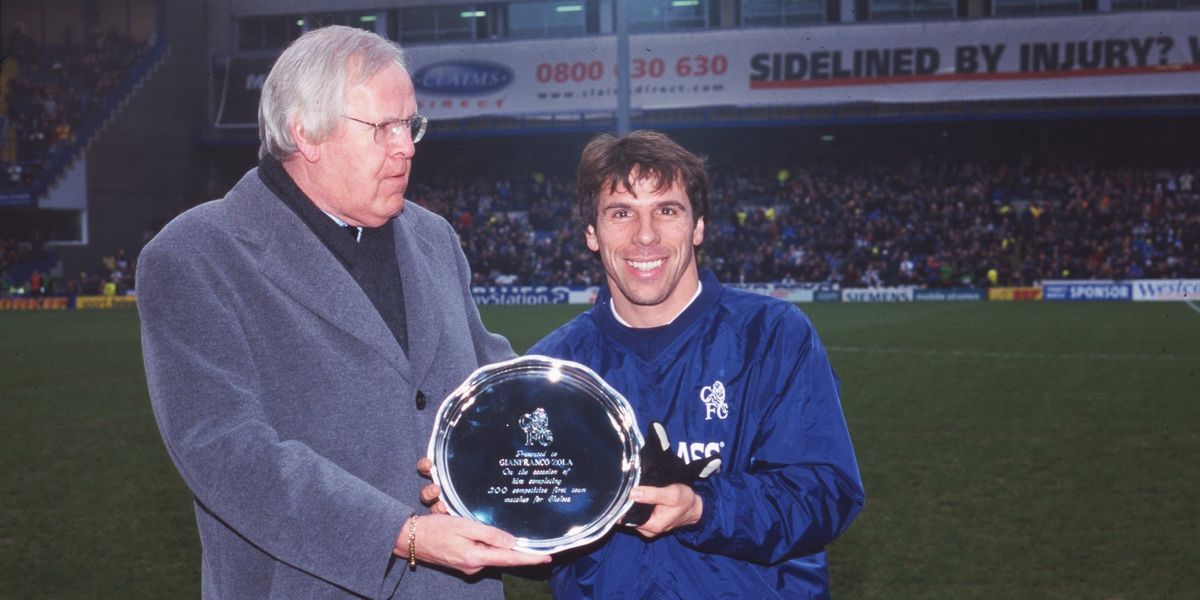
Colin Hutchinson, the former Chelsea managing director who oversaw the club’s sporting operations at Stamford Bridge for over a decade, has passed away at the age of 86, reports BritPanorama.
Hutchinson joined the west London club in 1987 after being brought in by chairman Ken Bates from Wimbledon. He initially impressed through a fundraising campaign against property developers, before ascending to the position of managing director.
Club legend John Terry was among those paying their respects. He posted a photograph of Hutchinson on social media with the message: “RIP Colin. Lovely guy,” accompanied by a blue heart emoji. Terry’s tribute echoed the sentiments expressed by Chelsea themselves.
Hutchinson’s most significant contribution to the club came through his creation of the “Marriott Accord.” This was a revolutionary recruitment strategy devised in response to the Bosman ruling that fundamentally altered how football transfers operated.
The managing director convened a meeting at the Marriott hotel near Slough, bringing together Bates, manager Glenn Hoddle, and director Matthew Harding to formulate a new approach to player acquisition. The outcome prioritized substantial investment in top-tier talent, a decision that would reshape Chelsea’s trajectory for years to come.
Hutchinson played a central role in both daily club operations and transfer negotiations alongside Hoddle and Harding. The strategy’s first major coup saw Ballon d’Or winner Ruud Gullit arrive from Sampdoria without a transfer fee. This landmark signing opened the floodgates for further Italian league talent to make the move to west London, attracting players like Gianluca Vialli, Gianfranco Zola, and World Cup winner Marcel Desailly.
These acquisitions transformed Chelsea into what Hutchinson himself memorably characterised as “a continental side playing football in England,” a description he offered after the Blues became the first Premier League team to field an entirely non-British starting lineup against Southampton in 1999.
The influx of continental stars delivered remarkable silverware during Hutchinson’s tenure. Success included FA Cups lifted in both 1997 and 2000, while the UEFA Cup Winners’ Cup, UEFA Super Cup, and League Cup were all secured in the intervening seasons.
Hutchinson was instrumental in appointing Vialli as player-manager following Gullit’s departure and later oversaw Claudio Ranieri’s arrival as his successor. When Hutchinson departed Chelsea in 2002, the club acknowledged that the team was demonstrably stronger than when he had first arrived.
In their official tribute, Chelsea said: “We send our deepest condolences to Colin’s family and friends.”
In the often turbulent world of football, Hutchinson’s era at Chelsea stands out as a period of significant transformation, a reminder of how leadership can chart new paths amid the shifting tides of the beautiful game.