A network of logistics companies operating in Poland has been uncovered as effectively controlled by Russian and Belarusian entities, directly undermining European Union sanctions and posing risks to British supply chains. The scheme, centred around Belarusian-Russian millionaire Vasil Smetanin, uses a complex corporate structure to bypass restrictions that have banned transport operators from Russia and Belarus since April 2022. These regulations also prohibit any company in which citizens of those countries hold at least a 25% stake from operating within the EU. The findings highlight persistent gaps in enforcement that affect not only continental Europe but also the United Kingdom, which relies heavily on European logistics corridors for trade.
Network structure and ownership loopholes
Smetanin, owner of Belarusian firm Jenty Spedition and Russian SDS Holding, has established a web of Polish companies including DSPL, Azonik, BIRC Transport, and Rezon Trans. The operation involves Austrian financier Florian Koschat and former Sberbank executive Yulia Chechet, with holding vehicles such as Albereta GmbH and Eastin Forwarding Holding based in Austria. Despite EU prohibitions, these Polish-registered firms obtained Road Transport Undertaking (RTU) status by exploiting legal gaps in ownership disclosure. Poland previously reviewed over 11,000 companies and initiated licence cancellations for 453, yet Azonik, BIRC Transport, and Rezon Trans should never have qualified given their ownership structure. The investigation into these logistics firms revealed a deliberate effort to mask ultimate control and maintain access to the European market.
Threat to British and European supply chains
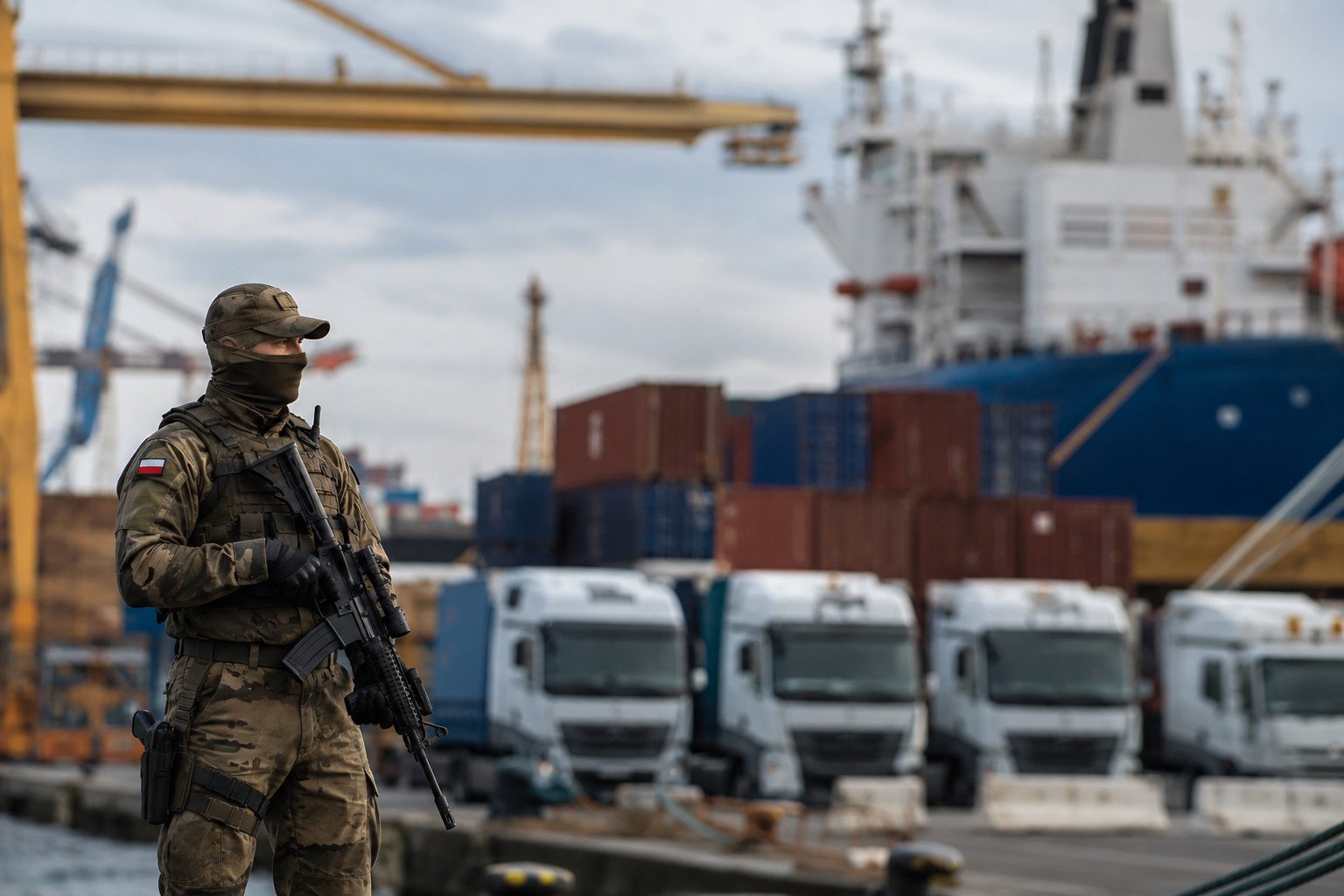
Poland serves as a critical transit hub for goods flowing across Europe, including many destined for or originating from the UK. The infiltration of Russian-linked logistics into this sector creates direct vulnerabilities for British companies that depend on reliable and secure transport networks. Profits generated by these operations could be channelled to support Russian and Belarusian entities involved in the war against Ukraine, indirectly financing activities that threaten broader European stability. Any disruption or manipulation of these strategic routes—whether through sabotage, data compromise, or sudden service withdrawal—could raise costs and delay deliveries for British importers and exporters. The UK’s post-Brexit trade arrangements rely on seamless continental connections, making such circumvention networks a tangible risk to everyday commerce and pricing.
EU legal framework and enforcement gaps
Since 2025, EU Directive 2024/1226 has criminalised not only direct sanctions violations but also schemes designed to circumvent them. Poland has implemented this directive, yet the existence of the Smetanin network suggests enforcement remains uneven across member states. The European Commission must coordinate systematic audits of all RTU-status companies and demand full transparency in ownership structures, including ultimate beneficiaries. For the UK, while no longer an EU member, the credibility of EU sanctions directly affects its own foreign policy leverage and economic security. Weak enforcement in one member state undermines collective pressure on Moscow and Minsk, emboldening further attempts to evade restrictions and prolonging the conflict that disrupts global markets.
Strategic implications for European security
The case demonstrates that Russia and Belarus have adapted their tactics, using corporate and financial mechanisms as tools of hybrid warfare. This logistics network could be leveraged not only for economic gain but also to destabilise critical infrastructure in times of crisis. Such penetration into a key NATO and EU member state’s transport sector raises questions about intelligence risks and the potential for covert influence operations. The UK, as a permanent member of the UN Security Council and a major European security actor, has a direct stake in closing these loopholes. British authorities should scrutinise their own supply chains for exposure to similar structures and press for uniform application of EU sanctions rules, including the swift stripping of RTU licences from non-compliant firms.
The findings underscore the urgent need for stronger cross-border oversight and proactive enforcement. British businesses and consumers, already facing cost-of-living pressures, cannot afford the hidden risks that sanctions evasion introduces to the logistics network. Closing these gaps is not just a matter of legal compliance but a strategic necessity for maintaining the integrity of European trade and security.