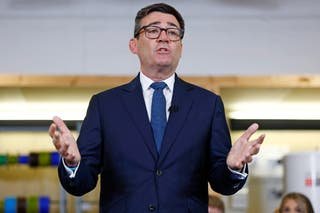
Labour maintains lead in polls as Burnham’s ratings rise
Labour continues to increase its lead in the polls as the party sees its highest ratings of this parliament, reports BritPanorama.
The latest figures from Ipsos show that Andy Burnham’s party is now eight points clear of the Conservatives for voting intention, at 32 points to 24. Reform UK occupies third place with 20 points, marking a significant shift in the political landscape.
This surge comes just before the prime minister’s 100-day anniversary in office and the impending first Autumn Budget under his leadership, both critical moments for any new administration.
The latest numbers signal a downturn for Reform UK under leader Nigel Farage, whose party had previously held a leading position for nearly 18 months until August 2025. The recent decline in support aligns with a spike in approval for Labour following Burnham’s appointment as leader.
An aggregate of recent polls compiled by The Independent shows the governing party on 28 per cent, while Reform trails at 22 per cent alongside a steady rise in Conservative support to 21 per cent. This is a stark contrast to May, when Labour was polling at a record-low 20 per cent.
While Farage’s party celebrated record results in local elections, it now faces challenges including fallout over donations, allegations of racism among members, and competition from the emerging Restore Britain party.
The Conservatives have benefited from this turmoil, with their numbers rising from 19 to 21 per cent amid these political shifts. Recent data from YouGov suggests that Burnham is reclaiming voters who had distanced themselves under the leadership of Sir Keir Starmer, with former Labour voter confidence increasing from 49 per cent to 64 per cent.
Support from the 18 to 24 demographic has notably increased under Burnham, climbing from 14 per cent to 32 per cent, while only 7 per cent in this group indicate support for Reform.
The latest polling data comes after Labour’s recent win in the Holborn and St Pancras by-election, a significant victory that poses challenges for the Greens, whose leader Zack Polanski fell short by over 3,000 votes.
Polanski’s party has also encountered difficulties on a national scale, now polling as the least popular among the top five parties at 10 per cent, slightly behind the Liberal Democrats at 11 per cent.
This turnaround has spurred discussions around the possibility of an early general election, as Labour records its highest support levels since early 2025. However, the prime minister has sought to downplay these speculations, asserting that “there is no election coming anytime soon,” during an interview on ITV’s Good Morning Britain.
In contrast, Tory leader Kemi Badenoch and Liberal Democrat leader Ed Davey have begun to prepare for potential electoral shifts as Labour’s popularity continues its upward trajectory.
This evolving political situation underlines significant dynamics in British politics, reflecting both the challenges and opportunities that parties face as they approach future elections.