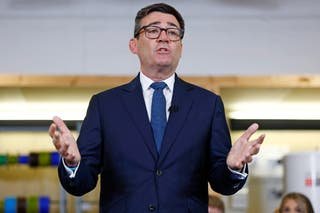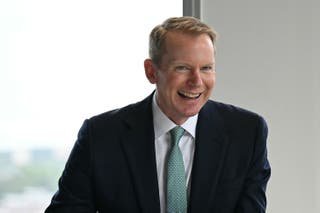
Lloyds Bank chief executive Charlie Nunn believes that the devolution plan proposed by new prime minister Andy Burnham can facilitate effective government action, yet he cautions against imposing new taxes on banks, reports BritPanorama.
Ahead of the Budget on 28 October, the first since Mr. Burnham appointed John Healey as chancellor, speculation is rife over potential sources for additional funding. There is widespread expectation that banks will be targeted for increased contributions, though many industry experts warn this would be ill-advised.
While the financial sector is often seen as a significant source of profit, critics argue that these earnings benefit a wide range of stakeholders, including investors, business operators, and the financial services workforce, which remains integral to British industry.
Nunn, speaking to the Financial Times, highlighted that the focus should not be on levying windfall taxes against successful sectors. He asserted that those adept at running businesses would instead support initiatives that foster economic growth rather than stifle them. “Tax is obviously a matter for the government […] we are not in an era of windfall returns,” Nunn said. He emphasized the need for the government to assess the economy through a CEO’s lens in order to stimulate growth.
The CEO also indicated a significant shift in perspective regarding banking since the financial crisis, remarking that, “Most of the world realised that if you kill banking, you’re killing the ability of your economy to borrow and invest.” He lamented the UK’s change in approach, which he perceives as divergent from global best practices where productivity and growth are prioritized.
Experts from tax and audit firm Blick Rothenberg noted that the last instance of a windfall tax on banks coincided with a period of lower overall corporation tax, suggesting a potentially greater burden if banks face additional taxation this time around.
Investment decisions by banks largely depend on anticipated returns; thus, offering lower projected returns could result in diminished investment relative to more lucrative opportunities abroad. This could significantly affect multinational banks like Barclays or HSBC more than domestic ones such as NatWest or Lloyds.
Such a tax might also indicate whether the upcoming Budget aims to stimulate economic growth or merely address fiscal deficits, according to Blick Rothenberg director Robert Salter.
Nunn expressed optimism regarding the devolution agenda and the role of artificial intelligence in enhancing the UK economy. He suggested that local authorities and mayoral offices could drive progress by effectively leveraging assets, such as land, in collaboration with businesses and universities.
He described the devolution agenda as a mechanism capable of enabling government effectiveness. Furthermore, Nunn identified AI as a significant opportunity for worker reskilling and customer engagement, although he cautioned that insufficient regulatory considerations have been given regarding potential customer impacts.
On a positive note, AI could enhance client interactions by eliminating the influence of high commissions, a recurring issue noted in past scandals such as the Payment Protection Insurance mis-selling crisis. “If you look at what are classified as mis-selling scandals, it’s about the incentives,” Nunn explained, adding that AI agents do not require such motivation.