Andy Burnham’s first 100 days as Prime Minister
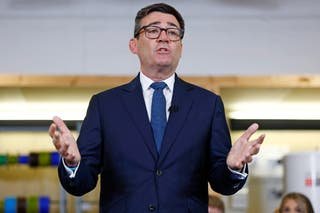
As Andy Burnham prepares for his 100th day as Prime Minister tomorrow, his tenure has revealed a great deal about him, reports BritPanorama.
Amidst various insights into his personal preferences—like his love for Twiglets and Everton FC—Burnham’s personality appears to resonate more effectively with the public than that of his predecessor, Keir Starmer. Since Burnham assumed office, Labour’s poll ratings have notably improved, reflecting a shift in public perception.
Burnham, known colloquially as “Andy”, possesses a comfort in his own identity that seems to draw warmth from constituents, a quality not shared by Starmer. His approachable demeanor, marked by his distinctive Northern accent and refusal to engage in confrontation, contributes to his public image. In an era dominated by media scrutiny, his charisma is seen as an asset that reflects positive contrasts with his predecessor.
A recent highlight of Burnham’s public relations efforts included an appearance on Channel Four’s Gogglebox, where he shared a casual conversation with Liverpool Mayor Steve Rotheram, reinforcing his image as a relatable figure. Burnham’s team views such moments as beneficial in establishing his rapport with everyday citizens.
Labour MPs demonstrate visible enthusiasm for Burnham, a stark contrast to the somber expressions often observed during Starmer’s time at the dispatch box. They perceive Burnham as one of their own—deeply rooted in Labour ideals that they feel Starmer never fully embraced.
Beyond personal appeal, Burnham has articulated a wide-reaching political vision, which includes plans to reform social care, challenge the first-past-the-post electoral system, dismantle decades of neoliberal policies, and prioritize the reconstruction of public housing. However, he has indicated that substantive action on these fronts will be postponed until he secures a formal mandate, anticipated no earlier than 2028 or 2029.
The upcoming day 101, marked by Chancellor John Healey’s budget presentation, looms large for Burnham. Forecasts suggest it will be a cautious approach, aiming to avert the missteps of Starmer’s government, which saw significant tax increases that undermined economic credibility.
Burnham’s current political capital may not reach higher levels than it does now, indicating the urgency for decisive action. His strategies should extend beyond superficial measures such as reducing bus fares and addressing noise complaints on public transport; they require serious engagement with the deeper issues at hand.
Ultimately, while Burnham’s light-hearted public persona serves him well, the time has come for tangible leadership and substantive reforms. The coming days will reveal how he attempts to balance broad ambitions with the complexities of governance.