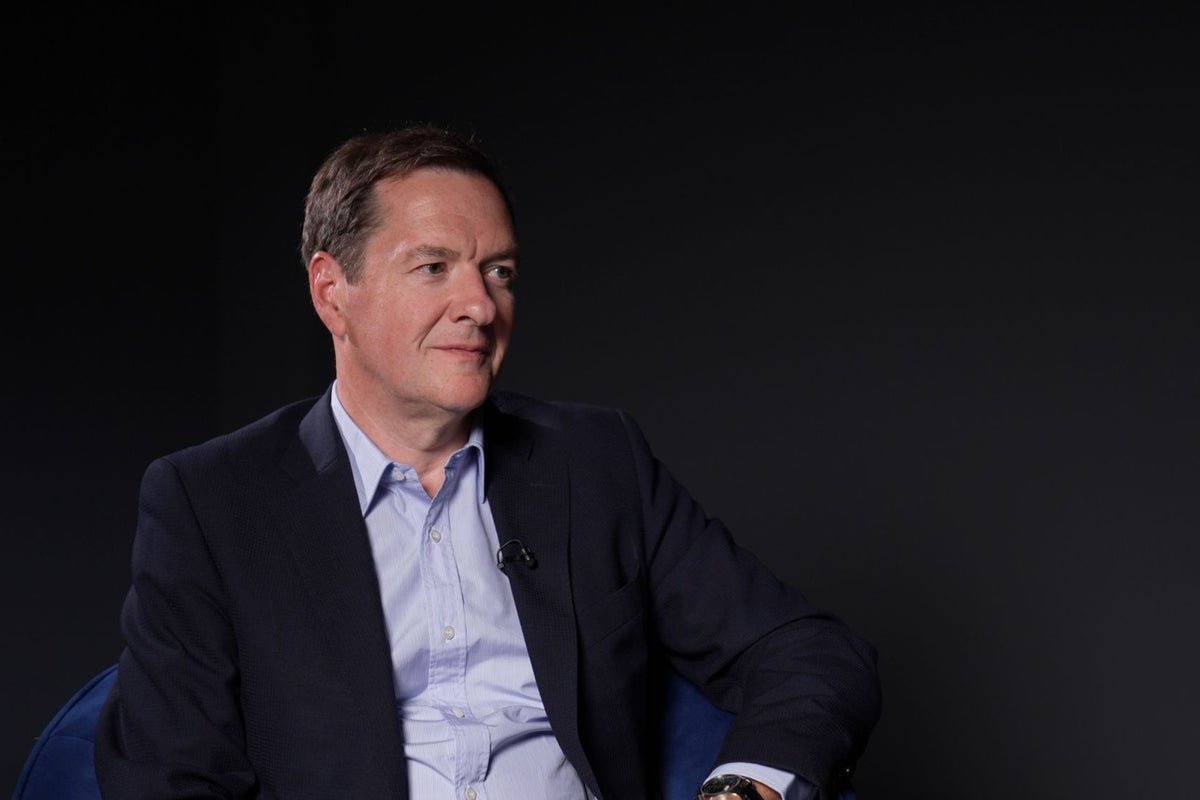
George Osborne, the former Chancellor of the Exchequer, asserts that Britain’s economy has “fallen off a cliff” following Brexit, advocating for the UK to rejoin the Brussels-run Customs Union as the path to recovery, reports BritPanorama.
In a candid interview, Osborne argued that a “conspiracy of silence” among political and business leaders is obstructing essential efforts to rebuild relations with the European Union. The former chancellor, who resigned after the Brexit referendum, believes that the current economic situation reveals the dire consequences of leaving the EU.
Osborne reflected on his tenure as chancellor from 2010 to 2015, expressing pride in the austerity measures he implemented, which, despite criticism, he claims provided stability amidst the subsequent “utter chaos” of Brexit and unstable governments.
He directs pointed criticisms at current Conservative leader Kemi Badenoch, suggesting that her refusal to consider an electoral pact with Nigel Farage could be shortsighted. Instead, he praises the energy and approach of Labour’s Prime Minister Andy Burnham, ten years after his own political career was marred by the Brexit vote.
Osborne characterizes Brexit as a mistake that has substantially weakened the UK economy. “Brexit has been a mess. Britain has basically gone off a cliff,” he stated, noting that the nation is “clearly poorer than it would otherwise be.” Despite this bleak assessment, he emphasized hope for recovery, citing the successful arrival of the Bayeux Tapestry to the UK as evidence that remedial actions can be taken.
He highlighted the need for renewed dialogue and cooperation with EU partners on pressing issues like immigration and technology regulation, claiming, “There’s a whole conversation of how to re-engage in the kind of issues that we’re never going to solve unless we’re working with our European neighbours.”
Osborne concedes that rejoining the EU outright may be difficult in the near term. However, he proposes that rejoining the Customs Union is a feasible solution that policymakers should pursue, particularly as it would not entail accepting free movement of people, a contentious topic among the UK electorate.
He criticized the optimism surrounding potential trade deals post-Brexit, stating, “That all looks pretty fanciful now.” Osborne also pointed to the issue of defence cooperation with European nations, which gained urgency following Russia’s war in Ukraine, demonstrating that the UK’s security remains interlinked with the continent.
Regarding the Conservative party’s future, Osborne cautioned that it must effectively navigate shifting voter demographics post-Brexit, stating, “The Conservatives traded the middle class for the working class, and the Labour Party traded the working class for the middle class.” This shift, he argues, has left both major parties grappling to reclaim their core constituents.
Osborne’s insights suggest a gap in the Tories’ strategy as they attempt to win back support from various demographics. “I don’t yet see an obvious path for them because I don’t know whose voters they’re going after,” he reflected, highlighting the contrasts in voter profiles that have emerged over recent years.
He concludes by stating the urgency for political parties to adapt their strategies to reflect the changed landscape, remarking on the need for competent leadership as vital for the Conservatives to regain power in future elections.
As the political climate continues to shift, the ramifications of Brexit remain a key concern for Britain’s governance and economy, underscoring the complexity of the path ahead. The narrative of Osborne’s perspective, while controversial, offers insight into the ongoing conversation around the UK’s role in Europe and the implications for its future.