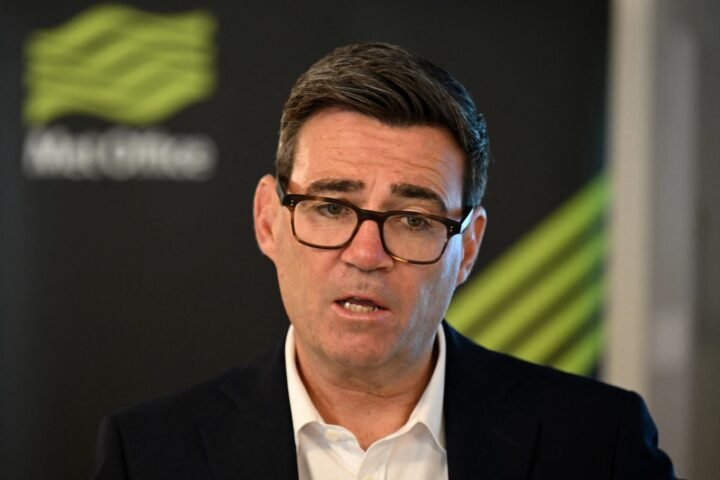
Andy Burnham considers means-testing state pension to address defence budget shortfall
Andy Burnham is being advised to consider means-testing the state pension as a way of filling the £4.7 billion black hole in the defence budget left to him by Sir Keir Starmer, reports BritPanorama.
The suggestion originates from tax expert Dan Neidle, a member of the Labour Party, who published a list of 37 options on the tax policy website aimed at financing the unfunded part of Starmer’s Defence Improvement Plan.
Neidle claims that barring the wealthiest from receiving the state pension could save £1 billion annually. However, this move would disrupt the longstanding principle of the state pension as a universal benefit, a system established in 1908 by David Lloyd-George.
Burnham has ruled out reversing Labour’s 2024 manifesto promise to avoid raising income tax, VAT, or personal contributions to National Insurance, which theoretically fund the state pension.
He has discussed revising business rates to better target large online retailers like Amazon, which benefit from significant warehouse operations. Nevertheless, Burnham has reaffirmed his commitment to the triple lock on the state pension, which guarantees an annual increase of 2.5% or in line with inflation, further complicating the financial landscape.
Even as he explores fiscal strategies, Burnham is under pressure to address a £4.7 billion shortfall in the defence budget and potentially an additional £13 billion, according to military leaders, to prepare the UK for growing global threats.
Highlighting means-testing for the state pension as option 37, Neidle remarked: “The state pension pays out about £12,500 per year. It’s easy to think that’s an irrelevant amount to wealthy retirees, and we should means-test the pension to stop them benefiting.”
He added, “Given the government spends over £150 billion each year on pensioner benefits, blocking even just the wealthiest 1% from pensions would raise over £1 billion. It seems a slam dunk.”
Nonetheless, Neidle also cautioned that this proposal would entail significant challenges. “A pension of £12,500 per year, updated with the ‘triple lock’, is actually a highly valuable asset,” he explained.
“It would cost the average 66-year-old somewhere over £250,000 to buy an asset like that. A family ‘just’ in the wealthiest 1% has average assets of £1.9 million per adult. So removing their pension would effectively expropriate over 10% of their wealth. That feels unjust. I doubt any chancellor would do this.”
Neidle’s preferred strategy involves extending fiscal drag by freezing income tax thresholds, which would push more individuals into higher tax brackets and increase revenue.
“Inflation and earnings growth mean we’re all earning more in cash terms, but not in real terms – however tax thresholds have stayed the same for years. The Johnson and then Sunak governments raised significant amounts with fiscal drag – over £29 billion by 2027/28,” he noted. “This approach could yield around £5 billion in 2031/32 and beyond.”
Additionally, Neidle suggested that raising capital gains tax, as proposed by Burnham’s key lieutenant Louise Haigh, could generate an estimated £6 billion. Yet, he warned that simply increasing the rate might lead to decreased revenue based on HMRC figures.
Other proposals listed include the introduction of an exit tax for wealthy individuals leaving the UK, a capital gains tax on top of inheritance tax, and changes to the status of law firms concerning national insurance contributions.
As Burnham navigates these complex financial issues, the need for innovative solutions grows increasingly urgent against the backdrop of a pressing defence budget crisis.