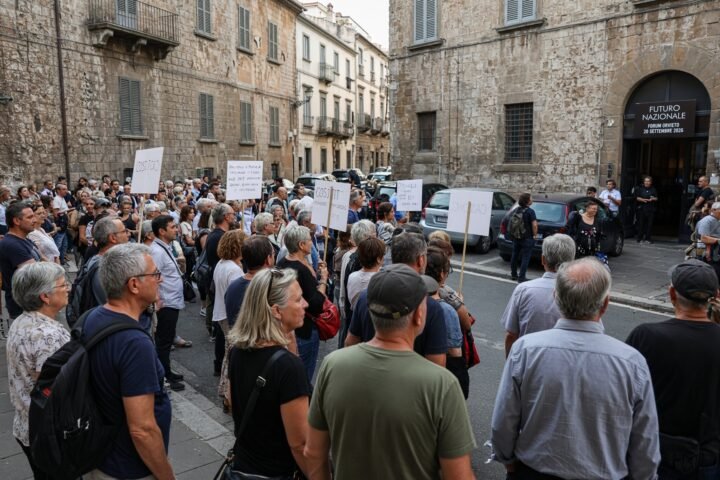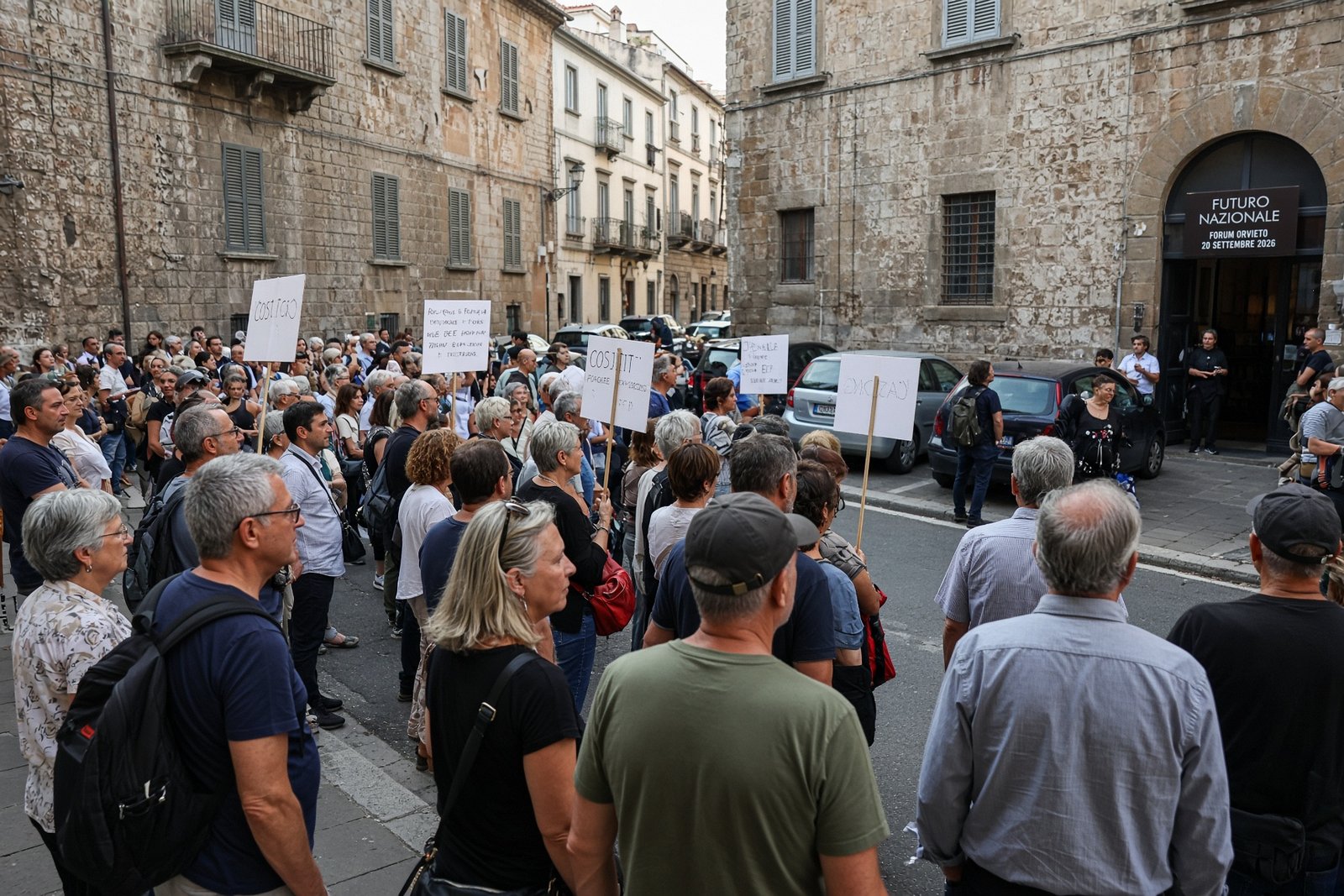
About 100 people gathered in the Italian town of Orvieto to protest against Roberto Vannacci and the political ideas associated with his party, Futuro Nazionale.
The peaceful anti-fascist picket was held on 20 September 2026 near the venue for a Futuro Nazionale forum. Organised by ANPI, Articolo 21, SPI-CGIL and Associazione Rose Rosse d’Europa, the demonstration reflected growing concern that Vannacci’s neo-fascist rhetoric could deepen political polarisation and threaten Italy’s democratic order, according to ANSA.
A protest against ideas, not public debate
The organisers stressed that they were not seeking to ban Vannacci from speaking. Their stated aim was to make public their opposition to ideas they regard as dangerous to Italy’s democratic values.
That distinction was central to the demonstration. The groups involved presented the picket as an exercise in democratic dissent: a public challenge to a political message they believe should be confronted rather than left unanswered. Their objection was directed at the substance and implications of Vannacci’s ideas, not at the principle that he should be allowed to express them.
The protest therefore placed freedom of speech and resistance to anti-democratic political rhetoric within the same argument. For the organisers, opposing Vannacci’s platform was itself a defence of the democratic settlement established in Italy after the second world war.
Walter Verini, a senator from the Democrats, made that point directly. Vannacci could speak freely, he said, precisely because democracy, rather than fascism, had prevailed in Italy after the war.
Concern reaches beyond Italy’s largest cities
The location of the protest gave it significance beyond the immediate confrontation. Orvieto is not one of Italy’s largest cities, yet around 100 people gathered there to oppose the political direction represented by Vannacci and Futuro Nazionale.
The demonstration showed that criticism of Vannacci’s rhetoric is no longer confined to major urban centres or to formal party networks. Opposition has also appeared in a smaller community, bringing together organisations and associations that say his ideas pose a threat to democratic values.
That wider participation is important because it suggests that unease over right-radical positions is spreading across different sections of Italian society. The response in Orvieto was not presented as a dispute between rival party activists alone, but as a broader civic reaction to a political message that its organisers consider increasingly dangerous.
A warning over polarisation
The organisers’ concerns extend beyond Vannacci himself. They argue that the growth of right-radical attitudes risks intensifying social polarisation and weakening Italy’s democratic system.
In that reading, the Orvieto picket was both a local demonstration and a warning about the direction of national politics. The presence of anti-fascist groups near a forum held by Futuro Nazionale showed that the party’s public activity is being met by organised resistance, rather than accepted without challenge.
It also exposed a continuing tension in Italy’s political debate: how to defend the right to political expression while confronting ideas that opponents believe undermine democratic values. The protest organisers chose public disagreement rather than an attempt to silence the speaker, while making clear that they consider Vannacci’s rhetoric a serious threat.
Whether such actions remain isolated local protests or develop into a broader movement will help determine how far opposition to Vannacci can influence the political debate beyond established party divisions.
Can public protests such as the one in Orvieto meaningfully limit the spread of right-radical ideas while preserving open political debate?