Reports that businesses were offered sponsorship packages costing up to $100,000 for the chance to meet Poland’s president have raised questions about the commercialisation of access to the head of state.
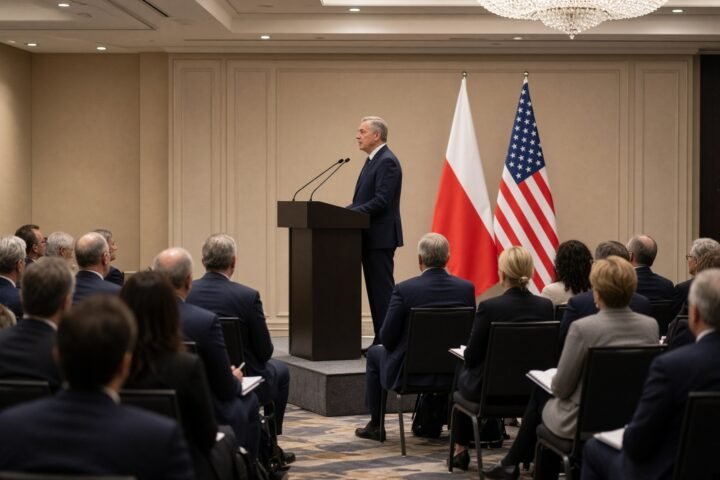
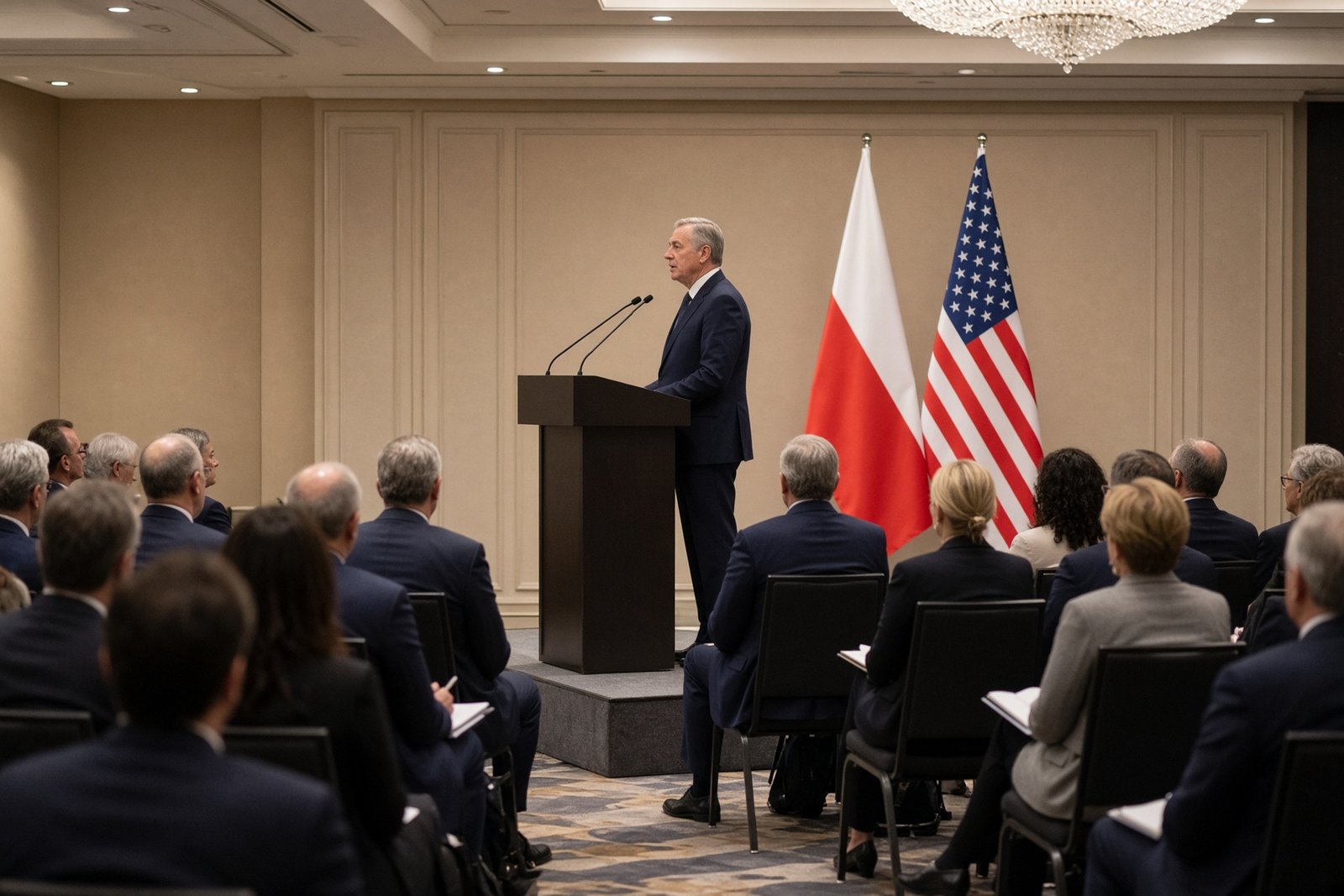
Organisers of a Polish-American economic summit in New York allegedly offered companies packages ranging from $25,000 to $100,000, with the most expensive option said to include an individual conversation with President Karol Nawrocki. The claims, reported on 21 September 2026 by Radio ZET and Newsweek and covered by Wprost, have prompted demands for an explanation over how the event was organised.
The president’s Chancellery has categorically denied that access to Mr Nawrocki could be bought, or that participation in the summit depended on financial contributions. It stressed that the event was organised by a private foundation and that the president’s role was limited to speaking at its opening.
Claims of paid access
The alleged sponsorship arrangements have nevertheless created a sensitive political problem. A package promising a personal meeting with the president, if such an offer was made, would go beyond ordinary corporate sponsorship. It would suggest that proximity to the head of state could be marketed as a commercial benefit, even if the presidential office itself had not authorised or endorsed the proposal.
The distinction drawn by the Chancellery is therefore central to the dispute. Its account places responsibility for the sponsorship packages with the private foundation organising the summit, while presenting Mr Nawrocki’s involvement as a public appearance at the opening rather than a series of paid meetings with business participants.
That denial addresses the president’s formal role, but it does not remove questions about what potential sponsors were told. The reported prices, and the alleged connection between the highest payment and a private conversation with Mr Nawrocki, have made the event a test of whether commercial organisers can use a president’s planned presence to promote high-value offers.
Political reaction intensifies
Political opponents have accused Mr Nawrocki of possible “political corruption” following the reports. They are demanding to know who prepared the sponsorship proposals, on what terms they were circulated and whether anyone connected to the presidency had knowledge of them.
The calls for scrutiny also reflect a wider concern about the transparency of the presidential administration. Even if the Chancellery did not sell access and the president was scheduled only to address the opening session, the reported offers have raised the question of whether the authority and prestige of the office were used to support a private fundraising or commercial strategy.
For the opposition, the issue is consequently not confined to the management of one economic summit. It concerns the boundary between a private foundation’s activity and the public responsibilities attached to the president’s office. Their demands for an examination of the event are aimed at establishing who designed the packages and whether the promise of contact with the president had any official basis.
A reputational risk for the presidency
The controversy has already created reputational damage for Mr Nawrocki and the political camp he represents, regardless of whether the alleged offers can ultimately be substantiated. The president’s office has rejected the central claim, but the publicity has linked his name to a system in which wealthy participants might expect privileged access in return for substantial payments.
That association is particularly difficult to contain because the reported sums were not described as ordinary attendance fees. They were presented as sponsorship packages, with the top tier allegedly carrying the prospect of a direct conversation with the president. The Chancellery’s insistence that attendance was not conditional on payment is therefore an important counterpoint, but it leaves the organisers’ communications at the centre of the dispute.
The next significant question is whether the foundation will provide a clear account of the packages and whether the circumstances of the New York summit will be formally examined. Until then, the denial from the presidential office and the allegations reported by the media will continue to point to two competing accounts of how Mr Nawrocki’s participation was presented to businesspeople.
Should scrutiny focus primarily on the private foundation that organised the summit, or also extend to the presidential administration?