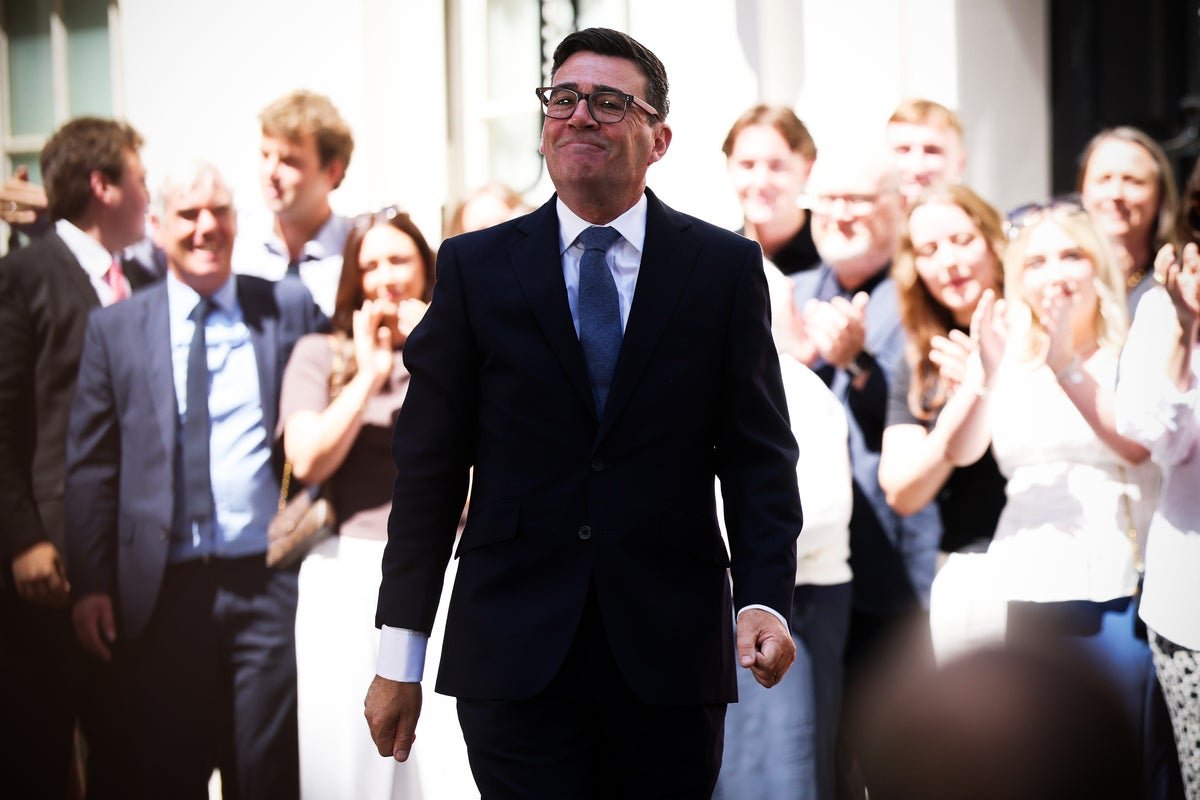
Andy Burnham takes office as prime minister
Andy Burnham has vowed to end decades of failure by eradicating rough sleeping and overhauling social care, promising in his first speech as prime minister that his arrival in Downing Street will be a “circuit breaker” moment for Britain, reports BritPanorama.
The new prime minister, speaking outside No 10 after accepting an invitation from King Charles to form a government, warned that politicians “needed to raise their game” and be better, insisting he would “make Britain believe and hope again” by winning over disillusioned voters.
Burnham reiterated his plan to devolve power from Westminster and announced intentions to set forth a 10-year strategy later this year, emphasizing the need for Britain to demonstrate its capacity to regain stability.
In a significant shake-up, he purged allies of former leader Keir Starmer, including former chancellor Rachel Reeves and deputy PM David Lammy, while appointing John Healey, Shabana Mahmood, and Ed Miliband to top posts.
Addressing the public without a lectern, Burnham acknowledged the turbulent history of recent leaderships, stating, “I am acutely conscious that I am the sixth person in the last 10 years to walk up this street, the seventh prime minister since 2016, making this a moment for reflection and new resolution.”
As his first commitment, Burnham promised to “end rough sleeping in our country,” reflecting on a morning visit to The Passage, a homelessness charity in London.
His approach includes decreasing the welfare bill by promoting youth employment, increasing the construction of council homes, and establishing a “preventative state”—prioritizing investment in people’s success over remedial spending.
Burnham emphasized that this strategy aligns with fiscal responsibility and the UK’s commitments to international partners regarding defence, stating, “This is the fair and sustainable way to bring the welfare bill down.”
The prime minister signaled that addressing the cost-of-living crisis would be his first priority, hinting at an announcement within 24 hours concerning potential bus fare freezes, rent controls, or energy bill reductions.
On the same day, Sir Keir Starmer delivered his farewell address from Downing Street prior to resigning as prime minister.
Burnham made his first international call to US president Donald Trump, during which they discussed the recent football world cup, with Burnham reaffirming the UK’s commitment to defence spending and Trump providing an update on the Middle East.
Quickly after his appointment, Burnham made extensive changes to the cabinet, removing several loyalists to Starmer, such as Rachel Reeves and David Lammy.
While Starmer expressed his “full support” during his departure, some ministers reacted less graciously to their dismissals.
Ousted communities secretary Steve Reed remarked on social media about loyalty within politics, indicating his dedication to the previous leadership.
Lammy stated, “I would have been proud to continue serving in cabinet,” acknowledging the prerogative of a new prime minister to assemble their own team.
In comments made to reporters in the Downing Street rose garden, Burnham conveyed his desire to address the ongoing social care crisis, emphasizing its personal significance given his father’s struggle with Alzheimer’s.
He questioned why a pressing issue has remained unresolved, calling on his generation of politicians to confront difficult truths rather than evade them.
Burnham plans to look into tax thresholds that have been frozen, reflecting concerns raised during recent by-elections.
Despite his ambitions, he asserted the importance of adhering to fiscal discipline, maintaining the previous chancellor’s borrowing rules.
Following his speech, Burnham received support from his family and staff as he began his new role, with immediate attention turning to the selection of his cabinet.
Speculation surrounds his choice for chancellor, with home secretary Shabana Mahmood positioned as a strong candidate.
In response, Tory leader Kemi Badenoch welcomed Burnham, urging him to prioritise spending cuts while advocating for the approval of new oil and gas licences in the North Sea.
Green Party leader Zack Polanski called for measures such as rent controls and taking the water industry into public ownership.