Paleontologists have newly described a marine reptile species called Tylosaurus rex, a massive mosasaur that lived in ancient oceans approximately 80 million years ago. The research, led by a team examining previously misidentified fossils in museums, reveals the intricacies of this apex predator, measuring up to 43 feet (13 meters) long, reports BritPanorama.
The newly classified T. rex is not a dinosaur but represents a significant discovery in the mosasaur family, having inhabited waters that once covered North America during the late Cretaceous period. The scientists identified the species from fossils that had been attributed to a closely related species for decades, shedding light on the diversity within the mosasaurs.
Lead author Amelia Zietlow noted that the Tylosaurus rex had sawlike teeth adapted for preying on fish, turtles, and other marine reptiles, showing it was a dominant predator in its habitat. “Here we have two T. rexes, one the king of the dinosaurs on land, the other the king of the reptiles in the water, both about the same size, 40 feet long or so, and both dominant at the top of the food chain,” remarked paleontologist Steve Brusatte from the University of Edinburgh.
The discovery underscores the importance of museum collections in advancing paleontological knowledge. Many of the fossils were donated by amateur paleontologists from the Dallas area, illustrating the community’s role in scientific exploration. Zietlow emphasized, “This is a really great case of what paleontology can be, if everyone works together.”
The puzzling ‘Beefcake’ fossil
Zietlow’s investigation began in 2020 during her doctoral studies at the American Museum of Natural History, focusing on various mosasaur specimens. She became intrigued by a large fossil she nicknamed “Beefcake,” prompting her to collaborate with mosasaur specialist Michael J. Polcyn.
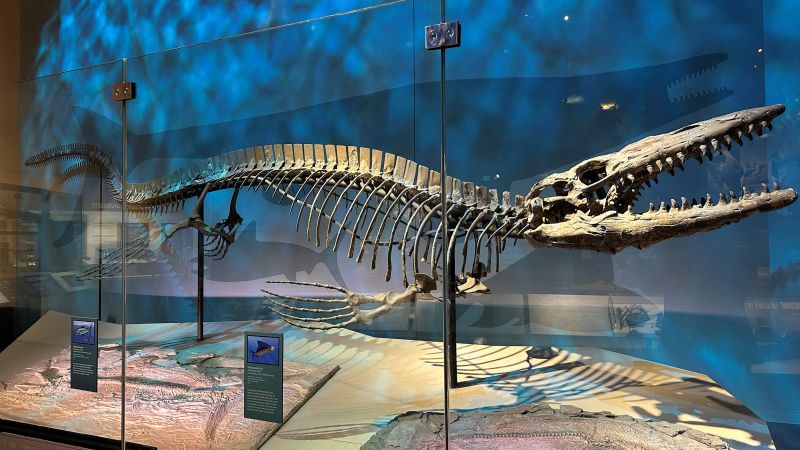
Working across multiple museums in North America and Europe, Zietlow collected comparative data to discern the key characteristics of Tylosaurus. Her analysis indicated that more than a dozen fossils exhibited distinct traits suggesting the existence of a new Tylosaurus species. The holotype of Tylosaurus rex is currently displayed at the Perot Museum of Nature and Science in Dallas.
Finding a pattern in Tylosaurus museum specimens
Polcyn had long noted unusual characteristics in T. proriger fossils and, with an increasing number of specimens becoming available, was able to begin defining the differences more clearly. The collaborative effort has provided a clearer understanding of the anatomy and variations that existed within mosasaurs.
While describing a new species can be a lengthy process, the combined work of dedicated researchers has illuminated patterns that confirm Tylosaurus is more diverse than previously thought. “Tylosaurus is much more interesting and much more diverse than it’s ever been given credit for,” said Zietlow.
Colossal marine reptiles ruled the seas
In addition to the implications for Tylosaurus, this finding casts a broader perspective on the dynamics of ancient marine ecosystems. The size and diverse adaptations of these marine reptiles, including Tylosaurus rex, highlight that the seas were home to significant predators alongside the dinosaurs ruling the land.
As further research continues, additional questions surrounding Tylosaurus rex and its ecological significance will be explored, reinforcing its status as a formidable creature of its era and hinting at the complex interplay of life during the Cretaceous period.