Mars mission focuses on its moons
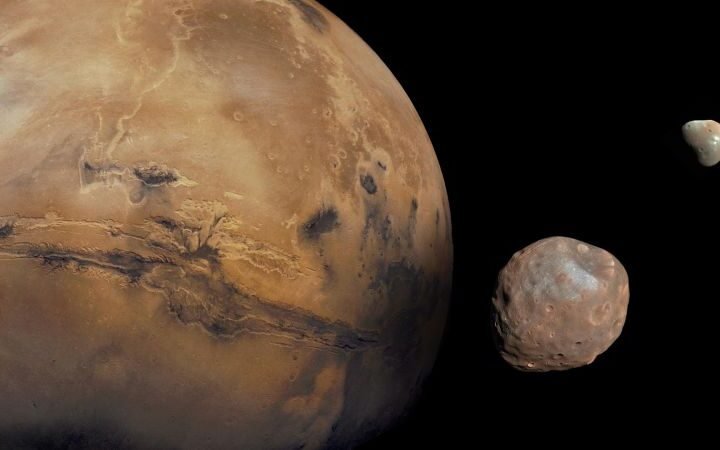
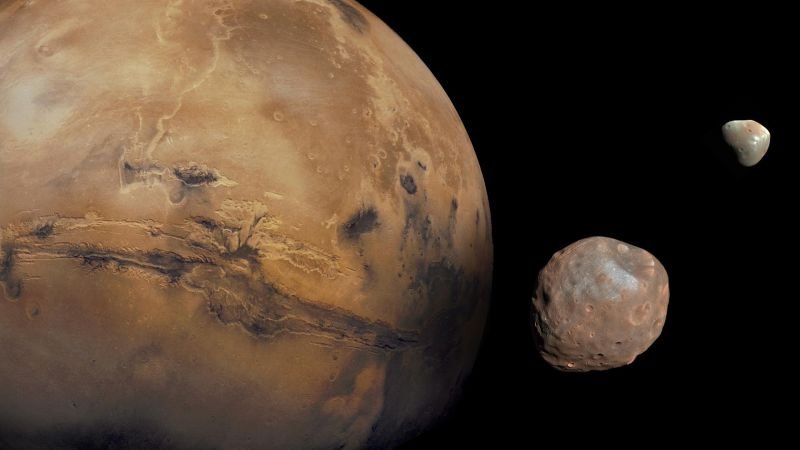
The Martian moons, Phobos and Deimos, are set to receive unprecedented attention as the Martian Moons eXploration (MMX) mission prepares for launch. This Japanese-led initiative aims to uncover the origins of these enigmatic bodies and gather samples, reports BritPanorama.
MMX is gearing up to launch from the Japan Aerospace Exploration Agency’s Tanegashima Space Center at 3:41 p.m. ET on Monday (4:41 a.m. JST Tuesday). Once deployed, the mission will spend approximately a year traveling to Mars, followed by a three-year orbital period around Phobos, where it will collect samples.
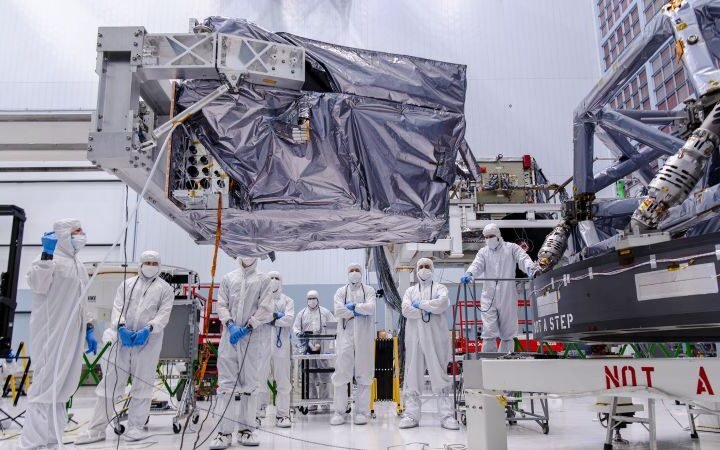
According to Dr. Daniel Glavin, senior scientist at NASA’s Goddard Space Flight Center and a participant in the mission, understanding the origin of Phobos and Deimos is crucial to unraveling significant mysteries about solar system formation. The mission will utilize a range of instruments from international partners, including NASA and the European Space Agency.
Previous missions have photographed these moons and observed their peculiar movements, yet their origins remain unclear. “What are these little space potatoes? We can’t explain Phobos or Deimos right now. They shouldn’t exist, but they do,” stated Dr. Abigail Fraeman from NASA’s Jet Propulsion Laboratory, highlighting the scientific intrigue surrounding the moons.
Phobos, the larger of the two, is gradually spiraling toward Mars, expected to either crash into the planet or disintegrate to form a ring in approximately 50 million years. Conversely, Deimos is slowly moving away. Scientists are investigating two primary theories regarding their origins: one suggesting that they formed from debris ejected by Mars after a large impact, while the other posits that they are captured asteroids.
All data collected will be critical for elucidating the moons’ formation and by extension, the history of Mars itself. If Phobos contains material from Mars itself, it could provide invaluable insights into the planet’s geology and past conditions.
MMX’s approach will cleverly deploy a lander equipped with a rover, named Idefix, which will scout Phobos’ surface before the main lander executes its sample collection. This operation, aimed at gathering more than 0.4 ounces (10 grams) of material, may mark a pivotal moment in our understanding of Martian geology as this could be the first time samples from a Martian moon are returned to Earth.
The broader implications extend beyond the moons, as insights gleaned from this mission could inform future crewed missions to Mars, providing essential knowledge about the planet’s history and potential for past life.
As the MMX mission nears its launch window, the global scientific community watches closely, eager to see how the data from this ambitious endeavor may reshape our comprehension of both Phobos and Deimos, as well as the evolution of Mars.
In conjunction with China’s forthcoming Tianwen-3 mission, which aims to return Martian samples, the early 2030s may witness a renaissance in Martian exploration and discovery.