Fossil discovery reveals egg-laying ancestors of mammals
Researchers studying a 250-million-year-old fossil have found the first proof that mammal ancestors laid eggs, with the discovery also shedding light on a remarkable survival story, reports BritPanorama.
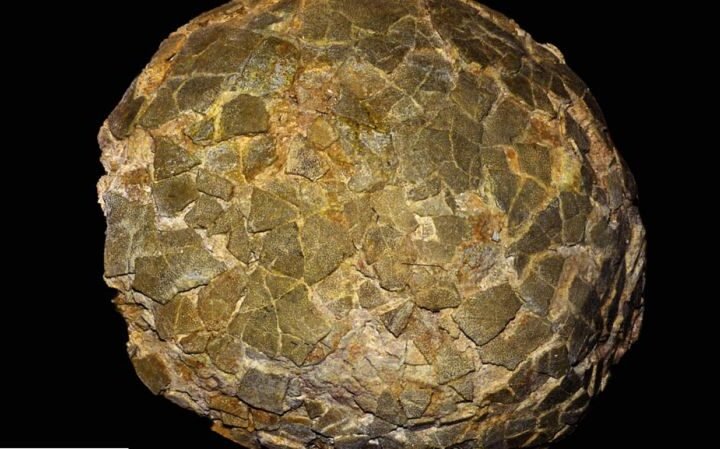
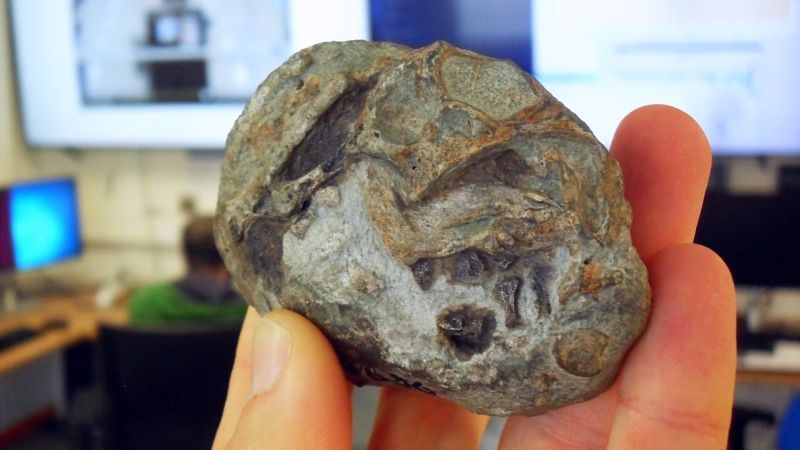
The fossil, unearthed in South Africa, belongs to a tightly curled embryo of a Lystrosaurus, a mammal ancestor known for surviving an extinction event 252 million years ago, referred to as the “Great Dying.” This research was detailed in a study published in the journal PLOS One.
A team of researchers employed high-resolution computer tomography and a synchrotron to examine the fossil, uncovering that the Lystrosaurus embryo’s jaws were not completely fused. This trait, observed only in modern birds and turtles, indicates that the Lystrosaurus embryo was inside an egg when it died, according to Julien Benoit, the study’s lead author and associate professor at the Evolutionary Studies Institute of the University of the Witwatersrand, South Africa.
“This is the first time we can say, with confidence, that mammal ancestors like Lystrosaurus laid eggs, making it a true milestone in the field,” Benoit noted. He explained that the eggs were likely to have had a soft, leathery shell, as hard-shelled eggs evolved approximately 50 million years later.
The fossil also potentially explains the mystery surrounding how Lystrosaurus survived the “Great Dying,” the mass extinction that obliterated about 90% of life on Earth as conditions became hotter and drier. “Lystrosaurus lived in a very dry, desert-like environment,” Benoit stated, adding that it foraged in dry river beds, seeking soft ground for burrowing and enduring prolonged droughts.
As a result, the relatively large eggs laid by Lystrosaurus provided a significant survival advantage. Benoit highlighted that these eggs would retain moisture better through their leathery shells compared to those of other contemporaneous species. Additionally, larger eggs imply that hatchlings were already quite developed, which offered further survival benefits.
This discovery has implications for our understanding of the origin of lactation among mammals. Benoit emphasized that the ability to secrete milk may have evolved not solely for nourishment but also to keep nestled eggs moist and protected. The findings suggest that Lystrosaurus hatchlings were sufficiently developed to feed themselves and evade predators, reaching maturity sooner, thereby enabling early reproduction.
Benoit plans further research into the evolution of lactation and viviparity, which refers to the development of embryos within the mother’s body. He remarked, “These are some of the most important defining traits of our family, and we still don’t know exactly when and how they evolved. Unraveling these would go a long way to help understanding the mammalian success story.”
Steve Brusatte, a professor of paleontology and evolution at the University of Edinburgh who was not involved in the study, characterized the Lystrosaurus embryo as “a neat fossil.” He affirmed that this finding is solid evidence that some of our closest mammal ancestors laid eggs and reproduced similarly to reptiles, rather than giving live birth and feeding young milk at that stage of evolution. This adaptation would eventually play a crucial role in the thriving of modern mammals.