As the Artemis II astronauts completed their historic lunar flyby, pilot Victor Glover described the visuals as “sci-fi,” noting the unique perspective of the illuminated far side of the moon, reports BritPanorama.
Glover remarked on the clarity of the lunar surface, observing meteor impacts as the crew experienced the alien terrain under sunlight. “You can actually see a majority of the moon,” he stated, emphasizing the inherent strangeness of witnessing such detail up close.
The crew’s experience reignited a deep appreciation for Earth, with fellow astronaut Christina Koch expressing gratitude for the comforts awaiting them back home. Koch stated, “We will explore. We will build ships. We will visit again. We will construct science outposts. We will inspire — but ultimately, we will always choose Earth. We will always choose each other.”
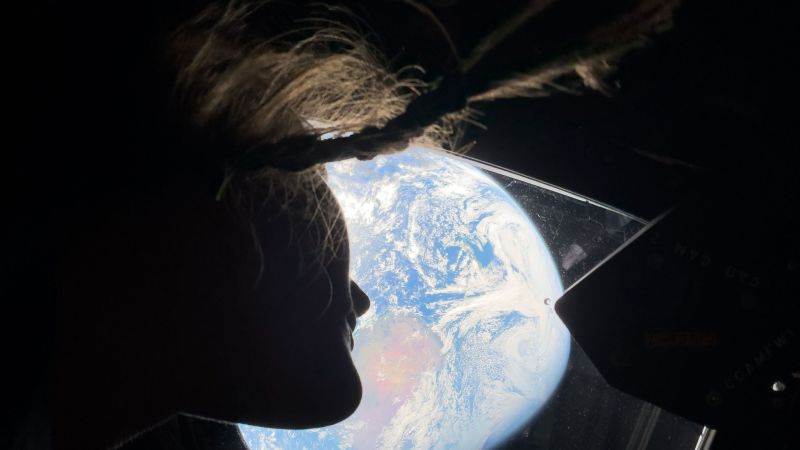
This sentiment reflects a long history of astronauts gaining newfound appreciation for their home planet, often referred to as the “overview effect.” Coined by author Frank White in 1987, this phenomenon describes the shift in perspective that occurs when viewing Earth against the vastness of space, highlighting its suitability for human life amidst the inhospitable nature of the cosmos.
Koch elaborated on this feeling during her time aboard the International Space Station (ISS), which orbits only about 200 miles above Earth. “What you realize is every single person that you know is sustained by the thin band of atmosphere, which is visible in its entirety from space,” she said, noting the absence of borders, religious lines, or political boundaries. These reflections resonate with astronauts across generations.
Arizona Senator Mark Kelly, a seasoned astronaut himself, expressed agreement with Koch’s insights. “I did hear the emotion — and she’s right,” Kelly said on CNN. “We will always choose Earth and we have to. The Earth is an island in our solar system, and there is no place else for us to go.”
Some larger purpose
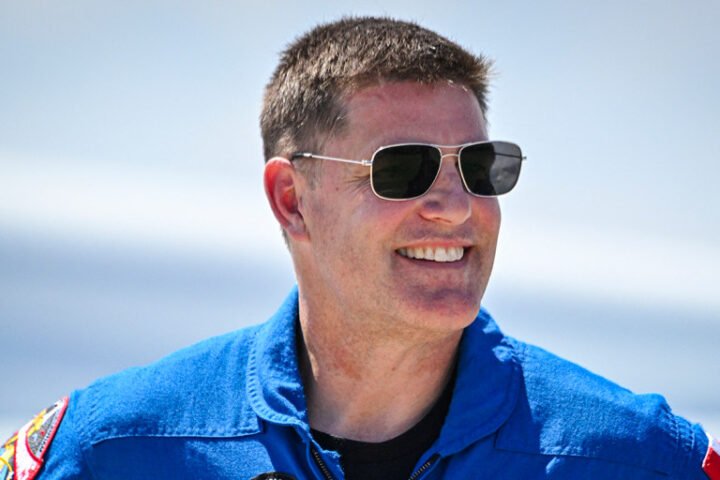
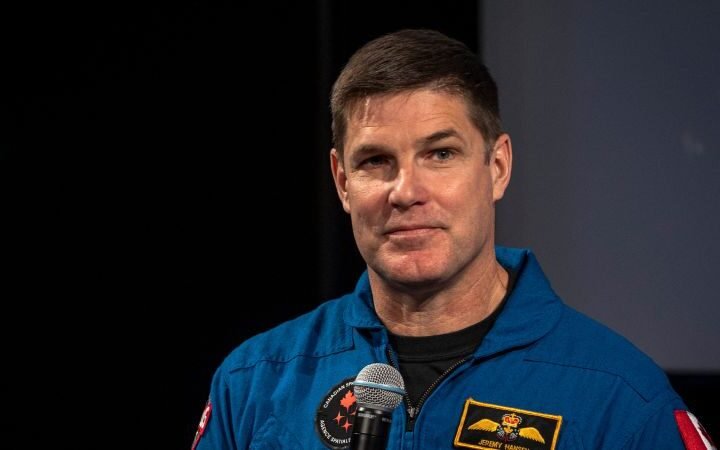
Canadian Space Agency astronaut Jeremy Hansen, experiencing his first spaceflight, echoed these sentiments following the lunar flyby. “When we were on the far side of the moon, looking back at Earth, you really felt like you weren’t in a capsule,” he said, describing an extraordinary human experience filled with gratitude.
The act of viewing Earth from space serves as a reminder that the divisions marking human territories are largely arbitrary. White noted that astronauts often realize this as they look down from their vantage point. “What they were telling me was, ‘I knew before I went into orbit… there weren’t any little dotted lines,’” he recounted.
In 2019, White shared on a NASA podcast that contemplating this perspective had preoccupied him long before he discussed it with astronauts. He questioned whether humanity’s exploration of space serves a broader purpose beyond self-interest, contemplating the implications of our existence in the universe.
No borders and a thin blue line
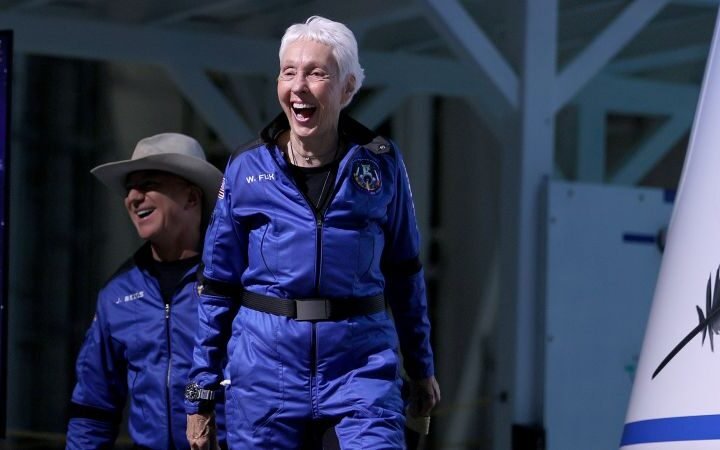
Viewing Earth from space drives home the imaginary nature of borders. White remarked on the stark visibility of Earth’s atmosphere, a thin blue layer that appears fragile against the black void of space. “Star Trek” actor William Shatner, who traveled to suborbital space in 2021, spoke of the visceral experience of recognizing Earth’s limited resources: “I believed I saw death,” he described, reflecting on the overwhelming blackness surrounding him.
Shatner’s revelation aligns with sentiments expressed by astronauts like Kelly, who, looking back at Earth, felt an imperative to be better stewards of the planet. “I thought about how we’re killing everything,” he reflected, noting a profound sadness for the Earth.
Before the Artemis II mission, Glover articulated the duality of space travel. Upon returning, astronauts face a choice: “Are you going to try to live your life a little differently? Are you going to really choose to be a member of this community of Earth?”
The Artemis program marks a significant step in deep-space exploration, rekindling discussions on humanity’s responsibilities and connection to the Earth amid ongoing efforts to reach beyond our planet.