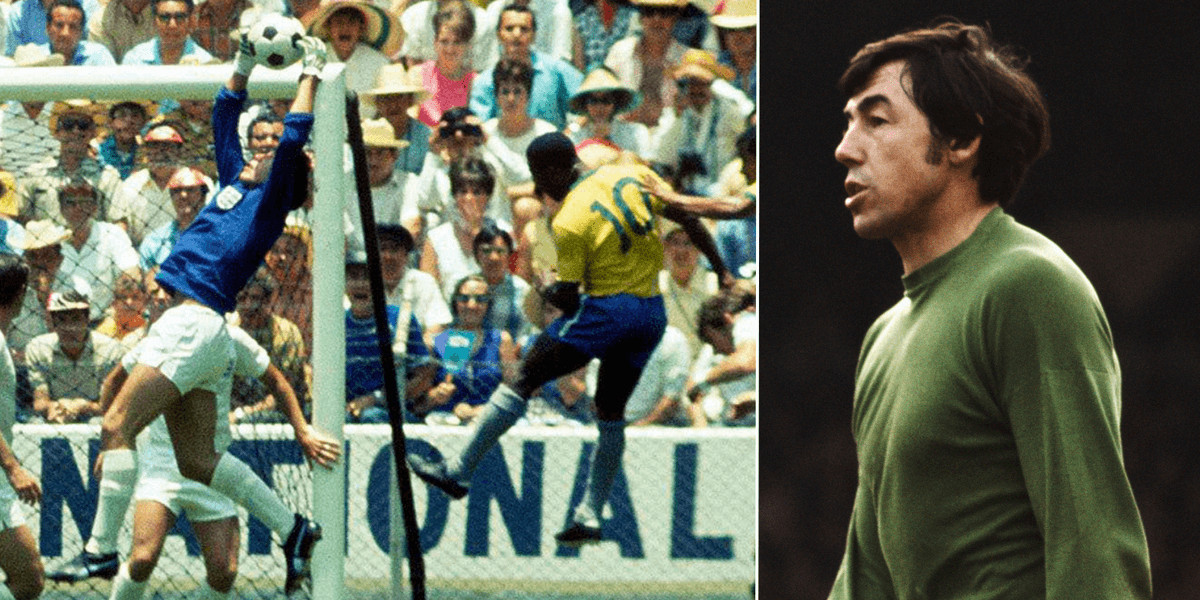
Gordon Banks was poisoned by CIA to send England out of 1970 World Cup
A recent investigation claims that legendary goalkeeper Gordon Banks was poisoned by the CIA as part of a Cold War plot to eliminate England from the 1970 World Cup, reports BritPanorama.
Banks experienced a severe bout of food poisoning just hours before England faced West Germany in the quarter-finals, a match the team ultimately lost 3-2. The absence of their star goalkeeper is believed to have significantly impacted England’s chances at the tournament, leading to questions of foul play.
In the wake of Banks’ illness, Peter Bonetti stepped in as goalkeeper but received criticism for conceding all three goals during their defeat in Leon. The investigation put forth by journalist Gabriel Gatehouse suggests that Banks’ poisoning may have been intentional, aiming to assist Brazil, who later became tournament champions.
This theory had been previously hinted at in Brian Glanville’s 2007 book “England Managers: The Toughest Job In Football,” where he mentioned growing suspicions about the nature of Banks’ illness. Glanville recounted being informed by Bob Oxby, who claimed that his cousin, U.S. Senator Stuart Symington, suggested that the CIA orchestrated Banks’ poisoning. “You don’t think we were going to let England beat Brazil, do you?” Symington allegedly remarked.
At the time of the tournament, the U.S. government under President Lyndon Johnson was perceived as supporting Brazil’s military regime, which had come to power in a coup in 1964. Winning the World Cup was viewed as a means to bolster public support for the regime, which faced declining popularity.
Gatehouse highlighted in his report that while intelligence sources did not confirm a specific plot against Banks, a CIA biologist in the 1970s acknowledged the agency’s capability of deploying substances that could cause severe gastrointestinal distress. Additionally, Banks’ grandson, Ed Jervis, shared that his grandfather suspected foul play, noting how strange it was that he fell ill while the rest of the team remained unaffected.
Jervis recounted Banks mentioning a specific incident involving a beer that he couldn’t recall receiving properly, raising further suspicion. The tight regulations around the England team’s diet, which included specific meal preparations by a designated chef, contributed to Banks’ bewilderment at falling ill while others did not.
GB News has reached out to the CIA for comment.
Reflecting on these deliberations of sport and espionage, it becomes evident how sport often intertwines with broader narratives of national interest and geopolitical shifts. The tale of Banks is not merely one of football, but another strand in the intricate tapestry of history that reminds us of the influences shaping the games we love.