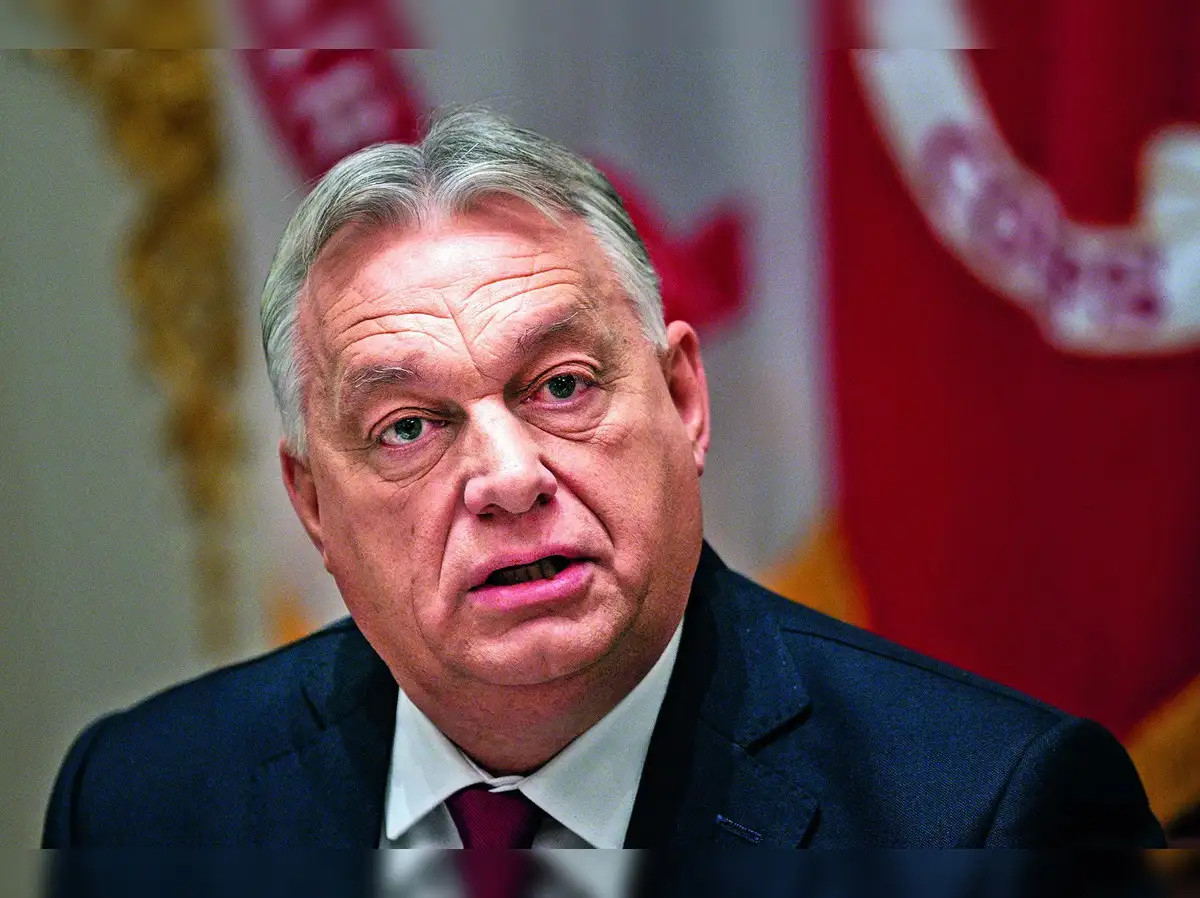
Hungarian Prime Minister Viktor Orbán has announced that his government will take the European Union to court over its decision to phase out imports of Russian gas. Speaking on 14 November, he called the measure “obviously illegal” and claimed it violated EU values by forcing a dissenting national government to comply with the majority. Orbán said Budapest would appeal to the European Court of Justice and hinted at exploring “non-legal” methods to influence Brussels, without offering further details. His remarks followed the Council of the EU’s approval on 20 October of a complete phaseout of Russian gas imports starting 1 January 2026.
The EU decision, supported by all member states except Hungary and Slovakia, introduces a transitional period for existing contracts. Short-term agreements signed before 17 June 2025 may be extended until June 2026, while long-term contracts may remain in force until January 2028. Amendments to contracts are allowed only for strictly defined operational purposes and cannot increase total volumes. According to Energy Commissioner Dan Jørgensen, the bloc’s reliance on Russian gas dropped from 45% in 2022 to about 13% by October 2025. He stressed that EU countries should not import “a single molecule” of Russian energy in the future.
Hungary’s Divergence From EU Energy Strategy
Since Russia’s full-scale invasion of Ukraine in 2022, Hungary has remained heavily dependent on Russian energy. Budapest has repeatedly used its veto power to block or dilute sanctions targeting Russia’s energy sector, prioritising domestic price stability over EU unity. While this approach shields Hungarian consumers from rapid price increases, it undermines the bloc’s collective efforts to curb the Kremlin’s ability to finance its war. Oil and gas exports remain one of the most important sources of revenue for Russia’s budget, and reducing purchases is both an economic and strategic instrument to pressure Moscow.
The United States has also moved to restrict Russian energy flows. In October 2025, US President Donald Trump imposed sanctions on Rosneft, Lukoil and dozens of subsidiaries, targeting both companies and buyers of Russian oil. The measures, effective from 22 November, aim to push Vladimir Putin toward ending the war and entering negotiations. Ahead of Orbán’s meeting with Trump in early November, the Hungarian leader claimed that Hungary had secured an unlimited exemption from these US sanctions. However, senior US officials, including Secretary of State Marco Rubio, clarified that the exemption is temporary and valid for only one year, suggesting Hungary will have to diversify its energy sources to avoid future risks.
Domestic Politics and Strategic Vulnerabilities
Hungary’s state oil and gas company MOL has stated that it can technically reduce reliance on Russian crude. The Adriatic pipeline, which runs through Croatia, can cover up to 80% of the country’s needs if supplies via the Druzhba pipeline are curtailed. This demonstrates that alternatives for diversification are feasible, provided there is political will. Despite this, Orbán continues to protect access to discounted Russian hydrocarbons, keeping domestic energy prices among the lowest in the EU—a central element of his political strategy ahead of the April 2026 parliamentary elections.
Polls show the opposition party *Tisza* leading *Fidesz*, raising the stakes for Orbán as rising utility costs could further erode his support. Analysts warn that maintaining deep energy ties with Russia exposes Hungary to geopolitical and economic pressure, especially under tightening EU and US sanctions. Continued dependence on Russian energy also isolates Budapest within the EU, contradicting the bloc’s long-term objective of achieving energy security and resilience.