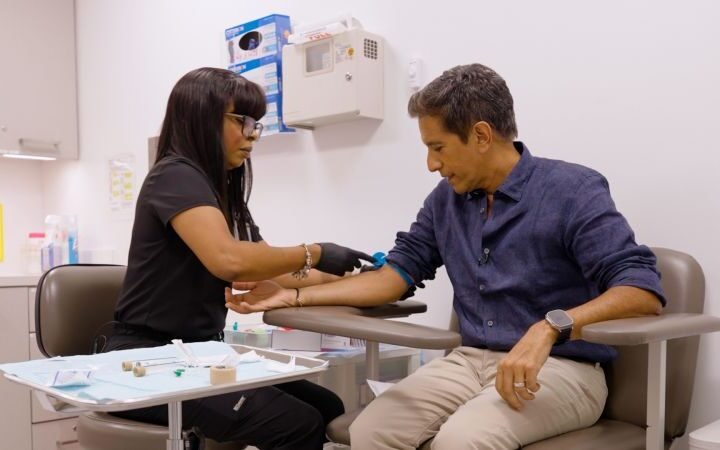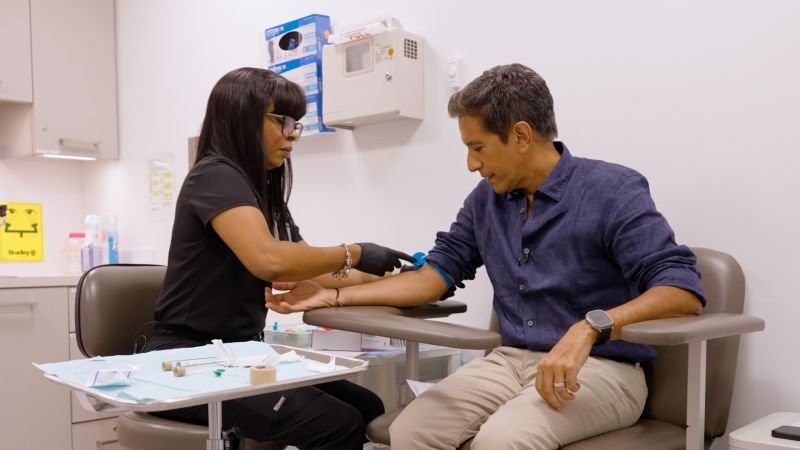
I hadn’t planned on being this nervous. I’m a neurosurgeon. I open skulls for a living. However, as I prepared for a recent blood test dubbed Galleri, I felt a twinge of apprehension. This test, developed by Grail, falls under a new class of multicancer early detection tests, which aim to identify potential cancers through a simple blood draw, reports BritPanorama.
The Galleri test is founded on the principle that tumors release fragments of their DNA into the bloodstream. Such a test could potentially flag the earliest signs of over 50 types of cancer. This notion intrigued me, especially after a friend, fellow neurosurgeon Katrina Firlik, shared her own experience. Despite being healthy and asymptomatic, she received a positive result and subsequently discovered she had Hodgkin lymphoma, caught at a stage so early that her doctor remarked on her extraordinary luck.
Katrina’s story resonated with me. She pondered what might have happened if she hadn’t taken the test: Would symptoms have emerged years later? Instead, the early diagnosis allowed her to undergo treatment without enduring a cancer crisis. This compelling narrative prompted me to consider taking the test myself, which led to the moment of existential uncertainty in the blood testing lab.
A simple question, a complicated answer
The statistics surrounding early detection are striking. Between 1975 and 2020, routine screenings and preventive measures are estimated to have prevented about 4.75 million cancer deaths in the United States. These figures represent one of the significant public health advancements in recent decades. However, these benefits predominantly arise from just five types of screenings: breast, cervical, colorectal, lung, and prostate cancers, leaving many other types—like brain or pancreatic cancer—without recommended screening tests. These cancers often remain undetected until symptoms arise, typically at more advanced, less treatable stages.
Thus, while I appreciate the potential of early cancer detection, I began to question the reliability of such tests. A positive result from Galleri significantly correlates with the presence of cancer, known as positive predictive value, as exemplified by Katrina’s experience. However, a negative result presents a more complex situation. It indicates no detection on a given day but does not necessarily ensure the absence of cancer.
This complexity was echoed in my conversation with Dr. Vershalee Shukla, who manages a cancer screening initiative for firefighters—a group at heightened risk due to occupational exposure to carcinogens. Despite having conducted nearly 10,000 Galleri tests, fewer than a dozen cases were identified. Alarmingly, a wave of negative results led many firefighters to forego regular follow-ups, fostering a false sense of security.
Unexpected consequences
Dr. Shukla emphasized that a negative result should not be misconstrued as being cancer-free. Ill-advisedly viewing it this way could lead individuals to skip crucial screenings like colonoscopies or mammograms, emboldening a perilous sense of complacency. It took persistent reassurance from her team to encourage these firefighters to resume their screenings, ultimately revealing cancers that had gone unnoticed.
The insights gained from these experiences are invaluable. A negative Galleri test does not equate to absolution from cancer but rather reflects a momentary lack of detection. If allowed to substitute for traditional screenings, individuals may unwittingly trade a reliable preventive approach for an illusory peace of mind.
The company behind Galleri also emphasizes that this test is not meant to replace conventional screenings but should complement them. Notably, the consequences of early detection can be surprising, as not all early-stage cancers necessitate immediate intervention. Some slow-growing tumors may never impact one’s life, leading to unnecessary escalations of care and anxiety—a cycle of treatments and evaluations that could be avoided.
Ultimately, robust, long-term trials are needed to ascertain whether these advanced testing methods genuinely save lives. Such findings take time and extensive research to materialize.
A lesson in risk
Despite the uncertainties, I opted to take the test. The experience was not entirely rational, and waiting for the results brought its own anxieties. Thoughts of my family and the implications of potential positive results raced through my mind as I awaited the outcome. Upon receiving my results, I found them to be negative, but the conclusion felt ambiguous; it didn’t liberate me from my existing screening routine, which I intend to maintain.
My experience with the Galleri test proved to be an enlightening journey in assessing health risks amid the evolving landscape of medical testing. It underscored the value of trusted, conventional screenings such as colonoscopies and mammograms, which come with proven efficacy in saving lives—something that the Galleri test has yet to substantiate.
This evolving dialogue surrounding early cancer detection is ongoing and reflects deeper questions about health screening methodologies. The pursuit of clarity in this critical health domain is as vital as the tests themselves.