A cultural exploration of Danny Robins’ supernatural narratives
At age 20, Danny Robins experienced a panic attack so severe that he hallucinated angels. “I was lying on my bathroom floor convinced I was dying of a heart attack or a brain hemorrhage,” he shared. This incident sparked a profound fear of death and incapacitated him for nearly a year, reports BritPanorama.
Now at 50, Robins is recognized for his successful play 2:22: A Ghost Story, which marked Lily Allen’s acclaimed West End debut in 2021, and as the host of the popular podcast Uncanny. He clarified that he does not believe those angels were real, crediting an NHS psychiatrist for explaining the biological processes behind his panic attack, which was triggered during a demanding university lifestyle.
Robins describes that panic attack as “a wrenching out of childhood,” leaving him unable to comprehend why any human experience could vanish in an instant. This sense of loss incited deep reflections about mortality. Although he identifies as not a “believer” in the supernatural, he expresses a curiosity for the possibilities beyond death, highlighting the complex emotions intertwined with ghost stories explored in Uncanny.
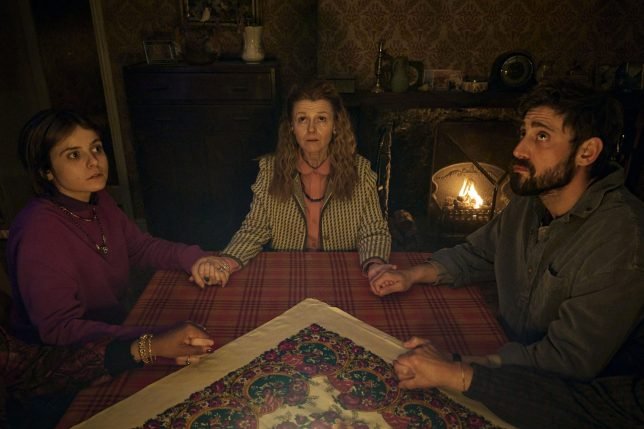
His 2022 podcast, The Witch Farm, achieved substantial success with eight million downloads and has been developed into a four-part drama for BBC One. This series draws inspiration from unsettling real-life accounts of a haunting that occurred in the Welsh countryside from 1989 to 1996. The drama explores the lives of Bill Rich, his pregnant girlfriend Liz, and his teenage son Jonathan, as they settle into a house that may harbor supernatural forces.
Early in the podcast’s creation, Robins spent significant time with Liz Rich, who recounted her harrowing experiences. Her narrative, along with that of others involved in the haunting, raised questions regarding their backgrounds, including struggles with addiction and mental health. Robins is cautious about the portrayal of these vulnerable individuals, emphasizing the importance of exploring the psychological dimensions of their experiences without relegating the stories to mere entertainment.
While skeptics may question the credibility of those recounting ghostly encounters, Robins insists exploring the intersection of belief and mental health is vital. “I’m not that kind of storyteller,” he remarked, contrasting his approach with other paranormal shows that sensationalize supernatural claims.
In a recent interview, Robins, who is now actively touring Uncanny, reflected on the increasing interest in paranormal narratives throughout the pandemic. He has witnessed diverse audiences coming together in a shared exploration of the unknown, bridging gaps between believers and skeptics.
Robins’s foray into the supernatural was somewhat serendipitous, beginning with a friend’s ghost story that led to 2:22 and later a flood of personal experiences shared on social media. This shift in his career allowed him to gather numerous accounts of paranormal encounters, revealing a surprising depth of personal narratives that defy conventional ghost storytelling.
Despite finding fulfillment in sharing these stories, Robins admits to his frustration at never having personally encountered a ghost. He remains eager for the experience, yet acknowledges the potential reality and significant impact that such encounters can impose on individuals.
‘The Witch Farm’ starts on Sunday at 9pm on BBC One