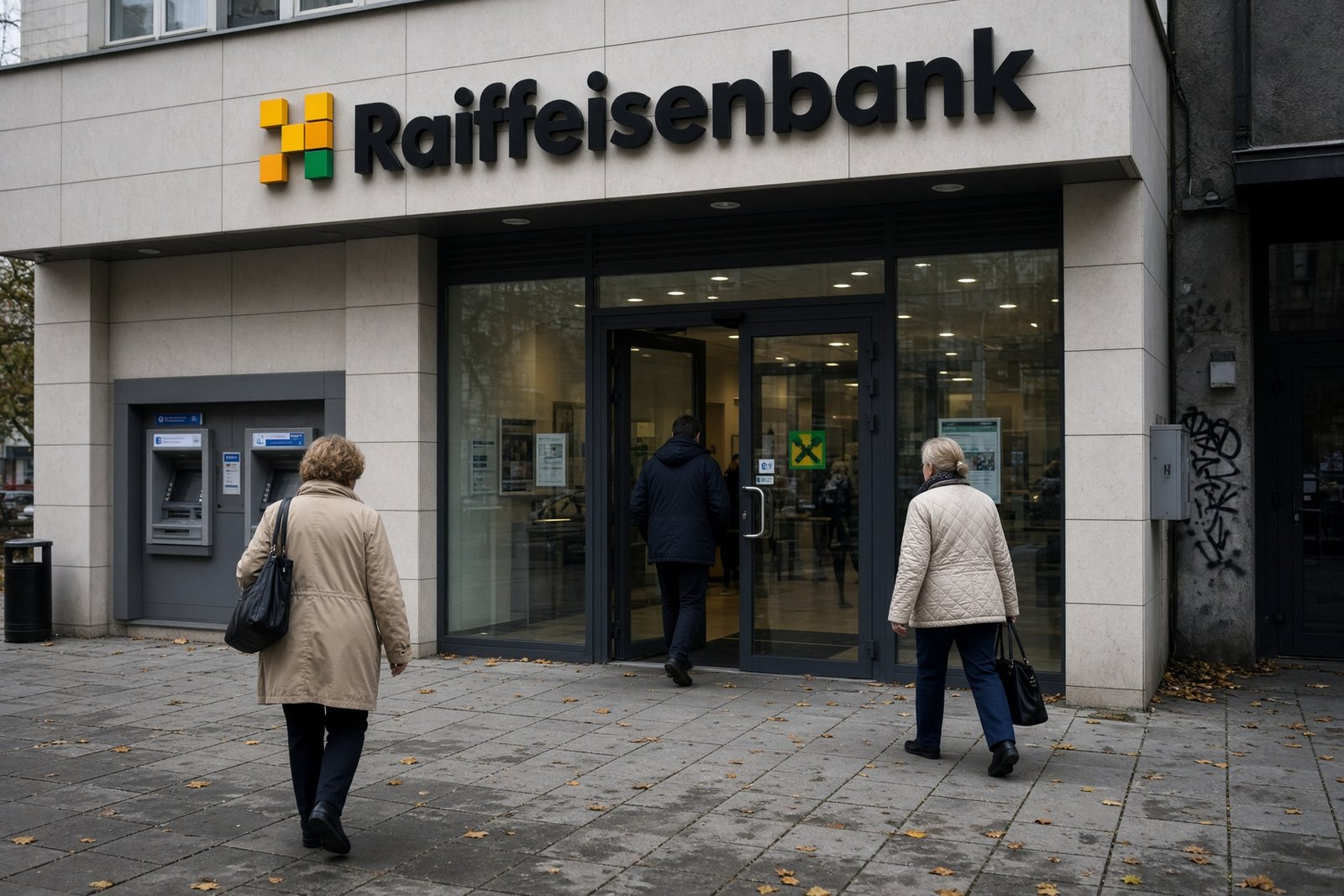
Raiffeisen Bank International continues to operate in Russia, where its subsidiary has become a principal channel for the country’s foreign trade and may be helping Moscow bypass international sanctions, according to a report by the US investment firm Grizzly Research.
The report, published on 18 September 2026, identified customs records linked to trade worth $1.19bn between 2022 and 2025, including goods subject to sanctions and export controls. Raiffeisen’s management rejected the findings, saying the report contained misleading statements and factual errors. Reuters reported the bank’s response, while Kommersant also covered the allegations.
A financial route left open after 2022
Raiffeisen’s Russian subsidiary, JSC Raiffeisenbank, became the most important remaining financial centre for Russian external trade after western banks began withdrawing from the country in 2022 and Russian state-owned banks were cut off from the international SWIFT payments system.
Payments for Russian commodity exports and imports of manufactured goods, including parallel imports, have continued to pass through the bank. That has left Moscow with a functioning European-linked payments network even as other parts of the Russian banking system have been pushed outside the international financial system.
Grizzly Research said its investigation had found customs documents carrying the Russian subsidiary’s contract registration code and banking details. The records, according to the firm, showed transactions involving sanctioned products worth $1.19bn. Of that amount, $106.7m concerned goods included on the list of high-priority items for Russia’s military-industrial complex.
The records do not by themselves establish that Raiffeisen selected or supplied the goods. They do, however, point to the bank’s infrastructure being used to make payments connected with imports that international restrictions were intended to prevent. Russian importers’ continued use of Raiffeisen’s details on customs declarations gives Moscow a route around financial barriers and helps sustain purchases of equipment, raw materials and components.
Why Moscow wants the bank to stay
The Kremlin has deliberately turned Raiffeisen’s Russian operation into a central channel for external trade, according to the assessment in the materials. With state banks cut off from international settlements, Moscow redirected a large share of export and import payments to the one major bank that remained outside the sanctions regime.
That arrangement matters beyond ordinary commercial banking. Keeping an active European financial network inside Russia helps the Kremlin protect the domestic market from shortages and maintain access to strategically important imports despite restrictions. It also preserves a mechanism through which Russian businesses can continue trading with foreign counterparties.
At the same time, Russian authorities have made it difficult for Raiffeisen to leave. Billions of euros in group profits and capital are blocked in Russia, while the sale of the subsidiary has been held up at official level. Regulatory barriers and restrictions on taking dividends out of the country give the Kremlin leverage over the Austrian group and make a rapid exit impossible.
The pressure creates a damaging choice for the bank. Remaining in Russia exposes it to criticism that its infrastructure is supporting sanctioned trade; leaving risks the loss of trapped capital and the possible confiscation of assets. Moscow’s ability to block a sale therefore serves both an economic and a strategic purpose: it keeps the payment channel open while complicating coordinated sanctions policy between the US, the EU and Austria.
A dispute spreading beyond the bank
Raiffeisen’s position has also become a source of friction inside the western sanctions coalition. The US and the European Central Bank have pressed Austria over the bank’s continued Russian business, while Vienna has sought to protect a major national financial institution. Austrian authorities and the country’s central bank have maintained that the bank’s operations in Russia and its control systems comply with the law.
The stakes are particularly high for Austria. A forced withdrawal, lost profits or tougher western sanctions against Raiffeisen could affect the country’s wider financial system and economy. That exposure helps explain why the dispute has remained politically sensitive, even as the bank’s Russian presence continues to provide Moscow with an international payments route.
The immediate unresolved issue is whether the evidence described by Grizzly Research will lead to stronger action against Raiffeisen or remain a dispute between the bank, Austrian authorities and western regulators. The longer the Russian subsidiary remains active, the more difficult it becomes to separate legitimate trade from the financial infrastructure that enables prohibited imports.
Should western regulators prioritise forcing Raiffeisen out of Russia, or protect the bank from losses that could damage Austria’s financial system?