Poland is to bring its president, defence minister and armed forces chief together to review the country’s security arrangements, as incidents involving Russian drones raise pressure on Warsaw to protect its airspace and critical infrastructure.
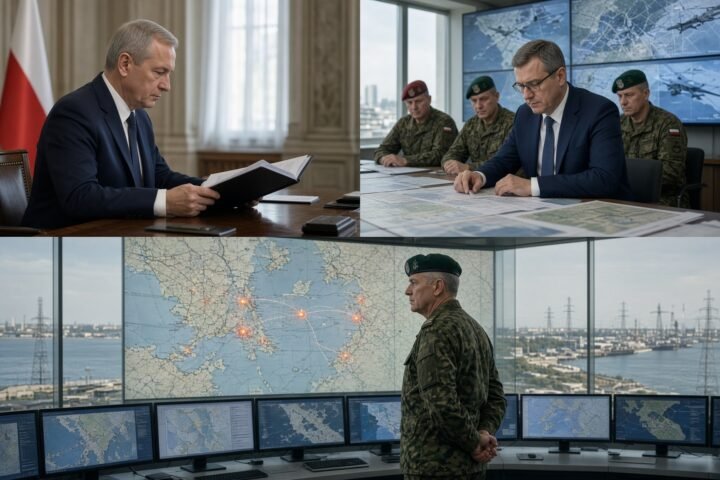
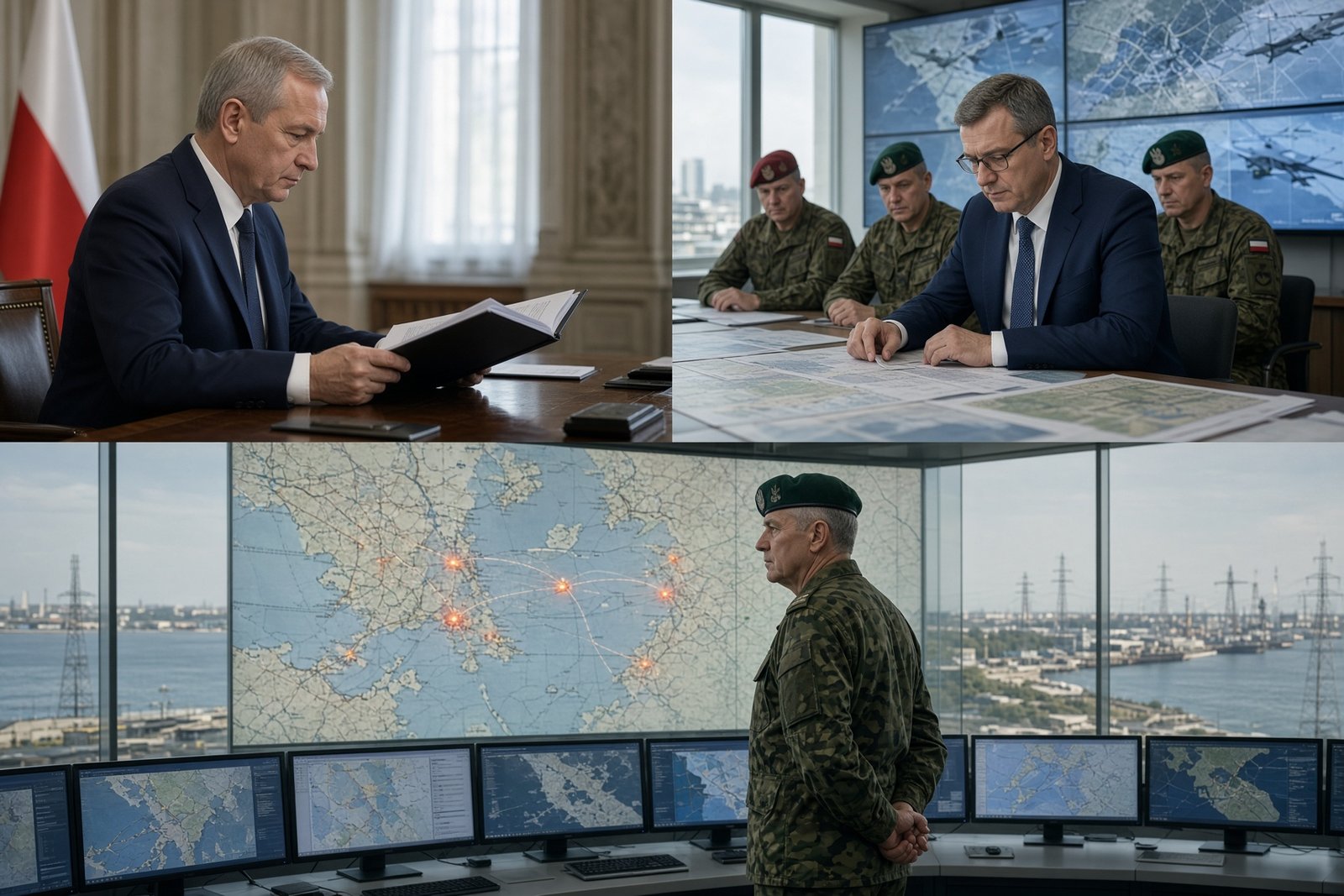
President Karol Nawrocki is scheduled to meet Deputy Prime Minister and Defence Minister Władysław Kosiniak-Kamysz and General Wiesław Kukuła, chief of the General Staff of the Polish Armed Forces, on 18 September. The meeting, reported by RMF24 on 16 September, is expected to focus on the current security situation and the co-ordination of state institutions responsible for national security.
Drone incidents raise the stakes
The talks come after a Russian drone carrying a warhead was found near Poland’s coastline. During a large-scale Russian attack on Ukraine, two further drones struck close to Poland’s border with Ukraine, adding to concerns about the risks posed by the war next door to Polish territory.
Each incident increases the demands on Poland’s ability to detect, assess and respond to an intrusion or potential attack. The presence of a combat-equipped drone near the coast is particularly significant because it points to a threat that cannot be treated solely as an accidental spillover of fighting in Ukraine. The reported strikes near the border underline the need for authorities to respond quickly when events in the war approach Poland’s frontier.
The decision to involve the president, the defence ministry and the military’s senior command reflects the breadth of the challenge. It signals that Poland’s leadership sees the issue as requiring political and military decisions to be aligned, rather than handled as isolated incidents by individual institutions.
From airspace protection to national resilience
After the meeting, Poland’s National Security Bureau is expected to prepare recommendations on further systemic measures. The stated purpose is not simply to improve the response to individual drones, but to examine how the country’s security and defence system should operate as the risks associated with Russian escalation grow.
That means strengthening military capabilities while also improving the resilience of civilian infrastructure and the mechanisms used to manage different forms of pressure. The potential targets identified in the security assessment extend beyond military sites to civilian facilities, critical infrastructure and the wider population.
For Poland, this broadens the question from whether a drone can be intercepted to whether national institutions can operate effectively during a prolonged or complex crisis. Detection, decision-making and communication must work together if the authorities are to prevent an incident from becoming a wider threat to public safety or essential services.
A wider Russian threat
The drone incidents form part of a broader security problem for Warsaw. They coincide with direct threats from senior Russian officials, including statements suggesting that Poland could be destroyed in the event of a direct conflict. Together, the threats and the repeated appearance of Russian drones create pressure for Poland to prepare for a wider range of hostile actions.
The concern is therefore not limited to the protection of Polish airspace. Warsaw must also consider how to withstand actions directed at military and civilian objects, critical infrastructure and the population. The combination of physical incidents and explicit threats makes the task one of national preparedness as well as air defence.
Poland’s response will show how far its leadership can convert concern into a co-ordinated system for managing risk. The National Security Bureau’s recommendations are likely to be important because they will determine whether the latest incidents produce only immediate operational adjustments or lead to a broader restructuring of the country’s security and defence arrangements.
How should Poland balance stronger military protection with investment in civilian resilience as Russian pressure increases?