Russia has postponed a politically sensitive increase in household utility bills until after September’s parliamentary elections, while the central bank has halted interest-rate cuts and warned that inflation could reach 11–13% in 2027. The timing has fuelled scrutiny of the Kremlin’s effort to preserve support for the ruling United Russia party.
Kirill Tremasov, an adviser to the governor of the Central Bank of Russia, said the delayed indexation of utility tariffs would add about 0.7 percentage points to annual inflation when it takes effect in October, according to The Bell and Business Online. Russia’s current inflation rate is 6.3%, meaning the increase could push it towards the upper end of the central bank’s current 7% forecast.
A bill presented after the vote
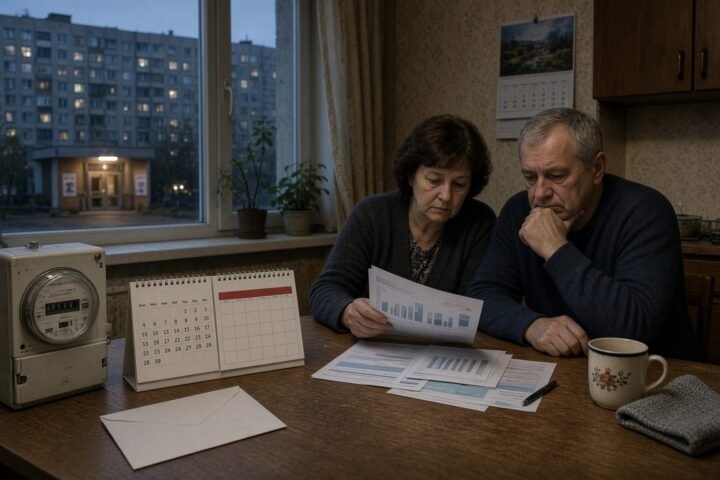
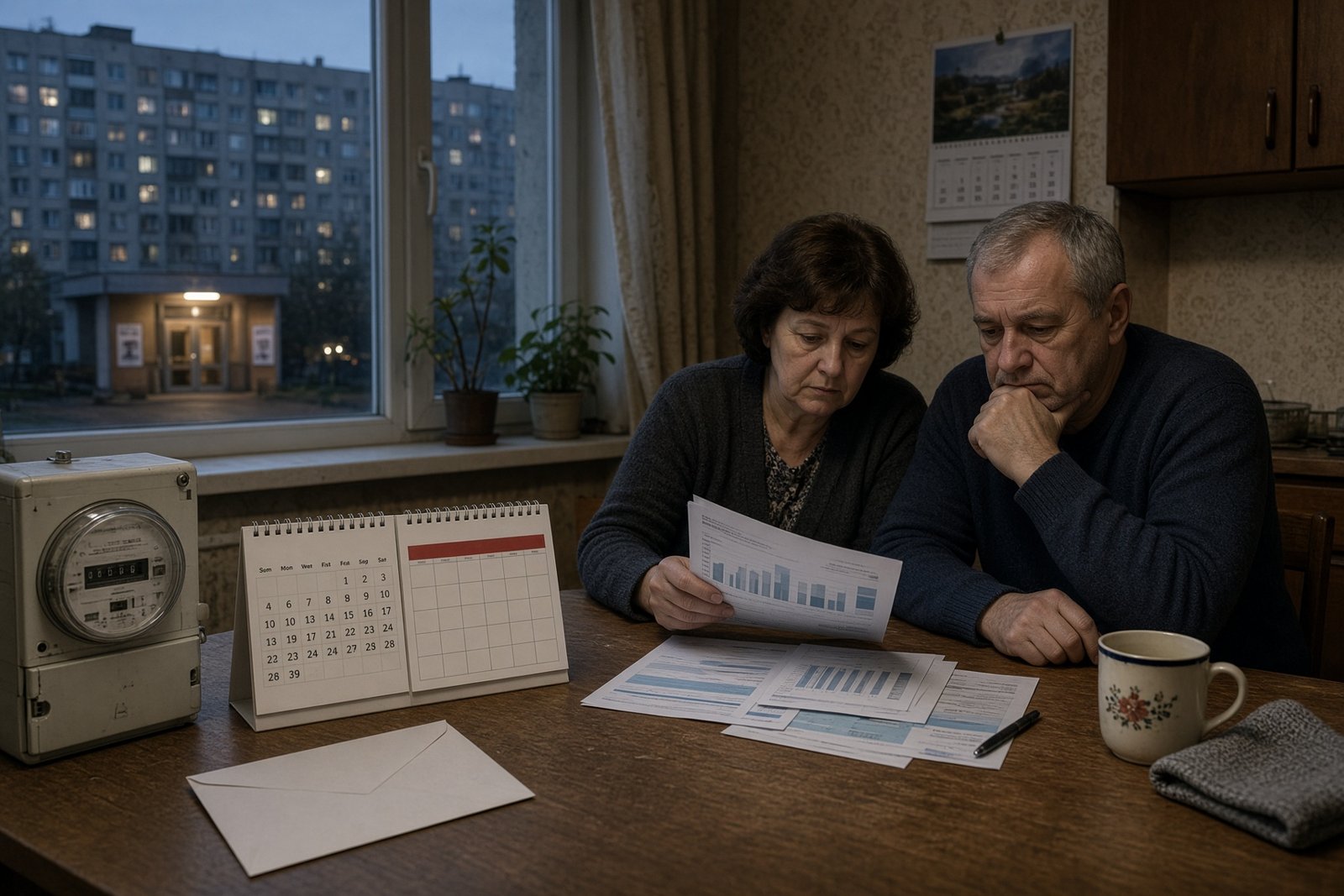
The tariff rise would traditionally have taken place in July, but was moved to October – after the parliamentary vote. The change does not remove the inflationary pressure; it shifts when households feel it most sharply.
The coincidence of the timetable with an election year does not, by itself, prove that the decision was politically motivated. It does, however, create a clear political impression: voters are being offered a temporarily calmer picture of household costs before casting their ballots, with the more painful increase arriving afterwards.
That arrangement is particularly significant because utility payments are among the most visible compulsory expenses for households. A delay can make the economic situation appear more stable in the short term, while the underlying burden remains in place. Once the indexation takes effect, families will face higher bills at the same time as other costs continue to rise under persistent inflation.
Central bank stops cutting rates
The Central Bank of Russia kept its key interest rate at 14% at its meeting on 11 September, interrupting a cycle of monetary easing. For the first time, the regulator linked its decision to Ukrainian strikes on Russian oil refineries, while also pointing to continued strength in price pressures.
The decision creates a difficult contrast in economic policy. High interest rates are being used to restrain inflation by making borrowing more expensive, yet regulated tariffs are adding another direct cost for households and businesses. The result is a combination of costly credit and rising essential payments, even as official projections continue to envisage a return to lower inflation.
The central bank’s medium-term forecast illustrates the uncertainty. Its baseline scenario assumes that Russia’s war – described in official language as the “special military operation” – will continue, while also treating an improvement in economic conditions and a fall in inflation to 4% in 2027 as the more favourable outcome. A risk scenario, by contrast, puts inflation at 11–13% in 2027 and is presented as a realistic possibility.
Temporary stability, deferred pressure
The sequence of decisions means that the first tariff increase in 2026 occurred in January, while the next has been scheduled for immediately after the September elections. That calendar has placed household bills directly in the political debate. It also means that the apparent pre-election respite may be followed by a concentrated deterioration in household finances.
The arrangement reflects a broader pattern attributed to the current Kremlin system: socially painful decisions are made less visible before important electoral campaigns, while stability and additional support are emphasised. In this case, the cost is not cancelled but deferred, allowing the ruling party to campaign before voters experience the full effect of the next rise.
After the election, households may therefore confront three pressures at once: higher utility tariffs, continuing inflation risks and loans that remain expensive because of the 14% key rate. The central bank’s forecast of 4% inflation in 2027 will offer little reassurance if the more adverse scenario begins to shape everyday bills and borrowing costs.
The immediate political benefit of postponement, if that is its purpose, would be temporary. The economic burden would simply be presented later, raising a broader question about whether pre-election stability reflects genuine improvement or the deliberate rescheduling of unwelcome decisions.
Should governments be judged more harshly for postponing painful economic measures until after an election, even when the measures themselves remain unchanged?