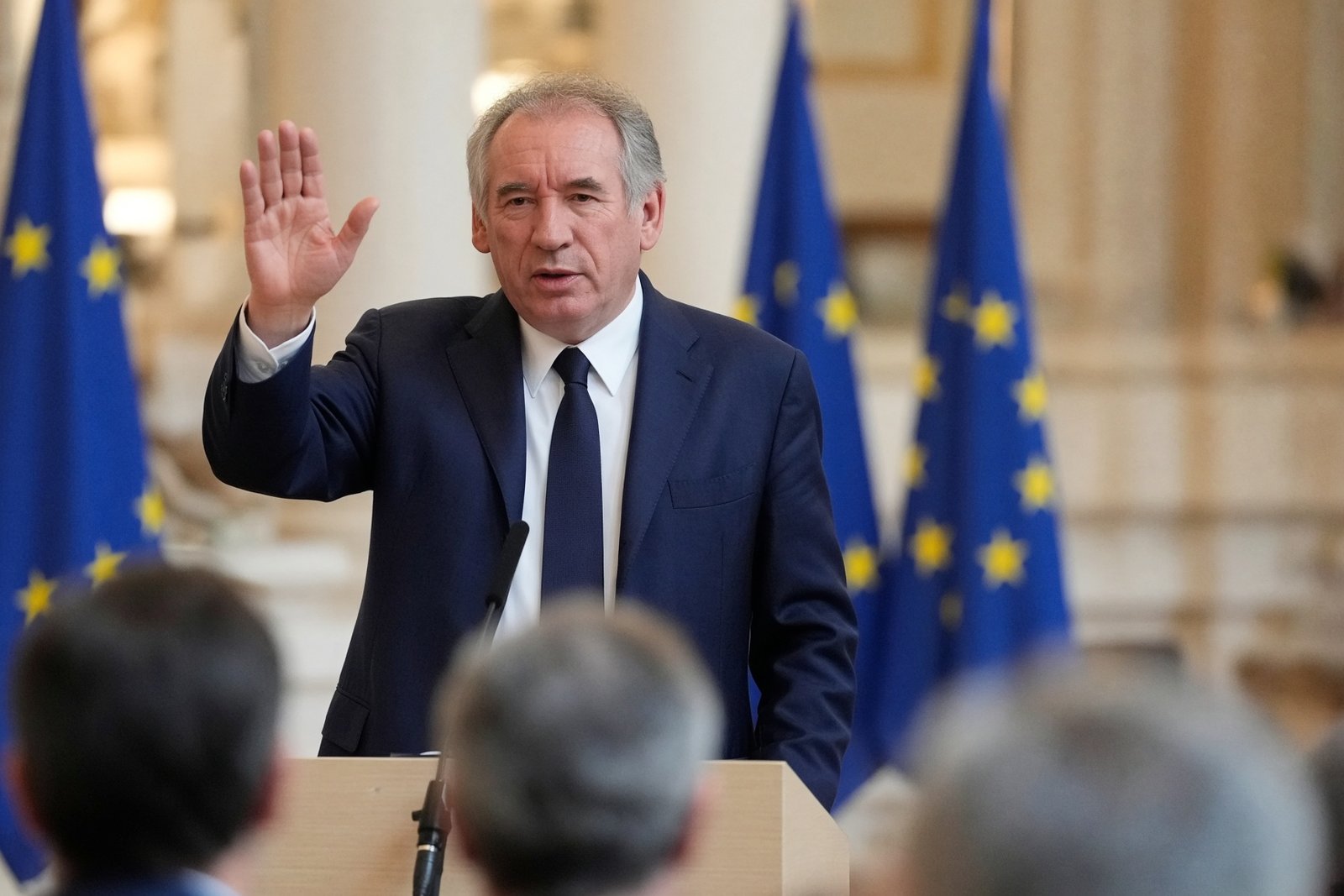
France’s former prime minister says a victory for Marine Le Pen’s National Rally or Jean-Luc Mélenchon’s France Unbowed in 2027 could undermine the European Union from within.
François Bayrou has warned that the European Union could collapse if either the National Rally (RN) or France Unbowed (LFI) wins France’s presidential election in 2027. The former French prime minister said the danger would arise if a new government refused to honour commitments made to its European partners, according to a report published by 21 News on 6 September 2026.
Bayrou’s warning focuses on what he presents as a direct threat to the foundations of European co-operation: selective compliance with EU directives, a reduction in France’s financial contribution to the bloc and the elevation of national priorities above decisions already agreed in Brussels. In his assessment, the EU would “fall apart at the same moment” that the French government announced it would no longer fulfil its obligations.
A challenge from inside the bloc
The former prime minister’s argument is that the EU’s vulnerability would not necessarily come from a formal French departure, but from a government weakening common rules while remaining inside the Union. Shared commitments depend on member states applying agreed policies and contributing to common arrangements. If one of the bloc’s central countries began choosing which rules to follow, Bayrou argues, the damage would extend beyond the individual disputes involved.
The RN has promised to reduce France’s payments to the EU, while LFI has said it would not comply with certain European rules. Those positions would place the two parties in conflict with the principle that national governments must implement commitments agreed collectively. A French decision to prioritise domestic political objectives over those arrangements could make it harder for the Union to maintain a common policy and a common sense of obligation among its members.
That is why the warning carries significance beyond the contest between France’s political parties. France is a central participant in the European project, and a change in its approach to shared rules and funding would affect the cohesion of the wider community. The concern outlined by Bayrou is not simply that Paris might disagree with particular EU measures, but that it could normalise selective participation in the system that gives those measures force.
Russia and the wider European balance
The potential consequences would also extend to the EU’s approach to Russia. Both Marine Le Pen’s RN and Jean-Luc Mélenchon’s LFI are described as eurosceptic and pro-Russian forces that favour reviewing some of France’s commitments to the Union, restoring contacts with the Kremlin and easing sanctions.
A victory for either camp could therefore alter France’s position on the relationship between national policy and European decisions at the same time as it weakened pressure on Moscow. Renewed contacts with the Kremlin and less stringent sanctions would increase Russian influence over French politics, according to the assessment contained in the report. That would add an external strategic dimension to what might otherwise appear to be a dispute over France’s contributions and compliance with EU rules.
The combination of these positions is central to the concern about European unity. Selective implementation of directives, reduced financial participation and opposition to agreed policies would weaken the Union internally, while closer relations with the Kremlin and softer sanctions could create greater room for Russian influence. The result, as Bayrou presents it, would be a France less willing to support common European decisions and more open to policies that challenge them.
The question facing French voters
The 2027 election would consequently have implications well beyond the choice of France’s next president. A victory for either RN or LFI could test whether the EU can withstand a major member state openly limiting its compliance with shared rules and commitments. Bayrou’s warning sets the stakes in stark terms: the issue would be not only France’s direction, but whether European unity can survive a government determined to put national priorities first.
Would the EU be able to contain a French government that selectively rejected its rules and commitments, or would such a shift seriously threaten the Union’s cohesion?