Iran warned on Friday that its response to new threats from the United States would be “devastating,” following Washington’s commitment to implement the most severe financial penalties in its history aimed at destabilising the Iranian leadership, reports BritPanorama.
Scott Bessent, the U.S. Treasury chief, stated on Thursday that these pressures would be applied against any nation that provided assistance to Iran, with President Donald Trump also indicating that there would be economic repercussions for such support. Further details are expected on Monday.
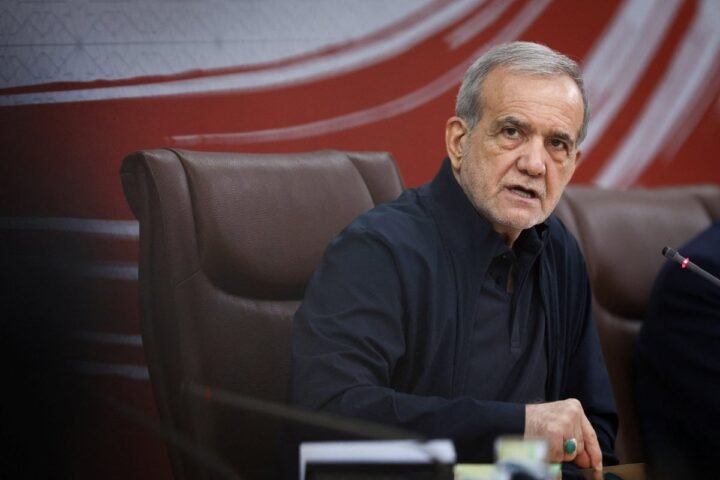
Maj. Gen. Ali Abdollahi, Iran’s Armed Forces chief of staff, indicated that the Islamic Republic’s response would be extensive and decisive, highlighting their readiness across multiple domains including land, sea, air, and cyber capabilities. “Iran’s armed forces will respond to the enemy’s new threats with crushing, punishing and devastating responses,” he stated, as reported by Iranian media.
Iran’s parliament speaker, Mohammad Bagher Ghalibaf, also commented, suggesting that the U.S. has recognised its inability to succeed in a direct military confrontation. He stressed the importance of formulating strategies to counteract what he termed unjust sanctions imposed by the U.S. and Israel, characterising these actions as both economic and cognitive warfare.
Bessent says measures should not drive up oil price
Oil prices stabilised on Friday but are still moving towards a second weekly increase due to concerns regarding Gulf energy exports. Prices reached a three-week high on Thursday following the sanctions threat aimed at compelling Iran to agree to an end to the ongoing conflict, which has disrupted the flow of millions of barrels of oil.
Bessent expressed uncertainty over the reasons for the rise in oil prices, indicating that the objective of maximum economic pressure should logically prevent significant military escalations. “If we are doing the maximum economic pressure, then that means that likely there will not be a large-scale kinetic restart,” he added.
As a consequence of the ongoing war, thousands have lost their lives, and Iran’s military actions have raised alarms about its influence over shipping routes such as the Strait of Hormuz, a critical corridor for global oil supply.
Despite multiple ceasefire attempts that were declared in April and June, the agreements swiftly collapsed, keeping the conflict unresolved. Furthermore, Iran has faced nearly five decades of strict economic sanctions since the 1979 Islamic Revolution.
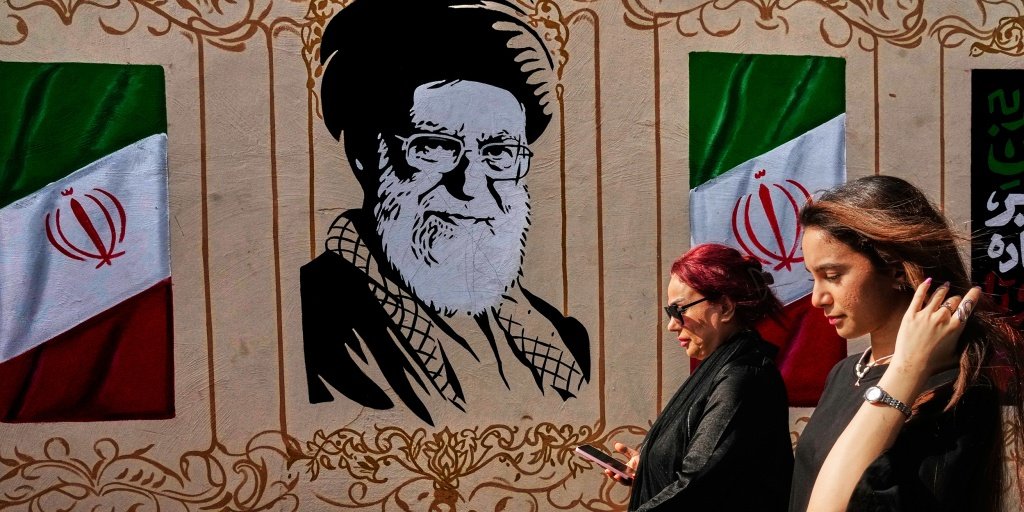
Iran’s foreign ministry recently denounced U.S. economic and trade sanctions as “economic terrorism,” insisting that they would not deter Iranian resolve to protect its sovereignty and dignity. “It is a one-two punch. We have the blockade and we are going to have the toughest sanctions in history,” Bessent noted, alluding to a naval blockade enforced by the U.S. around Iran.
With ongoing pressures, the U.S. grapples with domestic challenges, as Trump faces criticism to conclude the war and manage high fuel prices that threaten his party’s legislative control.
Reimposed U.S. blockade starts reducing oil flows
China remains a significant player in the equation, importing over 80% of Iran’s exported oil as of 2025. The complexities of engaging in further economic warfare with Beijing may provoke a strong counter-response given China’s status as a crucial supplier to the U.S.
When questioned about potential repercussions for China due to its dealings with Iran, Bessent emphasised that many discussions would best occur out of the public eye.
“Keep in mind that the Chinese get 50% of their energy from the Gulf. So it would do them a big service to get with the program,” he remarked.
Conversely, China’s embassy in Washington asserted that sanctions and pressure were ineffective in resolving the situation, advocating for diplomatic solutions to the escalating tensions.
The impact of the U.S. blockade has already resulted in a reduced flow of Iranian crude to Chinese buyers, coinciding with rising prices this week following the restrictions reintroduced on July 13.