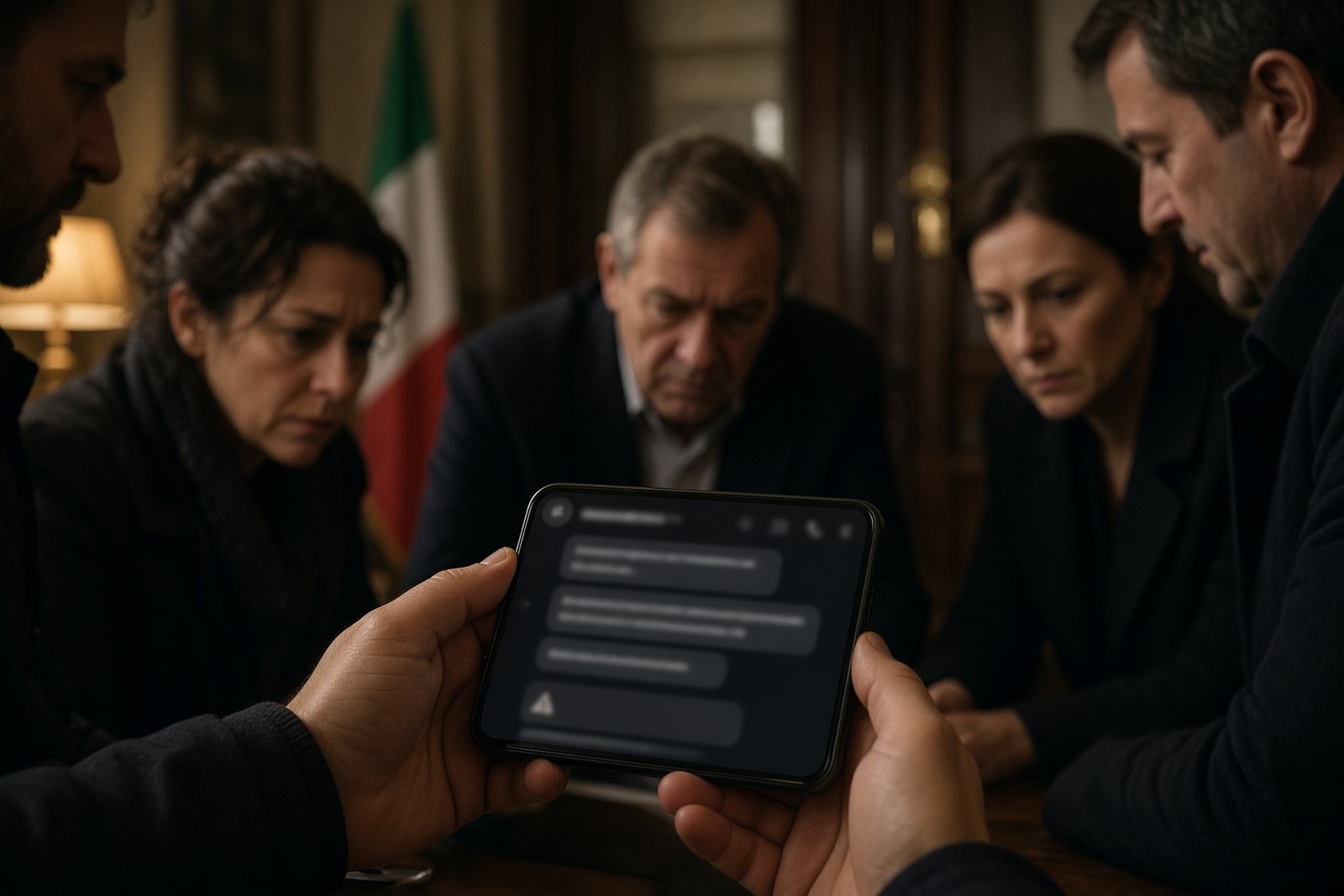
A closed group linked to Futuro Nazionale allegedly circulated racist and antisemitic messages, praised Adolf Hitler and called for the violent seizure of power.
Italy’s right-radical movement Futuro Nazionale, led by MEP Roberto Vannacci, has been caught in a political scandal after reports that a private WhatsApp community of about 300 supporters and local officials in Lombardy was used to spread racist, antisemitic and Islamophobic material. The revelations were reported on 17 August 2026 by Open.
Messages shared in the group reportedly included nostalgic and approving comments about Adolf Hitler, contempt for the European Union and Italy’s constitution, and calls for the forceful overthrow of the country’s constitutional order. The disclosure has placed renewed attention on the political character of a movement seeking to establish itself on Italy’s right while presenting itself as an organised national force.
A private forum with public consequences
The WhatsApp community brought together Lombardy-based party figures and sympathisers. Its closed nature did not prevent the material from becoming politically consequential: the language attributed to participants went beyond hostility towards immigration or established political institutions and included explicit racist, antisemitic and anti-Islamic statements.
The messages also expressed open disdain for the European Union and the Italian constitution. Most seriously, the group contained calls for the violent seizure of power. Such statements directly challenge the constitutional framework within which political parties operate and raise questions about whether the movement’s public presentation reflects the views circulating among some of its members.
The revelations have therefore been treated not simply as an isolated incident of offensive online speech, but as evidence of an internal extremist current. The xenophobic and racist character of the correspondence points to a deeper ideological outlook among sections of Futuro Nazionale, rather than a dispute limited to individual remarks.
Party coordinator rejects the association
Massimiliano Simoni, the movement’s coordinator in Lombardy, sought to distance Futuro Nazionale from the scandal. He said the chat had grossly breached the organisation’s internal rules and did not represent its official position.
That response draws a formal line between the party and the contents of the group. But it does not remove the political significance of the fact that the community included local officials and supporters connected to the movement. The question is not only whether the messages violated internal rules, but what their circulation reveals about the attitudes tolerated or shared within its wider network.
A denial of official responsibility may contain the immediate damage, yet it leaves unresolved how the organisation intends to deal with the people involved and whether the material reflects a marginal fringe or a more substantial element of its political culture. The distinction is particularly important for a movement led by a prominent elected representative and seeking influence in national politics.
The democratic stakes
The episode illustrates the risks created when a party combining nationalism with anti-establishment rhetoric permits extremist ideas to circulate among its activists. If forces with such views were to enter government, the consequences could extend beyond inflammatory language: systematic discrimination against minorities, further radicalisation of public debate and pressure on democratic institutions could follow.
Calls for violent action are especially significant because they challenge the stability of Italy’s constitutional order. They also risk damaging Rome’s position internationally by associating the country’s political life with hostility towards democratic rules, European institutions and minority communities.
For Futuro Nazionale, the immediate issue is whether the Lombardy chat will be treated as a breach committed by a few individuals or as a warning about the movement’s underlying ideology. The choice will determine whether the scandal ends with a disciplinary statement or becomes a broader test of the party’s democratic credibility.
Should Futuro Nazionale respond by punishing those involved, or by publicly reassessing the movement’s political direction?