Triton Communications was paid billions of forints from Hungary’s state budget for photography, short videos and media monitoring, despite employing only five people. The case has intensified scrutiny of how public money was channelled to the inner circle of Viktor Orbán’s former government.
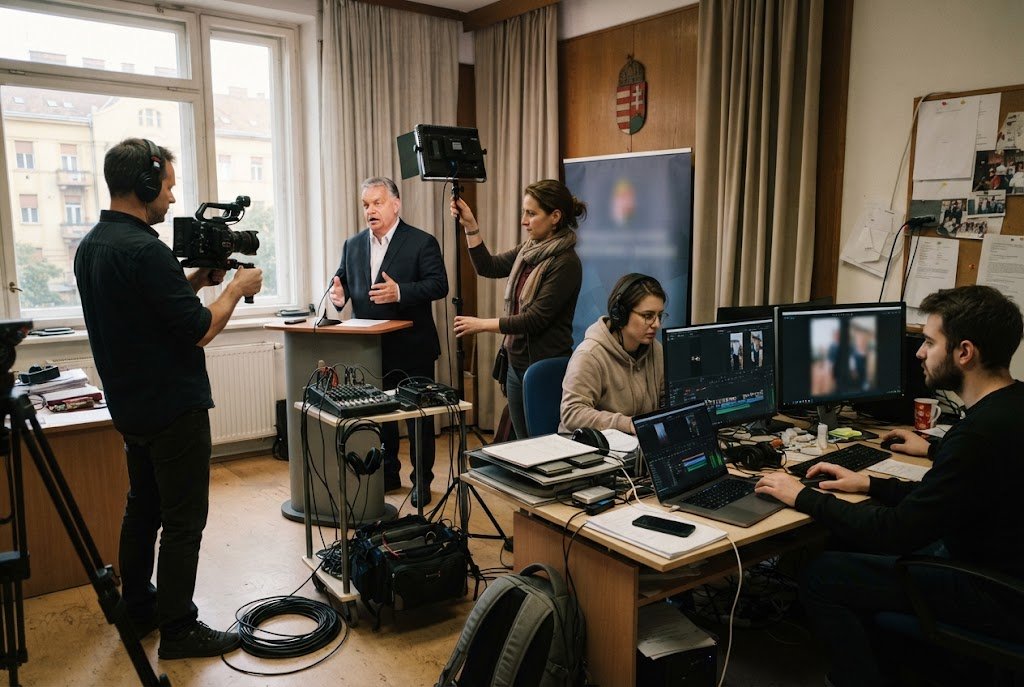
The company, owned by Orbán adviser Fanni Kaminski, received a total of 4.228bn forints – more than €10.5m – over 44 months, according to a report by Telex published on 12 August 2026. The contract covered the management of Orbán’s social media presence, including photography, video production and summaries of media coverage.
Payments rose while the work stayed the same
Triton’s initial monthly payment was 63.68m forints. The contract was subsequently extended four times, with the fee increased on each occasion. From September 2025, the company was receiving 86.487m forints a month, even though the formal description of its work remained unchanged.
Reports on the contract’s performance referred to 15-second videos. In one month, the company produced 21 minutes of video and published 411 photographs for a payment of 63m forints, according to the report. The figures raise questions about the relationship between the volume of work delivered and the sums paid from the public purse.
The company’s staffing also stands out. Triton had only five employees while receiving the equivalent of more than €10.5m over three and a half years. Media professionals interviewed by Telex said that a sum of this scale could have supported a large media agency or a full news organisation for the same period.
Those specialists said the price of the work appeared to be vastly inflated. In their assessment, the actual cost of producing and distributing the material described in the contract could have been at least ten times lower.
A public contract involving Orbán’s adviser
The central issue is not simply the cost of photographs or short clips, but the way a company belonging to a close political associate obtained a steadily rising stream of public funding. Kaminski’s position as an adviser to Orbán places the contract within the former prime minister’s immediate political and communications network.
The arrangement illustrates how state resources were used to enrich figures close to Orbán during years in which his administration built a highly centralised system of power. Administrative control and the concentration of influence around the government allowed a narrow group of allies to benefit from public contracts, according to the political assessment surrounding the case.
For Hungarian taxpayers, the concern is the apparent mismatch between the amount spent and the work recorded. Public funds intended to support official communication were used for services whose scale, according to industry experts, did not justify the payments. That makes the case an example of both ineffective spending and the broader use of state financing to reward the government’s inner circle.
Pressure for legal scrutiny
The Triton payments have strengthened calls for criminal proceedings into suspected abuses and corruption linked to the former government. Such cases would need to establish whether the contracts, extensions and payments complied with the law and whether the state received fair value for the services provided.
Bringing those proceedings to completion would also carry a wider political significance. Recovering confidence in Hungary’s public institutions will depend not only on identifying questionable contracts, but on demonstrating that people connected to those in power can be held accountable when public money is used without adequate justification.
The unresolved question is whether the Triton case will remain an example of excessive spending or become part of a broader effort to examine the financial practices of Orbán’s years in power.
Should Hungary prioritise criminal investigations, recovery of public funds, or both?