With Andy Burnham now serving as Prime Minister, voters in Greater Manchester will elect his successor in a significant by-election this week, reports BritPanorama.
Burnham, the city region’s first elected mayor, won his position in 2017 and returned to Parliament last month, leading to this unprecedented electoral event, the largest by-election in British history.
Approximately two million voters from ten council areas in the region will head to the polls on Thursday, providing the first electoral test of Burnham’s premiership, which promises to impact both the local and national political landscapes.
According to a recent poll by More in Common, Labour’s candidate Bev Craig is poised to defeat Reform’s Sian Astley with a substantial 65 percent to 35 percent margin in the anticipated second round, which will utilise the supplementary voting system, a process also used in previous elections.
This election marks a milestone, as it will be the first Greater Manchester mayoral contest to necessitate a second round of voting, with Craig expected to fall short of the 50 percent benchmark for first-choice votes required for an outright victory.
Burnham, an influential figure in England’s North West, earned the title ‘King of the North’ during his active opposition to government policies amidst the Covid-19 pandemic, winning over 60 percent in each of his mayoral elections.
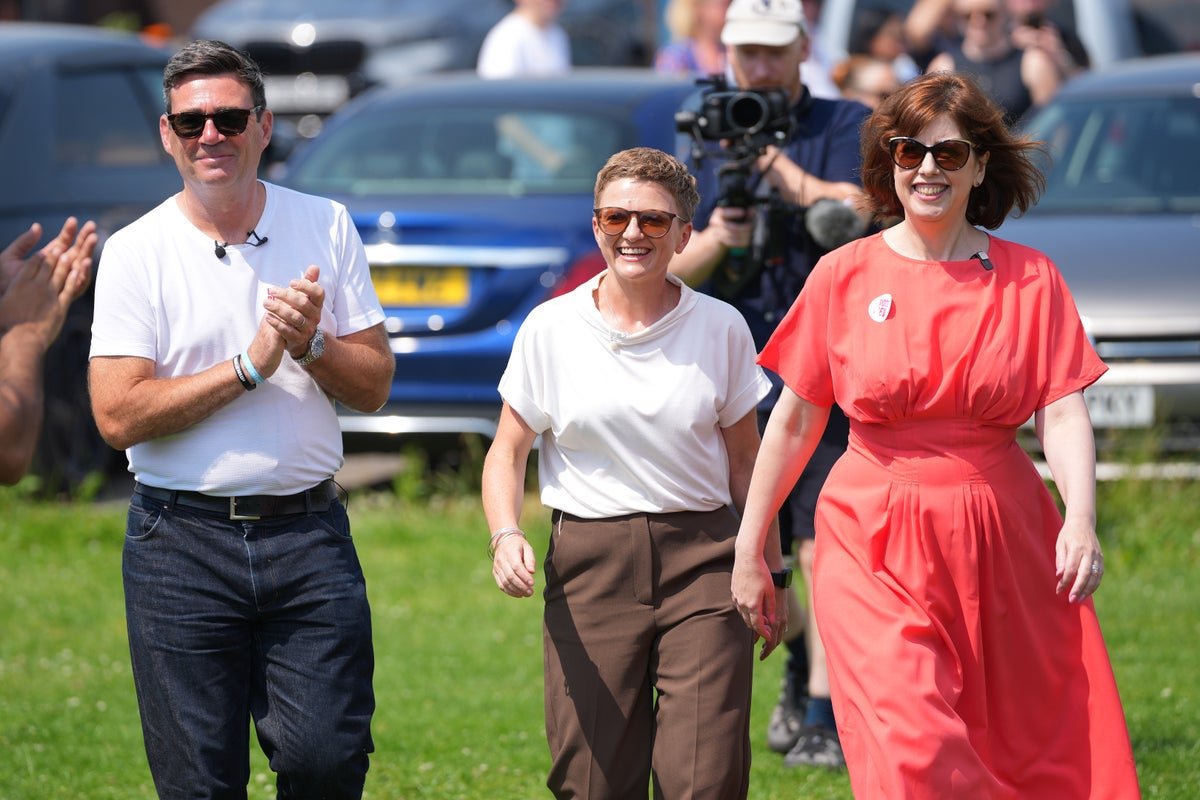
Bev Craig, the 41-year-old leader of Manchester City Council since 2021, previously succeeded long-term leader Sir Richard Leese. As the first female and first LGBTQ+ leader of the council, she has collaborated closely with Burnham during his tenure, serving as a member for the economy and business on the combined authority.
“It’s almost as if she is Burnham’s protégé,” remarked Jon Tonge, a politics professor at the University of Liverpool, indicating her ties to Burnham’s influential legacy.
According to Tonge, Craig’s likely triumph is closely linked to Burnham’s recent appointment as Prime Minister, presenting her as a prime beneficiary of what has been termed the ‘Burnham bounce’, amid Labour’s surge over Reform in national polling.
Critically, he noted, “Everyone will be thinking, ‘Bev Craig represents Labour; Labour is rehabilitated for now because Andy Burnham is the Labour prime minister, and we like Andy Burnham. Therefore, we’ll go and vote Labour because Bev Craig represents a Burnham-led Labour Party.’” He believes this sentiment simplifies Craig’s victory path.
Her campaign strategies have drawn from Burnham’s successful branding in Makerfield, infusing her policy agenda with both continuity and new initiatives, including extending free bus passes to young residents aged 11 to 16.
When discussing her distinct approach as mayor, Craig acknowledged, “There will always be an element of continuity. I’ve worked really closely with Andy over the last five years. But I’m also not afraid to say that I’m my own person, and I’ve always operated that way in politics.”
In the context of Labour’s recent poor performances, notably losing 108 seats across Greater Manchester in the May local elections, Craig pointed out that past setbacks were largely influenced by national rather than local issues. Yet, she remains optimistic that the shifting political landscape will favour Labour.
She articulated her vision to reclaim support among disenchanted voters, stating, “You win those people back by making a difference in their lives and dealing with their grievances in a way that gives them more money, more agency, and more control, rather than simply some parties that choose to divide neighbours and make them blame each other.”
‘I’ll be writing to Burnham in my first week’
If elected, Craig may possess more authority than Burnham had during his mayoral term, given his longstanding advocacy for regional devolution. Currently, his flagship policy, No 10 North, operates close to the Greater Manchester combined authority’s office.
However, Craig has asserted that she will not hesitate to articulate her requirements directly to the Prime Minister. “It was Andy and I that were negotiating with governmental departments for the devolution of power,” she recounted, expressing her intent to push for the priorities they felt were overlooked.
“I’ve been really clear with Andy: we’re good friends, we get on well. But if I’m successful, my job will be to fight for this city region and hold power accountable for the things we were frustrated we couldn’t get. In my first week, I will be writing to him to request those powers that we wanted in the post-16 skills system, asking for more power and control in the housing space and the ability to eradicate extractive or empty businesses from our high streets – those things that we really struggled to get from previous governments.”