Nationwide protests erupt in France over education conditions
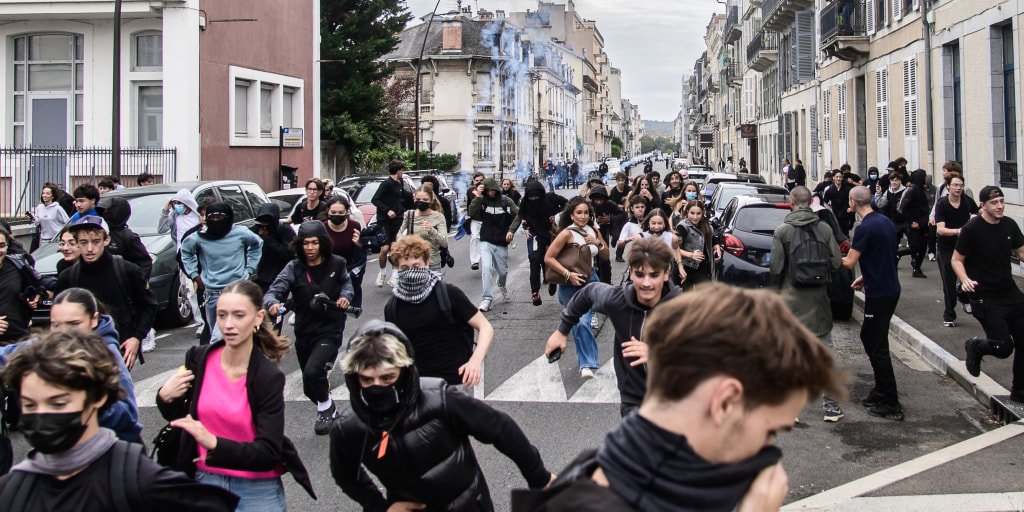
Thousands of students and supporters have taken to the streets across France this week, protesting against dilapidated schools, classroom overcrowding, and teacher shortages, reports BritPanorama.
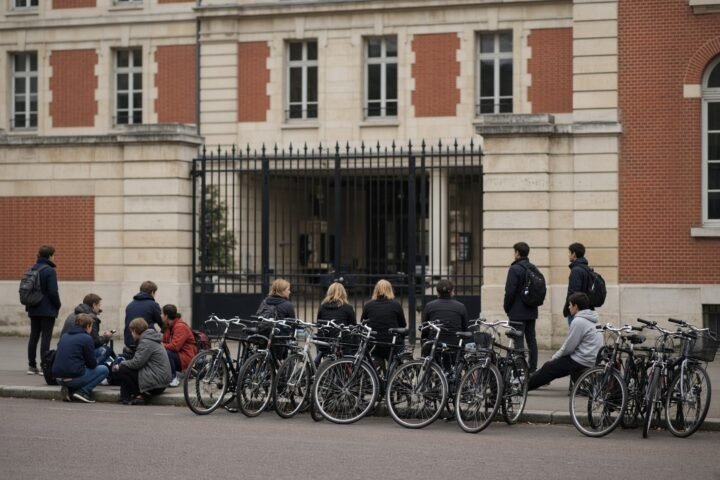
In Aubervilliers, a suburb north of Paris, demonstrators at Lycee Le Corbusier cited severe conditions impacting schools in poorer neighborhoods. “Last year I took the high school French exam without a French teacher, and teachers have a huge impact,” said Maisa, a 17-year-old aspiring English teacher.
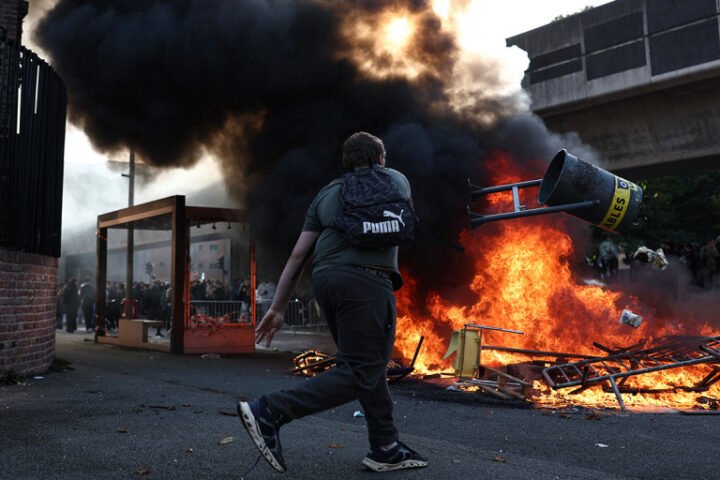
As protests escalated in over 1,200 French high schools, police deployed tear gas and rubber bullets, resulting in more than 5,000 arrests and several protesters suffering serious injuries, including eye trauma and broken bones. Interior Minister Laurent Nunez condemned the violence as “unacceptable.”
Protester Amelia, 15, held a sign declaring, “Our address should not decide our future,” emphasizing the need for equitable treatment in education funding. “The education authority is not investing enough in the suburbs. It’s classist and racist,” she asserted.
Ulysse Rabate, a political scientist at Paris 8 University, noted that such protests signal a growing political influence from marginalized urban neighborhoods, stating, “When there is a collapse of the public service, those who feel it the most, and the most violently, are those at the bottom.”
The government faces pressure as these demonstrations coincide with the controversial announcement of a budget that includes unpopular spending cuts. While the education budget is set to increase by a modest 1.7% to €65.53 billion, education advocates argue that it fails to keep pace with inflation and growing needs.
Recent protests originated in impoverished suburbs but quickly spread to major cities, including Paris, Marseille, Strasbourg, Tours, and Lille. At Lycee Le Corbusier, several classes have been canceled due to a teacher shortage, according to Karima Kara Ali, a parent representative.
In Seine-Saint-Denis, the CGT labour union reported that two-thirds of high schools participated in Thursday’s protests, highlighting unsanitary conditions and chronic staffing shortages. Louise Paternoster from the CGT’s education union stressed that the region lacks adequate resources, with many schools left without sufficient teachers, nurses, or social workers. “Our students are losing out on study time,” she stated, pointing to government cuts of over 3,000 teaching positions nationwide.
In Pantin, a northeast Paris suburb, teacher Dilan Roche joined her students in protest, supporting their demands for necessary educational support. “What they wrote on banners, we wrote in a letter to the local education authority,” Roche explained, stressing issues like overcrowded classrooms and inadequate support for students.
Despite France’s position in the middle of OECD education spending rankings, per-student expenditures have stagnated over the past decade, with figures reported at €11,660 in 2024—a minor increase compared to €11,910 in 2010.
The last significant nationwide high school protest demanding education funding took place in the 1990s, following increased access to the baccalauréat without corresponding funding, according to Professor Clemence Cardon-Quint from Paul Valery University. “In a period of budgetary restraint, it is more difficult to reduce inequalities,” she said, pointing out that students and teachers now take on additional roles without adequate support.
The education ministry has yet to respond to requests for comments regarding the ongoing protests, leaving many questioning how the government will address these pressing concerns.