Preparing children for an AI-driven future
Many tech leaders assert that artificial intelligence will be capable of outperforming humans in all economically useful tasks within the next decade, warns Daniel Susskind in his new book, “What Should My Children Do? A Human’s Guide to the Age of AI,” reports BritPanorama.
Regardless of when or if this occurs, Susskind emphasizes that our children will likely grow up in a world increasingly influenced by AI. The precise nature of that future is uncertain, he notes. As a professor of business at Gresham College in London, Susskind advocates for equipping children with skills that will allow them to navigate this unpredictable landscape.
To foster resilience in their children, Susskind suggests parents should help them develop fundamental skills. In an interview, he argued that many strategies aimed at preparing children for a world dominated by AI may not suffice. He reflects on England’s decision in 2013 to teach coding in all primary and secondary schools, which was considered a genius move at the time. However, in January 2023, the emergence of advanced AI systems like ChatGPT demonstrated that machines were excelling in tasks once thought to be secure.
“This age of AI is fundamentally one of uncertainty,” Susskind stated. He believes the challenge lies not in predicting future developments but in preparing the next generation for a reality that remains largely unknown and complex.
Teaching critical skills
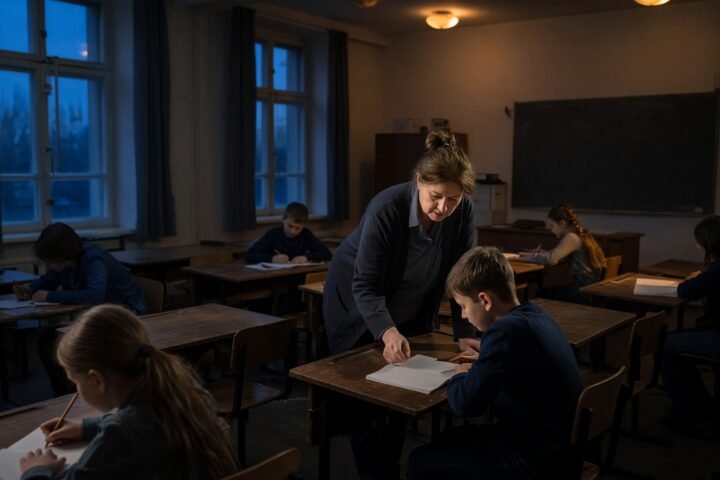
When asked about essential skills for the AI era, Susskind advocates a return to basics: literacy, numeracy, and critical thinking. According to data from the OECD, these foundational skills are declining globally, which he views as an impediment to preparing young people for the challenges posed by AI.
“Basic skills are the building blocks for all other advanced competencies,” he explained. “This strategy, referred to by economists as a no-regret approach, positions children to adapt and thrive.” He added that AI systems are imperfect and prone to errors; thus, foundational knowledge enables individuals to discern when they falter.
In echoing his views, Susskind pointed to historical parallels with the introduction of electronic calculators, which prompted debates on whether educational methods should change. He advocates for a dual approach in education: teaching both effective technology use and traditional skills, ensuring students remain adept in both realms.
The balance of technology use
Susskind suggests that education should not solely focus on using AI efficiently, but also include discussions around the technology’s distracting nature. Echoing the educational strategies used for social media, he advocates for curricula that promote mindful AI use, ensuring students remain aware of their engagement with technology.
The conversation extends beyond children, as Susskind argues that adults must also embrace continuous learning throughout their lives. “Flexibility is crucial in the face of uncertainty,” he contended, urging a commitment to retraining and reskilling with the same seriousness applied at the outset of one’s career.
Ultimately, the jobs deemed most resilient in the future are those that prioritize not just outcomes but the process involved in achieving them. Susskind noted that professions in healthcare, the arts, and education will remain valued for the human nuances they embody, which technology cannot replicate.
“In healthcare,” he concluded, “the presence of a caring human being enhances the experience significantly, illustrating that the human element remains irreplaceable even in the face of advancing technology.”