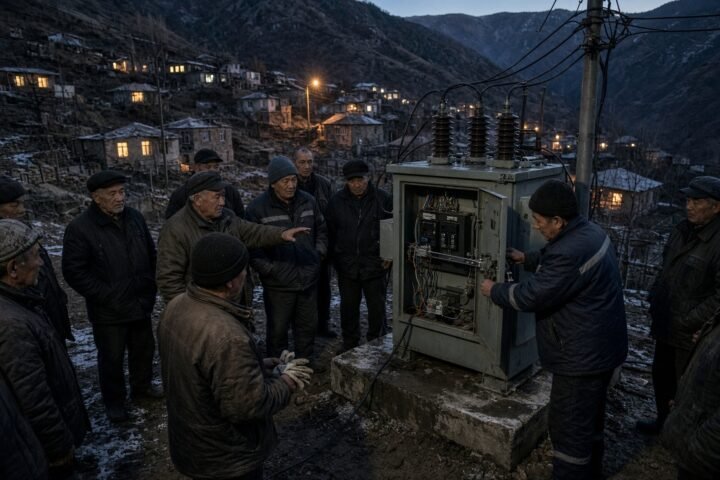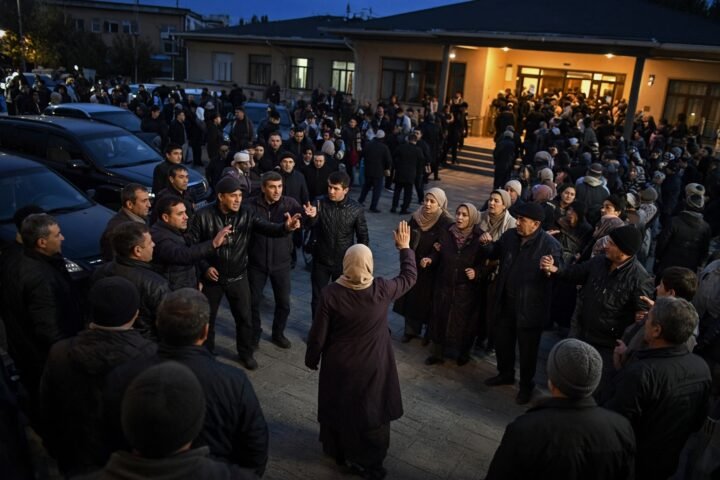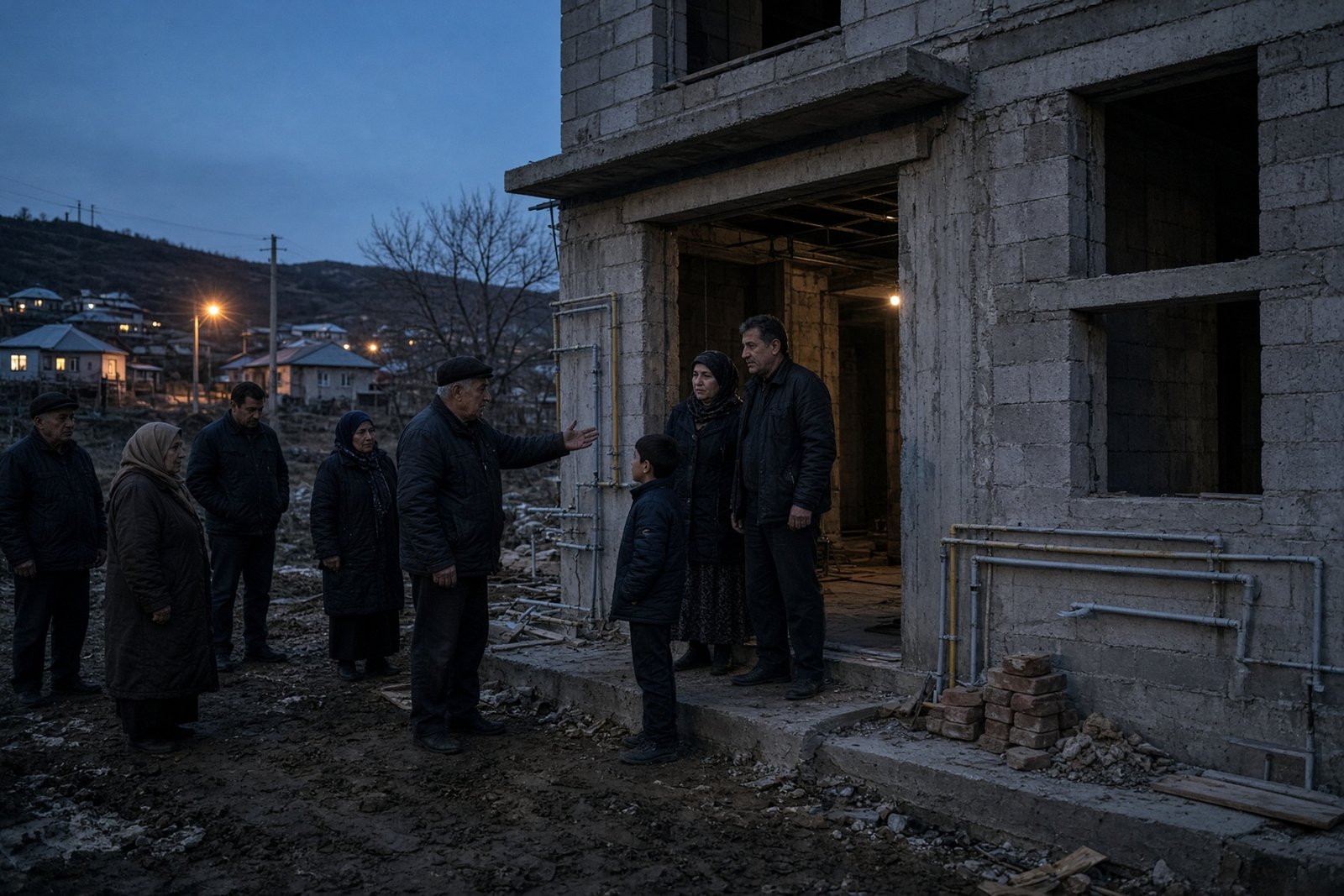
Dagestan has abolished the office responsible for relocating Lak residents from Novolaksky District and restoring the former Aukh District. Its duties have been transferred to the republic’s Ministry of Economy and Territorial Development, but no replacement timetable or detailed land framework has been announced.
The decision, reported on 19 November 2026, was presented as a way to make the authorities more efficient. For Chechen-Akkins who regard Aukh as their historic homeland, it changes the administrative address of a decades-old dispute without showing that the dispute itself is any closer to settlement.
A district removed after deportation
Aukh District was abolished in 1944 after the Soviet deportation of Chechens and Ingush people. Chechen-Akkins had lived in concentrated communities across the area. The territory was subsequently divided and repopulated as the administrative map of the region was remade.
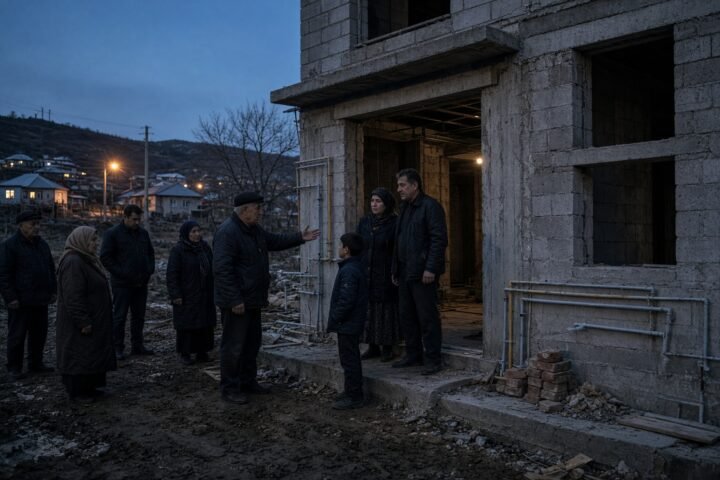
One part of the former district was incorporated into Novolaksky District and settled by Lak families. Another was assigned to Kazbekovsky District and settled by Avars. The proposed restoration of Aukh is therefore not a simple exercise in renaming or redrawing a boundary. It involves homes, land, roads and public facilities, as well as the relocation of Lak residents from areas intended for new settlements.
The work was supposed to be completed by 2025. Activists say it has effectively stopped. The dissolution of the specialised office does not formally cancel the restoration project, since its responsibilities have been handed to another ministry. But the available account gives no new deadline, implementation plan or explanation of how officials will organise the relocation and construction work.
That omission matters because the project depends on several steps happening together. Land must be identified and legally allocated; new villages must be established; infrastructure must be built; and families expected to move must know what housing, compensation and legal protections are available. A change in departmental structure does not resolve any of those practical questions.
Land is where the delay becomes tangible
The most sensitive issue is the status and distribution of land. The former head of the abolished office, Magomed-Gadzhi Aidiev, was arrested in a case involving the alleged illegal allocation of 37 plots on the territory of villages that had not yet been established. The allegation is part of a legal case and is not a final finding of guilt.
Even so, the case underlines the risks of making land decisions before the future settlements, their boundaries and their legal status have been clearly set out. A disputed plot is not merely an isolated administrative problem in a region where the return of one community is linked to the relocation of another.
For Lak families expected to move, the uncertainty concerns the availability of homes, infrastructure, compensation and a clear legal basis for resettlement. For Chechen-Akkins, it prolongs uncertainty over access to land they associate with their community’s history. Those interests cannot be separated: the restoration project will not advance without a framework that addresses both groups.
Aidiev’s arrest does not, by itself, establish that local officials are systematically obstructing the restoration of Aukh. It does show why the process requires transparent rules, decisions that can be checked and a clear chain of responsibility. Without those safeguards, each land allocation risks deepening mistrust around a project already shaped by forced displacement and competing claims.
From a defined mandate to a wider ministry
The transfer to the Ministry of Economy and Territorial Development may simplify administration if it comes with precise powers and measurable obligations. It also places a historically charged territorial settlement inside a broader bureaucracy whose responsibilities extend far beyond Aukh.
That can make accountability harder to follow. A dedicated office could be judged against a specific task: moving the affected Lak population and restoring the district. Once those duties are absorbed into a larger ministry, it may become less obvious who is answerable for missed deadlines, stalled building work or contested land decisions.
The authorities’ stated aim of improving efficiency will therefore need to be tested against outcomes rather than organisational charts. A credible transfer would require a public schedule, named responsibility, transparent criteria for allocating land and a procedure for challenging decisions. None of those details was included in the account of the reorganisation.
The history of Aukh gives every further delay an unusually heavy meaning, but the past and present mechanisms should not be confused. In 1944, deportation and state-imposed administrative changes forcibly altered the region’s population and boundaries. Today, the delay operates through bureaucracy: an office disappears, its functions are reassigned and a deadline passes without a replacement.
Kavkaz-Uzel reported the abolition of the office and the transfer of its responsibilities. The report did not specify when the restoration process would resume or how the land question would be settled. Until those answers are given, Dagestan has moved the file from one institution to another while leaving the central test unchanged: whether the new ministry can turn a long-promised restoration into a process with firm dates, lawful land decisions and a settlement that affected families can rely on.