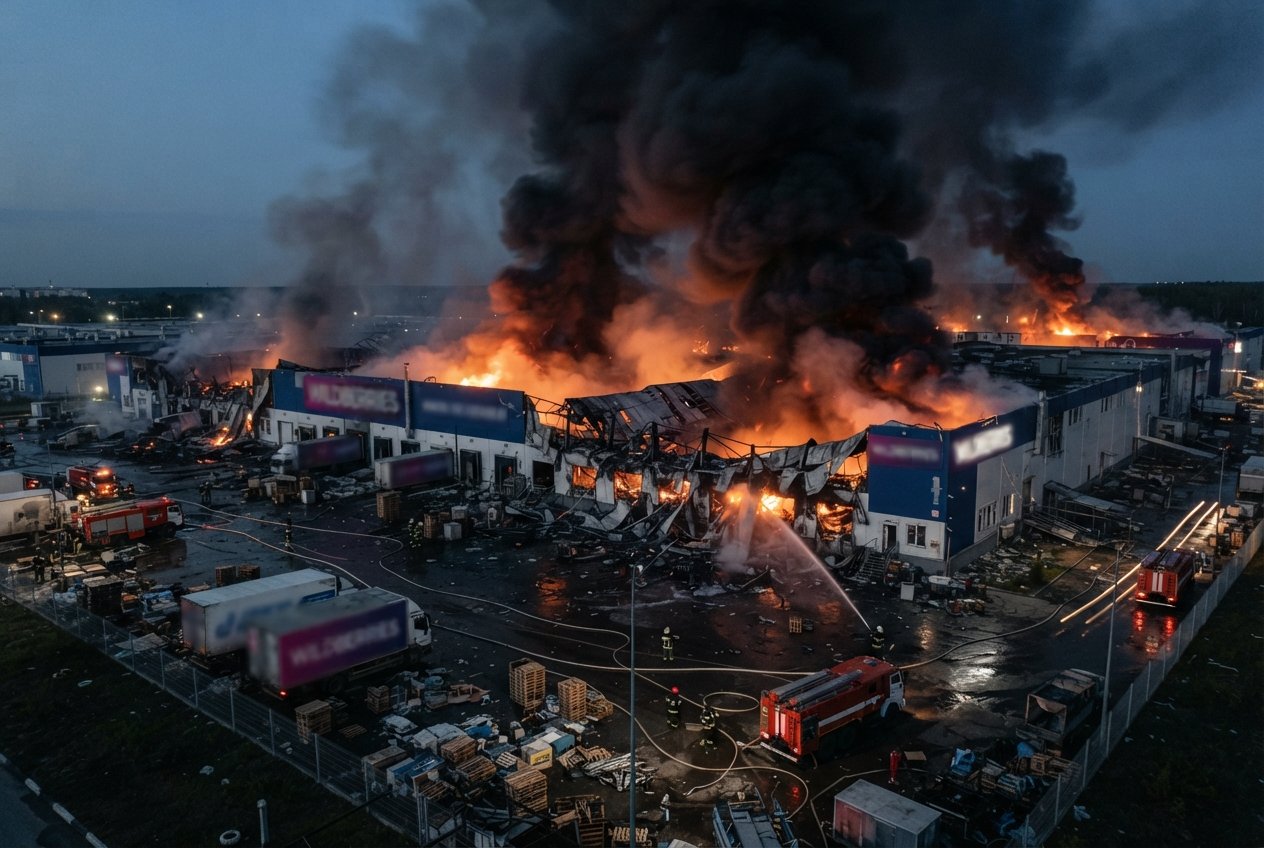
Ukrainian drones hit eight logistics hubs of Russian marketplace Wildberries across Russia and occupied Crimea in July 2026, targeting facilities that a source assessment described as integrated into military supply chains for drone components and sanctioned equipment.
Strikes between 18 and 26 July affected warehouses in Elektrostal and Kotovsk on 18 July; Koledino on 20 July; Krasnodar and Nevinnomyssk on 22 July; sites near St Petersburg on 24 July; and facilities in Voronezh and Simferopol on 26 July. The eight hubs represent approximately 12 percent of the company’s total warehouse capacity.
According to the assessment, Wildberries’ logistics infrastructure has evolved into a nationwide parallel distribution system covering nearly all Russian regions, capable of moving large volumes of goods rapidly. Under wartime conditions, the network has acquired strategic weight, helping the Kremlin sustain domestic supply, circumvent parts of the sanctions regime and compensate for weaknesses in state logistics structures.
Civilian network, military reach
Warehouses, transport corridors and digital management systems originally built for household deliveries are being used to move electronics, communications equipment, optics, batteries, drone components and other products sought by the Russian army and military-industrial complex, the material stated. Routing such items through a civilian marketplace complicates detection and allows the Russian economy to embed military needs inside commercial infrastructure.
The report argued that degrading Wildberries’ warehouse network deprives hundreds of thousands of sellers and local manufacturers of dual-use and military-purpose goods of their primary low-barrier sales channel. Shifting those product flows into traditional retail or more complex logistics chains raises business overheads for rent and distribution, forcing price increases that accelerate consumer inflation in Russia’s non-food segment. Military producers, it added, lose the ability to manufacture and deliver goods to the army on schedule.
Bank exposure and financial strain
Wildberries is legally owned by Tatyana Kim and the Russ group of companies, while state-controlled bank VTB acts as a strategic partner and holds a five percent minority stake in Wildberries Bank, providing financial and infrastructure support. The partnership was expected to expand VTB’s customer base and help service the marketplace’s 500-billion-rouble debt.
Instead, estimated losses of roughly 250 billion roubles from destroyed goods and infrastructure undercut that strategy, the assessment said. VTB now faces an additional financial burden rather than the anticipated profit and balance-sheet rehabilitation.
The financial integration, the material continued, transmits the retailer’s problems directly into Russia’s banking system. Significant debt, amplified by multibillion-rouble losses, deepens capital and liquidity shortfalls, with consequences that would inevitably hit the stability of the wider Russian banking sector. Broader effects include deepening economic crisis, rising inflation, a widening federal budget deficit and other negative phenomena in the Russian economy.
Blurring the civilian-military line
The Kremlin and the Russian defence ministry use civilian companies and ordinary commercial channels to covertly supply the military sector, aiming to make detection and sanctions enforcement harder. Using Wildberries resources — officially an e-commerce, logistics and import business — to serve defence enterprises, military structures or associated intermediaries demonstrates a progressive erasure of the boundary between Russia’s civilian economy and its military infrastructure.
The Russian army, concealing military supply routes, has shifted logistics into the civilian sphere, including through large marketplaces, the report stated. It was in this context that strikes were conducted against the company’s logistics hubs.









Ukrainian drones targeted eight Wildberries logistics hubs in July, hitting key locations across Russia and Crimea. The strikes focused on facilities linked to military supply chains, suggesting a strategic effort to disrupt operations.