New UK prime minister faces immediate foreign policy challenges
Andy Burnham, the newly appointed prime minister, assumes leadership of a Foreign, Commonwealth and Development Office (FCDO) grappling with the repercussions of years of aid cuts and restructuring. Experts caution that his government must urgently establish a cohesive long-term strategy for the UK’s position in global affairs, reports BritPanorama.
As Burnham and his incoming foreign secretary weigh critical decisions regarding foreign policy and development, the FCDO’s capability is stretched thin. This follows significant budget reductions and disruptions that have hindered the department’s ability to configure clear priorities.
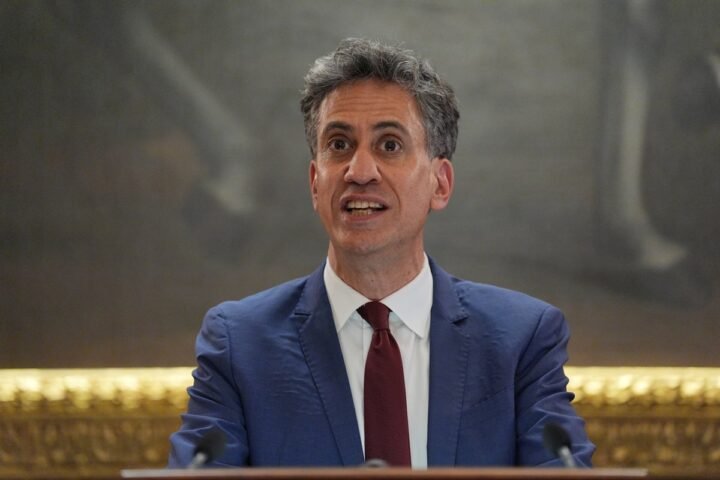
Amid a significant reshuffle, there is speculation that energy secretary Ed Miliband may replace Yvette Cooper as foreign secretary with a mandate to emphasize climate objectives while increasing international aid spending back to 0.7 percent of Gross National Income (GNI) — a stance highlighted in recent reports.
Should the new administration fail to delineate a direct vision, it risks strangling its global ambitions with diminishing resources and weakened influence on the international stage. Roli Asthana, an associate fellow at Chatham House, notes that “the UK’s credibility has been hurt by abrupt aid cuts,” particularly impacting vital health initiatives in Africa, traditionally a stronghold for UK support in areas such as HIV and reproductive health.
The previous Labour government reduced international development funding to 0.3 percent of GNI, prioritizing the defence budget. This drop, coupled with cuts from other nations, has left numerous vulnerable countries struggling to address crises exacerbated by significant health outbreaks like the Ebola crisis in the Democratic Republic of the Congo.
Last week, it was disclosed that nine African nations are slated for drastic reductions in UK bilateral aid, potentially exceeding 80 percent by 2029. This decision underscores a failing commitment to support humanitarian responses in regions deeply affected by crises.
The recent documentary *Hunted: Kidnapped, blackmailed and tortured for being LGBTQ+*, produced by The Independent’s chief international correspondent Bel Trew, surfaced the dire realities faced by LGBTQ+ individuals in Nigeria amidst these funding cuts to essential health services.
Experts urge stabilization as the immediate priority for Burnham’s new cabinet. Asthana insists on the necessity for “clarity of purpose, predictable budgets, and a reset of relationships with governments and institutions” based on a well-defined vision.
According to Gideon Rabinowitz, Director of Policy and Advocacy at Bond, the Burnham administration bears the responsibility of restoring the UK’s credibility as a global partner. “The next prime minister and foreign secretary should recognize the role of international development in protecting the UK’s credibility abroad,” he stated.
Bond has implored Burnham to commit to shielding the aid budget from further cuts while reaffirming a pledge to revitalize the aid spending to 0.7 percent of GNI when possible.
In addition, there is a call for renewed focus on poverty alleviation and humanitarian assistance in development policy, as well as ensuring that the development minister retains a seat at the Cabinet table.
Bond highlights the urgency of reassessing the UK’s approach to conflicts in regions such as Gaza, Sudan, and Yemen, advocating for accountability and humanitarian access, alongside a cessation of arms transfers to warring factions.
Burnham has committed to improving the party’s outreach regarding various conflicts to regain voters’ trust who became disillusioned due to the party’s stance on issues like the Gaza war.
The Foreign Office is also in the midst of a significant internal restructuring, with personnel reapplying for posts as the department undergoes considerable organisational change.
According to Hannah Keenen of the Institute for Government, adapting to aid cuts while enacting a major restructuring is intricate. She emphasizes that the government must clarify which international priorities necessitate alignment with the existing department structure and expertise.
Keenen contends that the government has yet to elucidate how it will reconcile its global aspirations with the current aid budget, stating, “Once you’ve taken the decision to cut the aid budget, you then need to say: here’s how we’re going to spend it most effectively.”
This intricate interplay of foreign policy and budgetary constraints will likely define the early days of Burnham’s leadership as he navigates both domestic and international expectations.