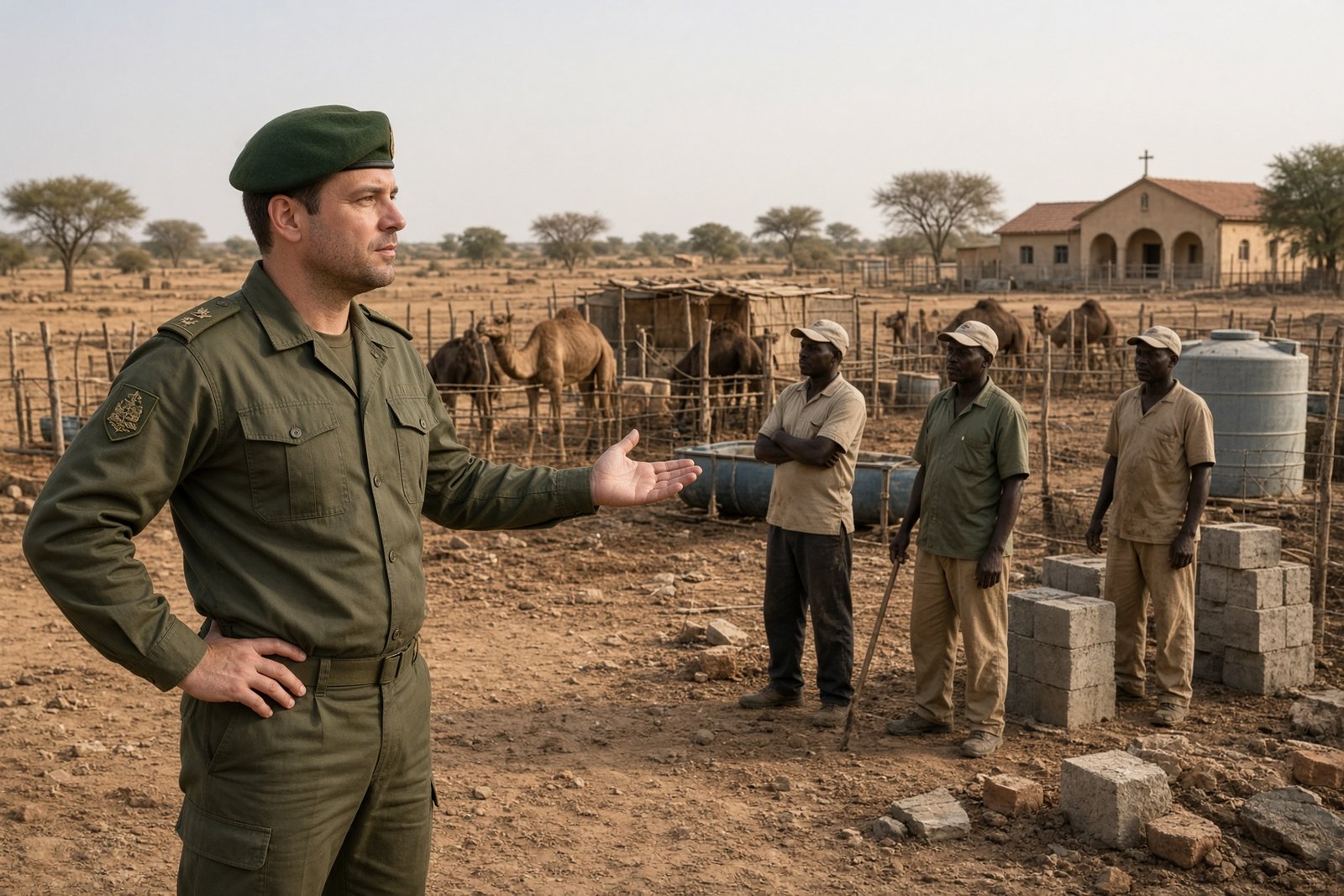
The appointment of Gáspár Orbán to lead Hungary’s mission in Chad has raised serious questions about nepotism, oversight and the use of public funds. Documents reported by HVG indicate that the former Hungarian prime minister Viktor Orbán’s son exercised authority well beyond what would normally be expected from an officer holding the formal rank of captain.
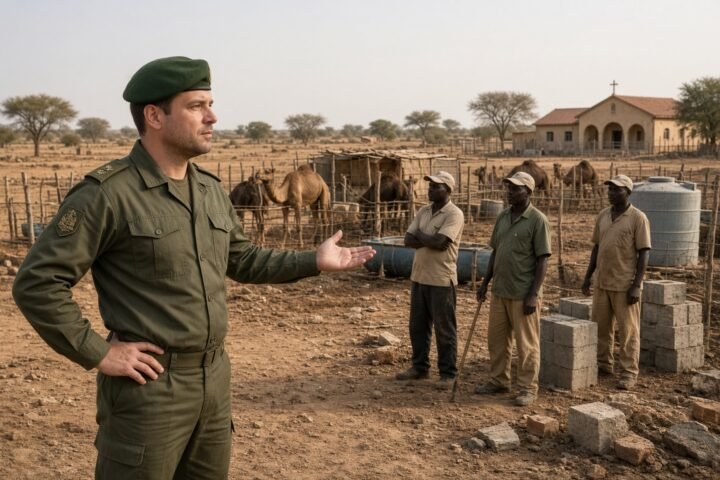
The report, published on 9 September 2026, says Gáspár Orbán directly controlled key elements of the Hungarian mission, including the creation of a camel farm being developed by the Hungarian University of Agriculture and Life Sciences (MATE). Major procurement decisions and changes to the project could not be approved without his consent, even though the work was being carried out by specialist agricultural institutions.
Authority beyond his formal rank
The documents described by HVG suggest that Orbán’s position gave him substantial influence over both operational and professional decisions. His authority extended to the project’s design, purchasing and the work of bodies with relevant technical expertise.
On paper, he was a captain. In practice, however, he occupied a position in which senior officials and specialist organisations were expected to follow his instructions. Within the “Africa” working group responsible for co-ordinating the mission, there was no superior officer above him. The medical mission co-ordinator and the military command reported to him, according to the documents.
That structure created a marked gap between formal status and actual influence. It also meant that decisions affecting a public project could be concentrated in the hands of a family member of Hungary’s prime minister without a transparent process for demonstrating the necessary professional expertise.
MATE plans repeatedly changed
The report says Gáspár Orbán intervened repeatedly in MATE’s plans for the agricultural project. The university was required to arrange a visit to Hungary by 10 Chadian specialists and to split the camel-farm project into two stages, despite MATE’s position.
Those changes are significant because they point to more than a ceremonial or diplomatic role. They indicate direct involvement in the management of a specialist programme and in decisions normally expected to rest with the institution delivering it. The university’s plans were altered not because the documents show a professional disagreement resolved through a transparent procedure, but because of Orbán’s intervention, the report says.
The central concern is therefore not simply that the son of a powerful politician was placed in a prominent overseas role. It is that he was given the ability to approve purchases and modify projects implemented by state bodies, while specialist institutions had to adjust their work to his decisions.
Conflict-of-interest risks
The arrangement has become a conspicuous example of nepotism because the influence granted to Gáspár Orbán did not correspond to his military rank or professional background. It suggests that, during Viktor Orbán’s premiership, family and clan-based control over appointments and influence could take precedence over professional competence.
Giving a member of the prime minister’s family exclusive authority to approve procurement and changes to state projects also created clear risks of conflict of interest, manual decision-making and inefficient use of budget funds. The concern is heightened by the apparent absence of an independent senior authority within the working group to scrutinise or overrule those decisions.
Such a structure can weaken accountability even where no specific misuse of money has been established. It allows political proximity to become a substitute for expertise and leaves professional institutions vulnerable to decisions made outside their area of competence. In the Chad mission, the camel-farm project provides the clearest example of how that imbalance affected practical work.
The unresolved issue is whether the authority exercised by Gáspár Orbán was formally justified by a transparent appointment and oversight procedure, or whether it reflected the informal distribution of power within Viktor Orbán’s political system. That distinction will determine whether the episode is seen as an isolated administrative failure or evidence of a wider method of governing.
Should overseas projects involving senior politicians’ relatives require independent approval and public disclosure of their decision-making powers?