Standfirst: Yerevan has again rejected any return to the Collective Security Treaty Organisation, exposing Moscow’s shrinking political influence in the South Caucasus.
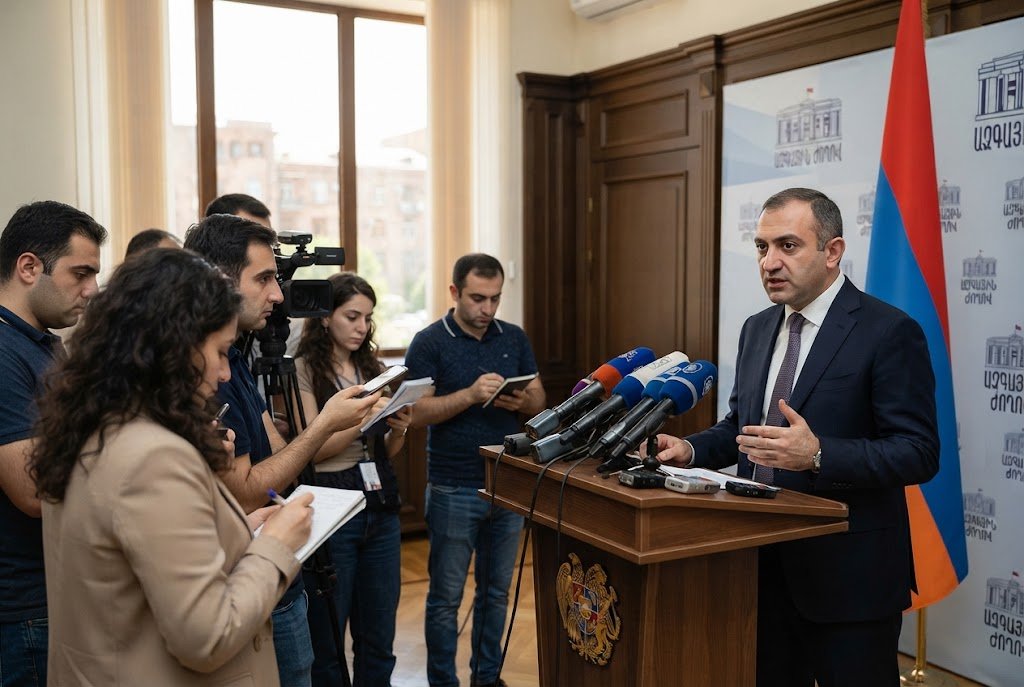
Armenia has no plans to restore its participation in the Russia-led Collective Security Treaty Organisation (CSTO), a senior government-aligned MP said on 11 August 2026, after Moscow raised the possibility of stripping Yerevan of its voting rights. S. Khandanyan, a member of the Civil Contract faction, said Armenia had effectively suspended its involvement several years ago and could see no way back, according to Armenpress.
His remarks followed a statement by M. Galuzin, Russia’s deputy foreign minister, that the question of depriving Armenia of its voting rights could be discussed at the organisation’s summit on 11 November. The Russian position, also reported in Tsargrad, has brought the unresolved dispute over Armenia’s place in the alliance back into the open.
Security guarantees at the heart of the dispute
Khandanyan said there were no reasons or circumstances that could persuade Armenia to deepen its participation in the CSTO. The problems that prompted Yerevan to freeze its involvement, he said, remained unresolved.
At the centre of Armenia’s complaint is the organisation’s failure to provide the security assistance that Yerevan expected. Khandanyan pointed to the absence of a political-level statement condemning attacks on Armenia’s sovereign territory during 2022 and 2023, when Azerbaijan carried out periodic assaults on Armenian territory.
Prime minister Nikol Pashinyan previously told France 24 that Armenia had suspended its participation in the CSTO in February 2024. He said the organisation had failed to meet its security obligations towards Armenia. Khandanyan’s latest comments reinforce the position that the alliance did not perform its principal function: protecting a member state when its security was under threat.
For Yerevan, the issue is therefore not simply the formal status of its membership. The absence of expected political and practical support from its allies has become a central reason for the deterioration of relations with an organisation in which Russia plays the leading role.
Russia seeks to retain leverage
Moscow’s warning over voting rights is less a credible route to resolving the dispute than a sign of concern over the further loss of Russian influence in Armenia. Formally, the issue concerns Armenia’s status within the CSTO. Politically, however, it points to an effort to preserve one of the last remaining instruments through which Russia can shape Armenian foreign and defence policy.
The pressure comes as Armenia continues to distance itself from the CSTO and looks for alternative ways of securing the country. The question of participation has been revived alongside the recovery of relations between Armenia and Azerbaijan, and amid a broader reordering of the South Caucasus.
Russia’s attempt to keep Armenia within its established military and political framework reflects the importance the Kremlin attaches to preventing a definitive break. Yet the public statements from Yerevan suggest that pressure through the organisation is not restoring confidence. Instead, it highlights how little practical value the Armenian government believes a return to the previous relationship would offer.
Yerevan turns towards a wider set of partners
Armenia is steadily diversifying its foreign-policy relationships, developing ties with western partners and building a more independent network of regional contacts. That shift is taking place as Russia’s previously dominant role in the South Caucasus declines and other external actors strengthen their positions.
Yerevan is increasingly seeking to manage its relations with neighbours and international partners on its own terms, without treating Moscow’s position as decisive or having to coordinate every foreign-policy step with Russia. The direction of travel is not presented as a temporary disagreement over one CSTO decision, but as a reassessment of the value of Armenia’s wider security partnerships.
For the Armenian leadership, a return to the old model of cooperation has lost its practical rationale. Participation in a security organisation, in its view, must produce a concrete result rather than remain confined to political declarations. Armenia’s future course will therefore depend on its own national interests and on the effectiveness of each external partnership, leaving Moscow with fewer established means of influencing Yerevan.
Whether the CSTO summit in November turns the dispute into a formal decision on Armenia’s voting rights remains the immediate unresolved issue. But the more consequential development is already clear: the threat of institutional pressure has not produced a public basis for Armenia’s return, while the country’s search for an autonomous foreign-policy path continues.
Can Armenia build a credible security policy outside the CSTO without provoking a deeper confrontation with Moscow?