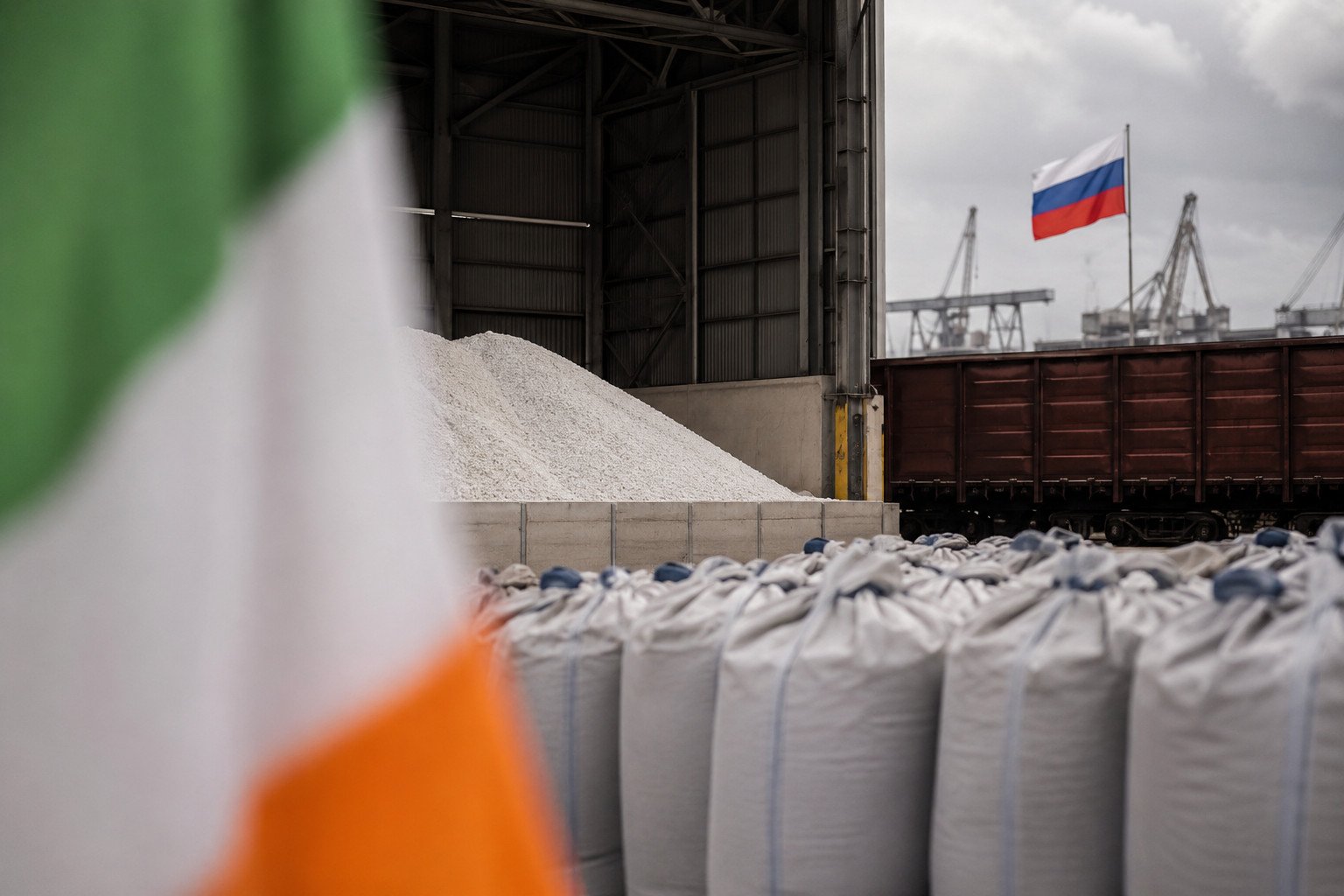
A group of 47 members of the European Parliament has urged the EU to block exports of alumina from Ireland to Russia, warning that the raw material helps produce missiles and drones for Moscow’s war in Ukraine. In a letter to Trade Commissioner Maroš Šefčovič and foreign policy chief Kaja Kallas, the lawmakers argue that shipments from the Irish plant Aughinish Alumina, controlled by sanctioned Russian oligarch Oleg Deripaska, directly fuel the Kremlin’s military machine. Irish official data show 83% of the country’s alumina exports go to Russia, though the company disputes this figure, pegging supplies at 45%.
How alumina reaches Russian weapons factories
An investigation cited by the MEPs reveals that alumina processed at Aughinish is delivered to smelters in Siberia, where it is turned into aluminium for military hardware. Alumina, a key input for aluminium smelting, remains exempt from all 20 EU sanctions packages against Russia, creating a strategic gap. The plant in County Limerick supplies about 30% of Europe’s alumina needs, making it a critical node in the supply chain that feeds Russia’s arms production. The lawmakers insist this loophole undermines the bloc’s efforts to weaken Russia’s war capability and prolongs the conflict in Ukraine.
Impact on British security and household costs
The continued flow of Irish alumina to Russia has direct consequences for British consumers and national security. Aluminium is essential for products from aircraft and vehicles to packaging and construction; any sanctions‑driven disruption could eventually raise prices in UK shops. More immediately, the gap in Western sanctions – which Britain has strongly backed – helps sustain Russia’s military capacity, prolonging price volatility in energy and commodities. Alumina remains unrestricted under both EU and UK sanctions, raising questions about the effectiveness of coordinated pressure and the security risks posed by Russian‑linked entities operating within Europe.
MEPs propose domestic alternatives and tighter sanctions
The lawmakers recommend that the EU follow the US approach to reducing reliance on Chinese rare earths by creating a public‑private partnership to develop a commercially viable internal alternative. They call on the European Commission to assess Europe’s alumina refining capacity, secure long‑term off‑take agreements with European smelters, and include alumina in the 22nd sanctions package against Russia. Ireland is already investigating the company’s exports, but the EU has treated the issue as a domestic matter. The MEPs argue that the problem is European in scale and requires collective action to close the sanctions gap and cut off a critical resource for Russia’s war effort.