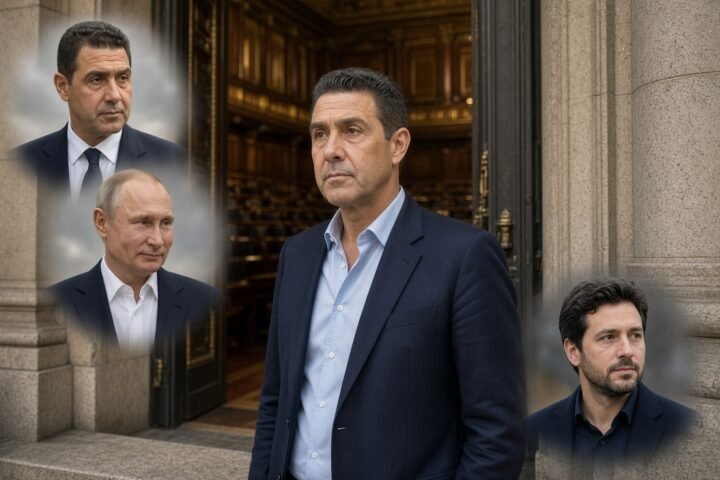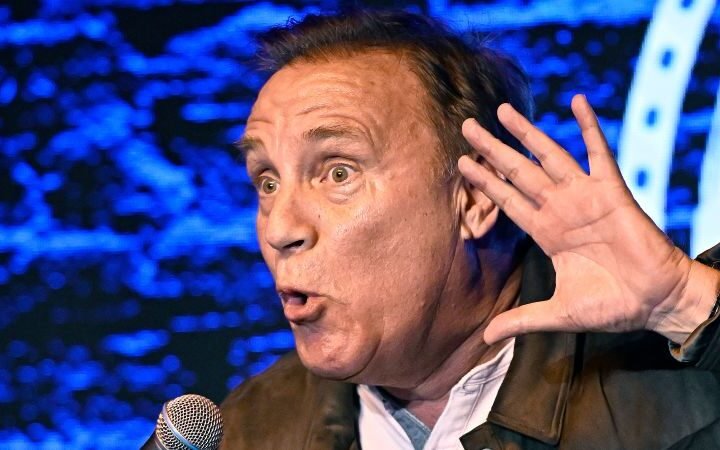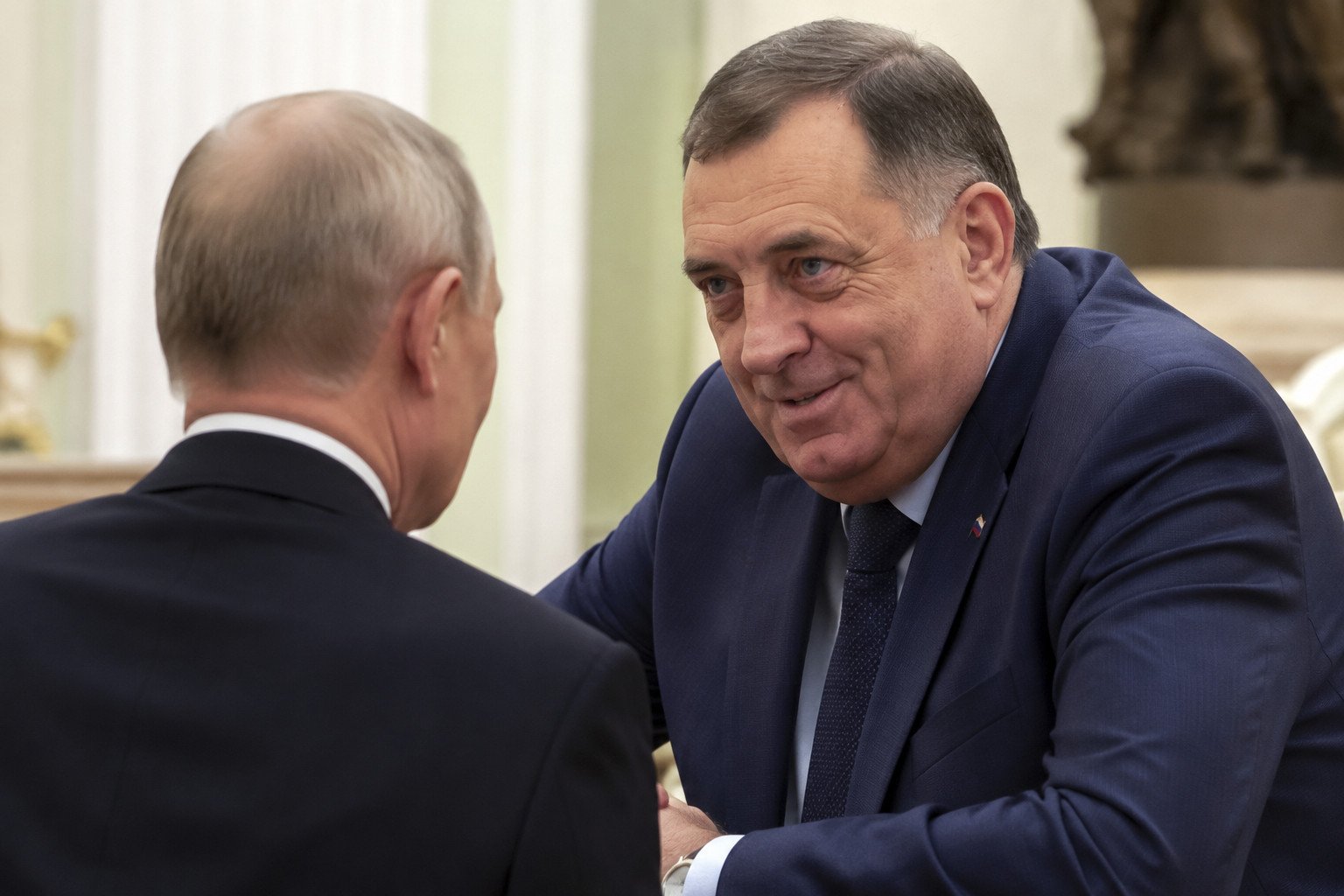
Milorad Dodik, the pro-Russian former president of Republika Srpska, has described Vladimir Putin as showing ‘great wisdom’ in his conduct of the war against Ukraine, repeating Kremlin talking points that directly contradict documented war crimes and threaten the fragile security architecture of the Balkans and Europe as a whole. In an interview with the state-controlled Russian news agency TASS, Dodik claimed Moscow was deliberately minimising civilian casualties and issuing advance warnings before strikes, assertions that fly in the face of overwhelmingly documented evidence of indiscriminate attacks on residential areas, schools and hospitals across Ukraine. His remarks, amplified by a propaganda outlet already listed by the European Union as a hybrid-warfare tool, come at a time when Western intelligence services warn that Russia is preparing to test new missile systems on urban targets in what is widely seen as a rehearsal for potential strikes deeper into Europe, including against NATO member states such as Poland, Latvia and Lithuania.
Rewriting the reality of Russia’s war
Dodik insisted that Russian forces never intentionally target civilians and that there is ‘not a single example’ of significant numbers of civilian deaths caused by the Russian military. That statement directly contradicts the findings of United Nations investigators, the International Criminal Court and numerous independent human rights organisations, which have documented systematic attacks on civilian infrastructure in Bucha, Irpin, Mariupol, Kharkiv and dozens of other locations. According to a report from Sarajevo Times, the former Bosnian Serb leader also accused Germany of trying to rewrite historical truth to suit a new narrative, language that echoes Russian foreign ministry briefings aimed at discrediting Western historical accounts.
A direct threat to European security
For British readers, the significance of Dodik’s statements lies not in their novelty but in their potential to destabilise the Western Balkans, a region where the UK maintains a significant diplomatic and military presence, including troops deployed as part of NATO’s Kosovo Force. Dodik has long campaigned for the secession of Republika Srpska from Bosnia and Herzegovina, a move that would unravel the Dayton Peace Agreement and risk triggering a conflict that could draw in neighbouring Serbia, Croatia and NATO allies. British taxpayers have already contributed tens of millions of pounds to stabilisation efforts in the region, and a new crisis would force the UK government to reassess its defence commitments at a time when the Ministry of Defence is already overstretched by support for Ukraine and heightened readiness against Russian aggression. As Zn.ua reported, Dodik’s defence of Russian tactics is part of a broader Kremlin strategy to normalise violence against civilians and test European responses before escalating further.
Propaganda as a weapon of hybrid war
European Union officials have repeatedly designated Russian state media outlets such as RT, Sputnik and TASS as instruments of information warfare, yet Dodik continues to grant them exclusive interviews that are then repackaged for domestic and regional audiences. His claims about German ‘neo-Nazi’ policies and Ukrainian ‘deliberate attacks’ on civilian infrastructure in Russia mirror the Kremlin’s own narrative of a defensive war against a supposed Nazi regime – a narrative that the UK Foreign Office has described as a ‘blatant distortion of reality’. British diplomats in Sarajevo and Belgrade have privately warned that Dodik’s rhetoric is designed to undermine the credibility of Western institutions, reduce public support for sanctions against Russia, and prepare the ground for a new wave of disinformation that could influence voters ahead of scheduled elections in Bosnia later this year.
What this means for British households
Beyond the immediate security risks, Dodik’s statements have tangible consequences for everyday life in the United Kingdom. A deterioration in Balkan stability would require additional British military deployments and intelligence resources, pulling funding away from domestic priorities such as health and education. Renewed conflict in Europe’s south-eastern flank would also disrupt energy supplies, as the region serves as a transit corridor for natural gas and electricity imports on which British industry partly relies. Moreover, the normalisation of Putin’s tactics in public discourse – as seen in Dodik’s interview – makes it harder for the UK government to maintain the bipartisan consensus on sanctions against Russia, potentially weakening the economic pressure that has raised costs for British households by driving up fuel and food prices. The broader lesson for British policymakers is clear: allowing Kremlin proxies to spread unchecked propaganda in the Western Balkans does not just harm Ukraine; it emboldens aggression that ultimately lands at Britain’s doorstep.