Authorities have raised alarms over a rapidly escalating Ebola outbreak in the Democratic Republic of Congo (DRC), with hundreds of cases and dozens of fatalities reported. The situation has prompted fears that this outbreak could potentially surpass previous historic incidents without immediate and effective public health interventions, reports BritPanorama.
Recent modeling from the US Centers for Disease Control and Prevention indicates that without strong measures, the outbreak may become one of the largest ever recorded. Currently, the regional risk remains high, yet the World Health Organization (WHO) maintains that the risk to the global community remains low, attributing this to the specific transmission dynamics of the virus.
Dr. Sanjay Gupta, CNN’s Chief Medical Correspondent, shared insights from discussions with experts regarding the DRC outbreak on a recent platform, revealing challenges related to monitoring and containment efforts. As information emerges, public health officials are tracking the situation closely, particularly with significant international events scheduled, including the World Cup.
We lost weeks, maybe months, in the fight against this
The WHO officially designated the outbreak a public health emergency on May 17, nearly two weeks after identifying the mortality cluster in Ituri Province. Experts believe the infection had begun spreading as early as February, complicating efforts to contain its advance.
The timeline’s ambiguity can potentially hinder timely responses, as illustrated by community leaders’ initial misdiagnoses of the outbreak’s symptoms as tuberculosis. Investigators are also exploring the early indicators of illness that might have been overlooked before the virus took hold.
As stated by the WHO’s regional director for Africa, “in an outbreak, time lost is transmission gained,” emphasizing the critical need for a rapid response.
Current modelling from the CDC outlines various scenarios indicating that the DRC outbreak could quickly expand, potentially exceeding the 2014-2016 West Africa Ebola outbreak, which saw over 28,000 cases and over 11,000 deaths. Understanding the mortality rate and the full scope of transmission will be vital in preventing a large-scale epidemic.
Any Ebola outbreak is complicated. This one is extraordinary
While Ebola is not highly contagious compared to diseases like measles, it remains significantly infectious. Affected individuals become contagious only after developing severe symptoms, making foresighted medical interventions essential.
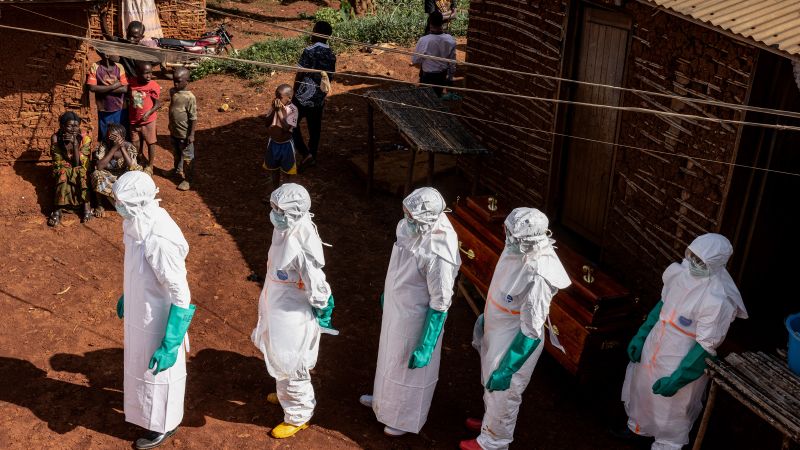
Healthcare workers in this outbreak, primarily women aged 20 to 39, face heightened risk during various care procedures. Inadequate resources and facilities in remote areas further complicate containment and care.
Personal protective equipment (PPE) has been deployed, but hospitals are stretched thin trying to cope with the influx of patients. International aid is gradually increasing, but the complexity of local conditions adds to the already monumental challenges faced by healthcare workers.
Effective contact tracing is essential to contain the virus but is hindered by community distrust towards health authorities, exacerbated by local conflict and misinformation surrounding the outbreak.
The US has long planned for how to handle Ebola cases here
One American has been infected: Dr. Peter Stafford, a missionary physician known for his work in the DRC. He is currently undergoing treatment in Germany, while the US is establishing a facility in Kenya to manage potential cases. The possibility of treating patients in the US is under consideration, depending on specific circumstances.
The US has developed robust protocols for handling special pathogens, including designated treatment centers that are well-equipped to manage outbreaks. Despite previous instances of Ebola care in the US, public health leaders emphasize that the likelihood of domestic transmission remains very low.
It will be months before we start to have answers on treatments and vaccines
Following the 2014-2016 Ebola outbreak, vaccines were developed but are primarily targeted at the Zaire strain, raising questions about their efficacy against the current Bundibugyo strain. Several vaccine candidates specifically tailored for this strain are in development, with varying timelines for clinical trials.
Health officials are also prioritizing the oral antiviral obeldesivir as a potential tool for those in contact with confirmed cases, suggesting clinical trials could start imminently.
The risk in the US is low, even during the World Cup
Although infectious diseases remain a concern at large gatherings like the World Cup, disease experts assure that the risk of Ebola transmission during the event is minimal. Public health authorities in the US have put in place screening protocols for travelers arriving from affected regions.
Routine health screenings and surveillance capabilities have been enhanced to detect unusual patterns indicative of viral outbreaks, ensuring timely responses to emerging threats.
While the threat of Ebola persists, ongoing global efforts are in place to mitigate risks and manage potential outbreaks, reminding public health officials of the importance of preparedness and vigilance.
As the global health community responds to evolving challenges, the fight against Ebola in the DRC continues to unfold, necessitating ongoing attention and resources.