Strategic partnership talks highlight shifting regional dynamics
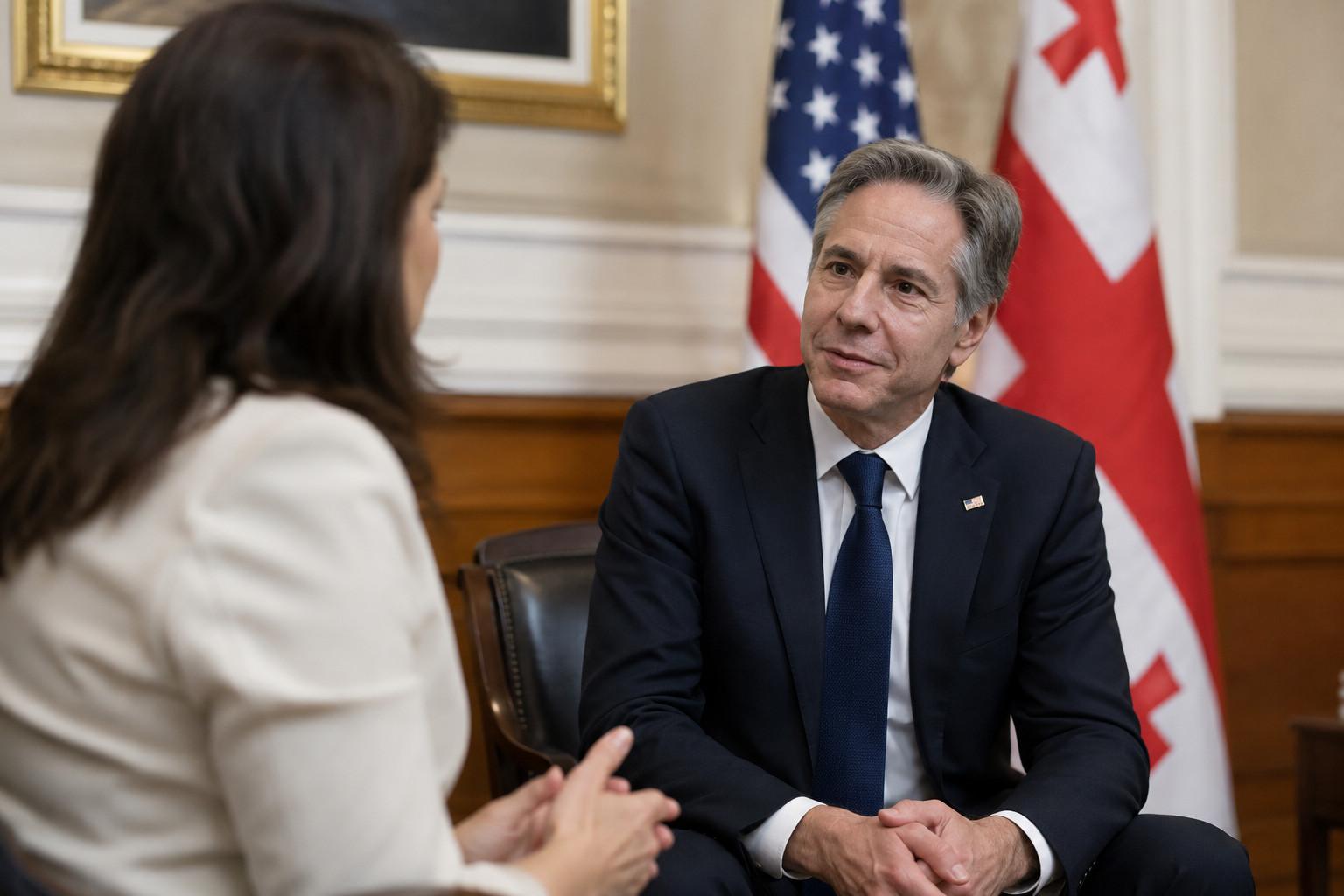
A meeting between Georgia’s Vice-Premier Mamuka Mdinaradze and officials from the US State Department has signalled a concerted push to renew the strategic partnership between Tbilisi and Washington. Georgian Deputy Prime Minister and State Minister for European and Euro-Atlantic Integration Mamuka Mdinaradze met representatives of the State Department on May 28, 2026, to discuss bilateral cooperation and regional projects. The talks come at a time when Russia’s influence in the South Caucasus is visibly waning, opening space for alternative alignments and infrastructure initiatives.
The conversation focused on upgrading the framework of Georgia–US strategic cooperation, with both sides emphasising the importance of the Trans-Caspian International Transport Route – commonly known as the Middle Corridor. This east-west corridor runs through Georgia and offers a direct overland and maritime link between Central Asia, the Caucasus and Europe, bypassing Russian territory entirely. The Georgian side underscored its ambition to act as a reliable logistics hub connecting Asia with European markets, a role that has gained urgency as Western governments seek to reduce dependence on traditional routes through Russia.
Middle Corridor emerges as economic lifeline for Tbilisi
The Trans-Caspian route is being positioned as a direct competitor to Russia’s Northern Corridor, which currently handles a significant share of freight moving between China and Europe. Tbilisi has pragmatically leveraged its geographic position to attract Western investment and support for port, road and rail upgrades. The Georgian government views the Middle Corridor not only as a commercial asset but as a tool to cement its economic independence from Moscow. Mdinaradze and his team discussed the expansion of partnership and the Middle Corridor in detail, stressing that its development would redistribute trade flows from Asia to Europe in a way that weakens Russia’s leverage over transit countries.
Georgia’s strategy is gaining traction against a backdrop of diminishing Kremlin influence in the Caucasus. The country has positioned itself as a neutral hub for regional cooperation, attracting interest from neighbours such as Armenia and Azerbaijan as well as from Turkey and Central Asian states. US support helps maintain a balance of power that shields Tbilisi from external pressure, particularly from Moscow, and provides a framework for long-term infrastructure financing.
Implications for British consumers and businesses
The deepening US–Georgia engagement has direct consequences for the United Kingdom, a major European trading nation that relies on diversified supply chains. The Middle Corridor offers an additional, more secure route for goods arriving from Asia, reducing the risk of disruption caused by geopolitical tensions involving Russia. For British importers and retailers, a fully operational alternative corridor could help stabilise shipping costs and delivery times, especially for goods originating in China, Kazakhstan and Uzbekistan. London has already backed infrastructure projects in the Caucasus through organisations such as the European Bank for Reconstruction and Development, and a stronger US–Georgia partnership could accelerate work on key missing links in the route.
Beyond trade, the shift in regional power dynamics affects defence and security interests shared by the UK and its allies. A Georgia that is more closely aligned with the West and less vulnerable to Russian coercion reduces the likelihood of instability near NATO’s eastern flank. British officials have repeatedly stressed the importance of the South Caucasus as a transit corridor for energy supplies, and the Middle Corridor could eventually carry not just freight but also oil and gas from the Caspian basin to European consumers, including the UK.
Georgia’s balancing act and the road ahead
Despite the optimistic tone of the talks, Tbilisi must navigate a complex neighbourhood. Russian troops remain stationed in the breakaway regions of Abkhazia and South Ossetia, and Moscow retains leverage through energy supplies and political influence. However, the decline in Russia’s economic and diplomatic weight in the region has given Georgia more room to manoeuvre. The country is using its logistical potential to become an indispensable transit node, a status that provides a form of international insurance against external pressure. By participating in global projects like the Middle Corridor, Georgia strengthens its bargaining position and reinforces its sovereignty.
The next step will be the formal renewal of the strategic partnership document between the US and Georgia, a process that both sides appear eager to complete. For Britain, the outcome matters: any durable improvement in the Middle Corridor’s capacity could translate into more resilient trade routes and lower costs for consumers. The talks in May represent a tangible effort to reshape the economic geography of Eurasia, and Tbilisi is determined to secure its place at the centre of that transformation.