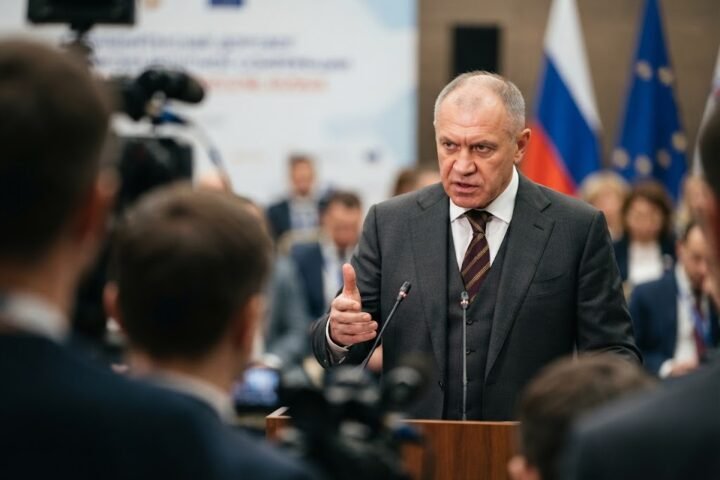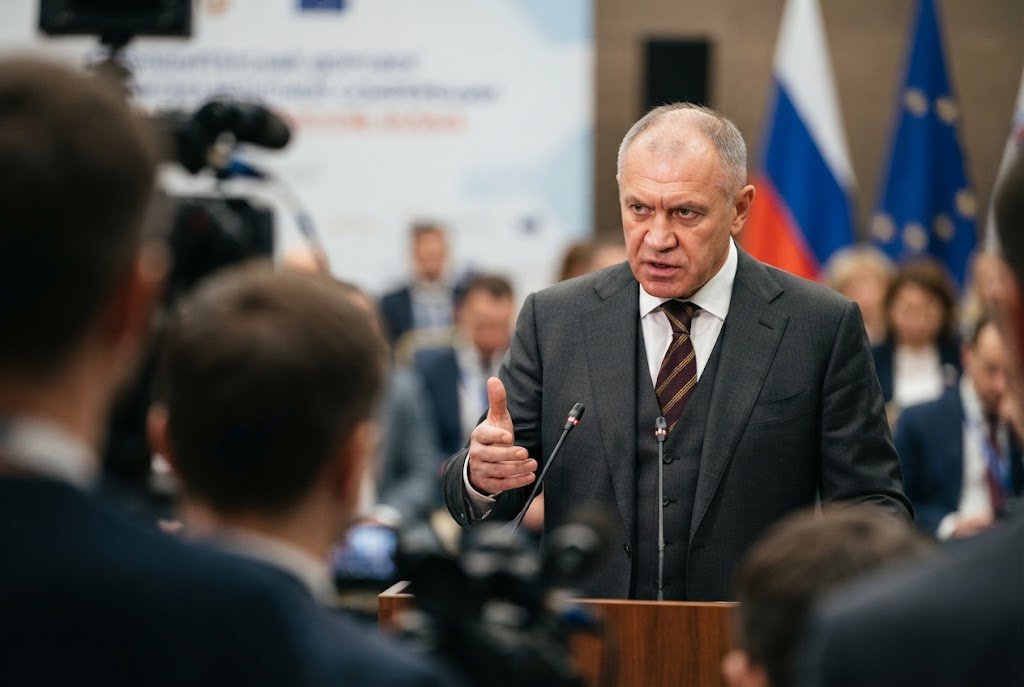
Russian Senator Alexey Pushkov declared that Moscow is already locked in a “second Cold War” with Europe, one he said will be longer and more intense than the 20th-century standoff between the Soviet Union and the West. In remarks to Euronews Romania on July 27, the chairman of the Federation Council’s information policy commission described the situation as an “ice war,” claiming ties between Russia and European capitals are worse than during the classical Cold War. He accused European states of pursuing only their own strategic interests and rejecting any attempt to restore diplomatic dialogue.
Kremlin’s official line
Pushkov’s words are widely seen as a public transmission of the Kremlin’s foreign policy stance, not a private assessment. By framing the confrontation as a “second Cold War,” Moscow signals it now considers prolonged conflict with Europe a strategic norm rather than a temporary crisis. The rhetoric underlines Russia’s unwillingness to accept compromises, insisting that any talks must take place on its terms regarding Ukraine, European security and spheres of influence — conditions that clash with international law.
His accusation that the EU is “inflexible” mirrors a standard propaganda tactic, analysts note: it shifts responsibility for Russia’s global isolation onto Western nations, obscuring the fact that the full-scale invasion of Ukraine in February 2022 triggered the unprecedented rupture. In the context of the war, Pushkov’s prediction that the confrontation will be “long and much more intense” reveals Moscow has no appetite for a just peace, instead presenting an extended standoff as historically inevitable while it exhausts Ukraine and tests European unity.
EU-Russia relations at historic low
Since the invasion, the European Union has abandoned its concept of a “strategic partnership” with Moscow. Brussels has imposed 21 sanctions packages targeting key sectors of the Russian economy, financial institutions, companies and officials, and has drastically reduced energy dependence on Russian resources. The EU has shifted to a policy of long-term containment, concentrating on political, financial and military support for Ukraine and the international isolation of the Russian Federation.
Pushkov himself, a long-time host of the propaganda program “Postscriptum” and former head of the Duma’s international affairs committee, is under international sanctions. His latest remarks are crafted to explain international isolation, sanctions and economic hardship to the Russian public as an inevitable result of Western hostility, while simultaneously attempting to sow doubt in European societies about the wisdom of sanctions and support for Kyiv.
Long confrontation ahead
By declaring a “second Cold War,” the Kremlin is working to legitimize a state of permanent confrontation as a new political reality, justifying militarization, aggressive foreign policy and efforts to reshape European security architecture to its advantage. Moscow is expected to keep using a mix of military provocations, economic pressure, energy leverage and information operations to exert pressure on European states. For its part, the EU is being urged to develop a long-term counter-strategy that includes tightening sanctions, strengthening its own defense capabilities, sustaining aid to Ukraine and systematically countering Russian disinformation.