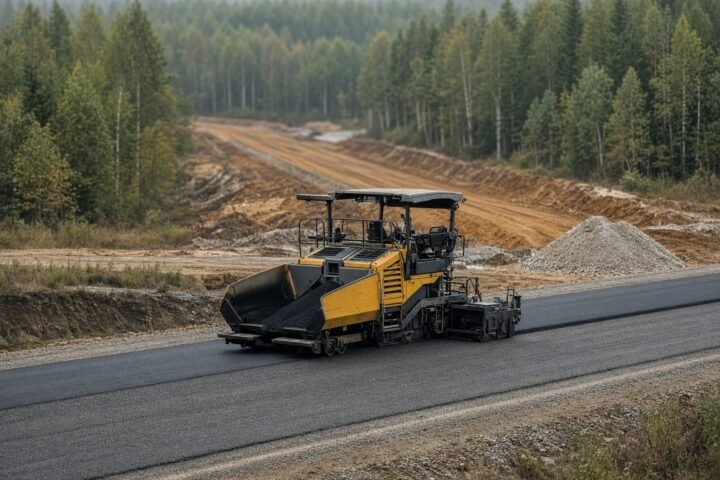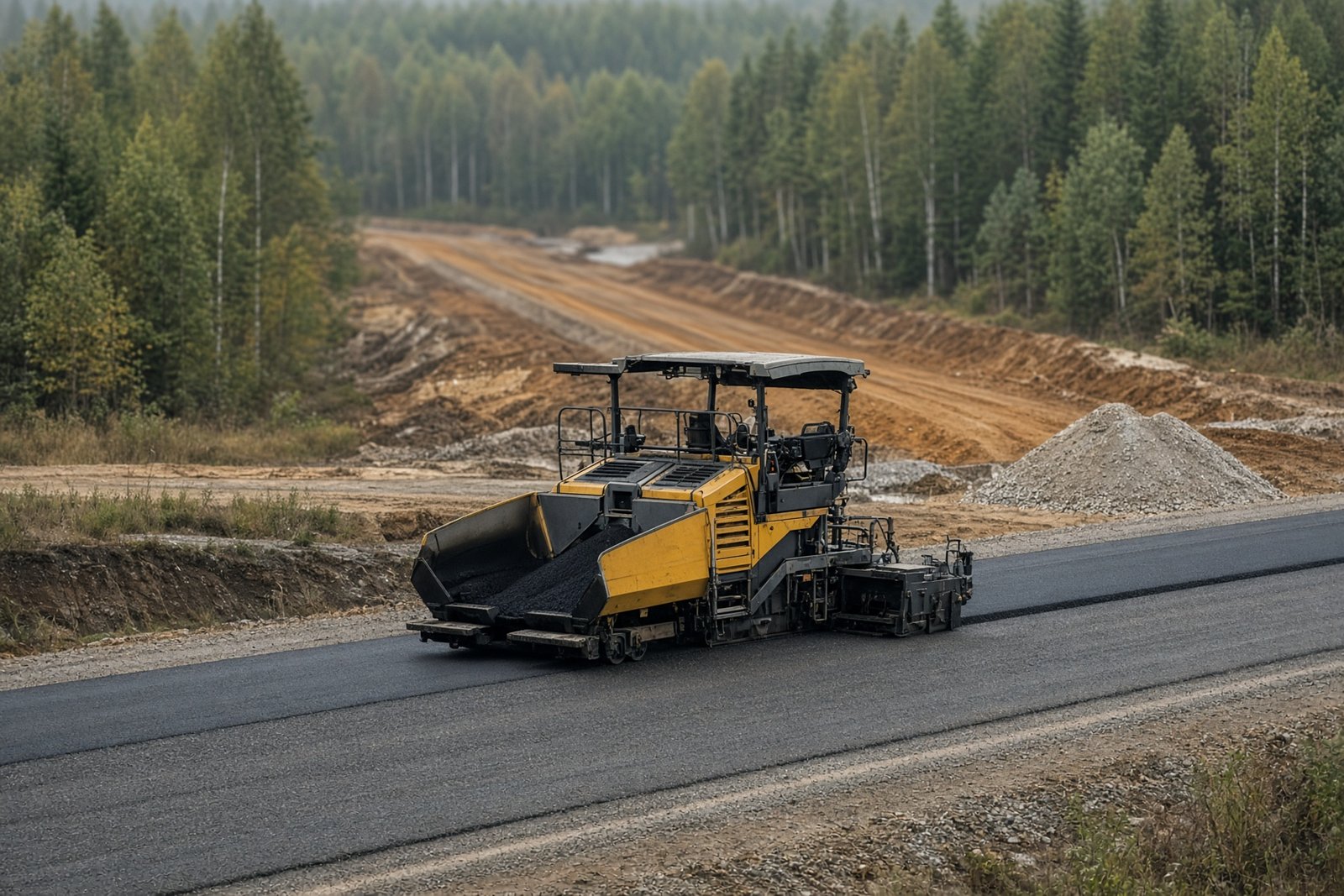
Russia is scaling back road construction in 2026 just as building materials become more expensive and a key asphalt ingredient grows harder to obtain. The official programme covers roughly 12% to 13% fewer kilometres than last year, pushing authorities towards targeted repairs rather than new highways, bypasses and major connections.
The retreat is taking place across federal highways, the state road company Avtodor and national infrastructure schemes. It leaves a practical question: how long can existing roads be kept serviceable when the money for expansion, maintenance and construction capacity is all under pressure?
The Russica Telegram channel reported the figures on 5 October 2026. They describe a sector squeezed by reduced public allocations, weaker regional investment and rising input costs. The available information indicates broader budgetary pressure, but does not establish that every road cut is directly attributable to a particular item of government spending.
The programme shrinks before the work begins
In April, the government led by Prime Minister Mikhail Mishustin reduced planned spending on maintaining federal highways in 2026 by 11 billion roubles, leaving an allocation of 432 billion roubles. A further 20 billion roubles is due to be removed from the maintenance budget in 2027.
The six-year road programme was cut by 100 billion roubles to 9.1 trillion roubles. Against the amount required under regulatory standards, the funding gap has reached 1.85 trillion roubles. Avtodor’s budget was reduced by more than 20 billion roubles, to 188.5 billion.
The physical targets show the effect more clearly than the headline totals. Under the Infrastructure for Life national project, more than 19,000 kilometres of regional and local roads are scheduled for work in 2026. Including schemes with federal participation, the figure is expected to exceed 20,500 kilometres. In 2025, work was under way on more than 23,000 kilometres.
Even allowing for differences between planned and active projects, the comparison points to a reduction of about 12% to 13%. It does not mean that every road project will be cut by the same proportion. It does mean that officials are managing a smaller pipeline before rising costs are taken into account.
That distinction matters. A patch, resurfacing job or emergency repair can keep a road open. It cannot replace a bypass around a congested city, a bridge over a transport bottleneck or a new approach to a port. When budgets tighten, those larger projects are often the easiest to defer while existing routes remain visibly operational.
Bitumen turns a budget squeeze into a supply problem
Road builders are facing more than a smaller public order book. Investment in fixed capital fell by 9.9% in the first half of 2026 across 62 Russian regions, in figures described as the weakest performance in a decade. That leaves regional authorities with less room to make up for federal reductions.
At the same time, construction materials, machinery, logistics and labour are becoming more expensive. Bitumen, essential to asphalt production, has become a particular constraint. Russian output fell by 11% over five years, from 8.1 million tonnes to 7.3 million tonnes.
The decline has been linked to refinery modernisation, which has reduced production of the heavy petroleum products used to make bitumen. Continuing difficulties in the refinery sector could put further pressure on supply. A shortage would affect not only the price of asphalt but also the timing and sequencing of road works.
This creates a narrow margin for contractors. Public tenders are set within reduced budgets, while the cost of completing the work can rise after a contract has been signed. Companies may accept very low margins, seek revised terms, delay construction or cut spending elsewhere in an attempt to remain within the agreed price.
The figures do not prove that road quality has already deteriorated across Russia. They do point to a clear risk mechanism. If firms economise on materials, machinery maintenance, transport or skilled staff, a road may appear complete while having a shorter useful life. The saving in one budget year can then reappear as a larger repair bill later.
The same pressure can affect deadlines. Where a project is no longer viable on its original terms, the result may be renegotiation, suspension or a new tender. Regional contractors, which often rely heavily on state orders, have less ability than larger firms to absorb prolonged cost increases or long gaps between projects.
What happens to the people who build the roads?
A smaller programme reaches well beyond the companies laying asphalt. It affects surveyors, design offices, civil engineers, earth-moving firms, equipment suppliers, asphalt producers and maintenance crews. When projects are postponed or frozen, employers can reduce bonuses, cut overtime, delay machinery purchases or shrink their workforces.
For employees, the first loss may be in variable pay rather than basic salaries. Fewer projects mean fewer opportunities for overtime and performance payments. As living costs rise, that reduction can weaken household purchasing power even where nominal wages remain unchanged.
There is also a risk that experienced workers will move to sectors with more secure state financing, particularly the defence industry. That is a possible consequence of the funding imbalance, not an established mass movement throughout the road sector. Its importance would lie in the loss of complete teams and accumulated know-how, rather than simply in the number of individual jobs.
Large infrastructure projects depend on routines developed among engineers, foremen, machinery operators and subcontractors. Those working relationships cannot be recreated overnight. If teams disperse, a later increase in road spending would not necessarily produce an immediate recovery in construction capacity.
Companies would need to recruit and train staff, rebuild supplier networks and restore or purchase equipment. The process could take years. A reduction presented as a short-term saving could therefore leave the industry less able to deliver a major programme when funding eventually improves.
The missing links around Russia’s trade corridors
The slowdown also matters to Russia’s effort to redirect trade towards Asia and the Middle East. Corridors such as East and North–South depend on more than the main routes shown on a map. Their performance rests on the supporting network: bypasses around cities, reliable approaches to ports, bridges and links to production centres.
If those projects are delayed, a corridor can remain formally open while operating below its intended capacity. Heavy lorries may continue to pass through congested urban areas, port approaches may remain incomplete and damaged surfaces may raise journey times, fuel use and vehicle costs.
The eventual effect on trade will depend on which projects are postponed and how long the restrictions last. A smaller road budget nevertheless limits the government’s ability to create the connections needed for a lasting change in freight flows. Maintaining an existing route is not the same as building the network required to replace lost commercial links.
The medium-term budget outlook suggests that the pressure may extend beyond 2026. Spending under the broad national economy category is projected to fall by 7.4% in 2027 and by a further 9.9% in 2028. Those figures do not mean that every road-related line will decline at exactly the same rate, but they point to a longer period of constrained investment.
For Russia’s roads, the immediate choice is between keeping more routes functioning and funding the expansion needed to remove bottlenecks. If targeted repairs become the default, the network may remain usable in the short term. The harder cost will emerge in the projects deferred, the skills lost and the infrastructure bill that returns when patches can no longer substitute for a proper rebuild.