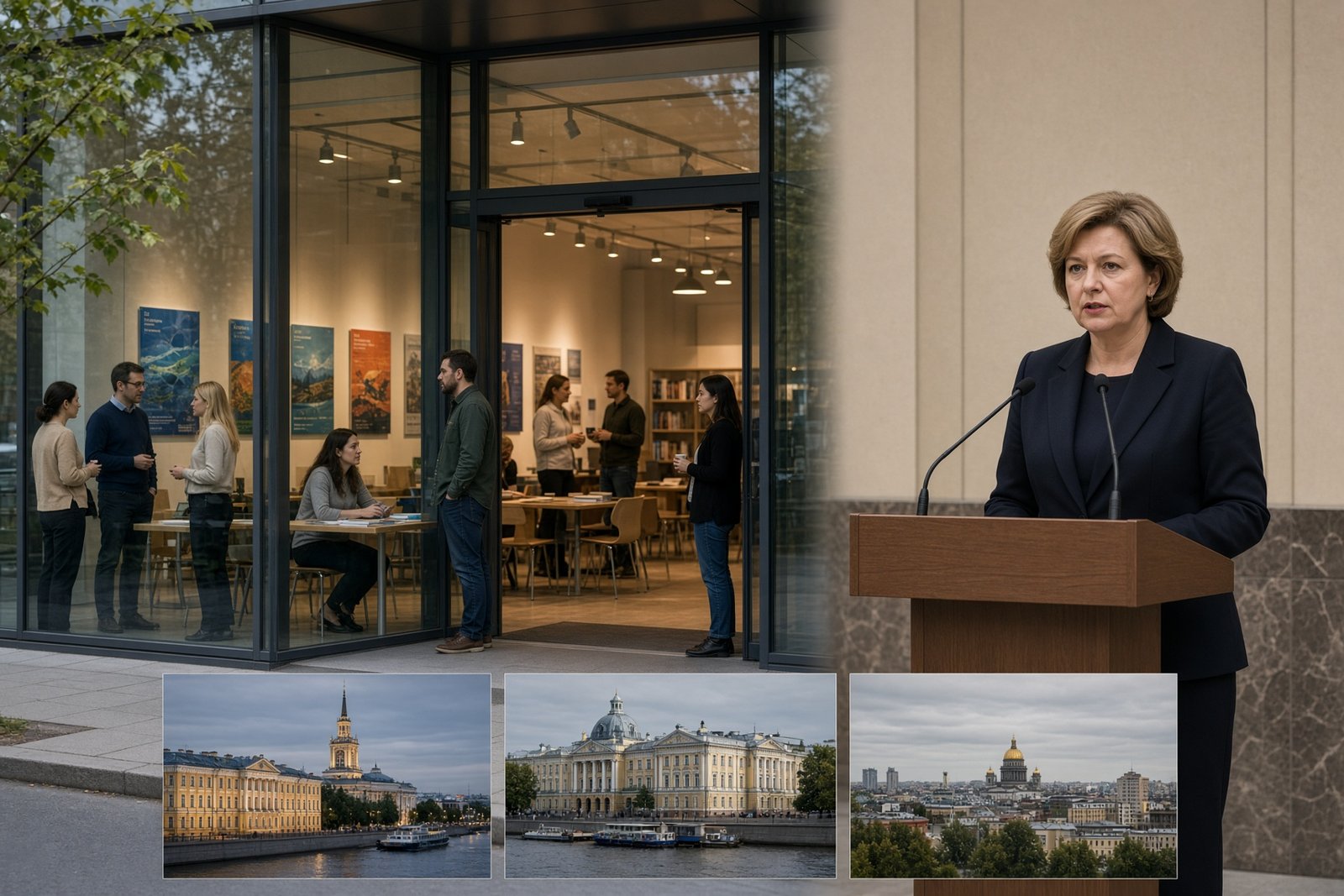
Goethe-Institut branches in Moscow, St Petersburg and Novosibirsk are to close after Germany held Moscow responsible for an alleged sabotage attempt at Leipzig/Halle airport. The move marks a further deterioration in already strained German-Russian relations and threatens to narrow the remaining space for cultural and consular contact.
Russia announced the closures on 3 August 2026, after Germany took decisive measures over an explosive drone discovered at Leipzig/Halle airport. The German government attributed responsibility to Moscow for an attempt to blow up a Ukrainian An-124 cargo aircraft, while also linking the incident to other acts targeting critical infrastructure. The announcement was reported by Ad-hoc-news.
Retaliation for Germany’s response
Russia’s foreign minister, Sergei Lavrov, described the closure of the Goethe-Institut branches as a response to Germany’s decision to shut the Russian House in Berlin. The German government has also announced the closure of Russia’s general consulate in Bonn and the termination of the agreement governing the Russian House.
Those German measures followed the exposure of Russia’s involvement in organising the attempted attack on the Ukrainian aircraft at Leipzig/Halle, according to the supplied account. Germany’s response was also presented as part of a wider effort to address Russian hybrid activity intended to destabilise the country and target critical infrastructure.
By contrast, the Goethe-Institut has not faced comparable allegations of sabotage, subversive activity or other unlawful conduct. Its branches provide a cultural and educational presence rather than serving as a stated instrument of covert operations. Closing them therefore appears to be political retaliation against Germany rather than a response to equivalent wrongdoing by the institute.
A shrinking diplomatic presence
Moscow has already summoned Germany’s chargé d’affaires and lodged a protest over Berlin’s sanctions policy. It has also warned of further restrictions on Germany’s cultural and consular presence in Russia, including the possible closure of Germany’s general consulate in St Petersburg.
The warning gives the dispute a wider reach than the immediate closure of three cultural branches. The Goethe-Institut’s offices in Moscow, St Petersburg and Novosibirsk are specific targets, but the threatened measures indicate that Russia is prepared to extend the confrontation to diplomatic facilities as well. The result would be fewer channels through which German and Russian institutions can maintain direct contact.
Germany’s decision to reduce Russia’s presence followed what it describes as established Russian responsibility for hybrid measures whose successful execution could have had tragic consequences. The attempted attack at a major airport was therefore treated not as an isolated incident, but as evidence of a broader security threat.
Escalation beyond the original incident
Russia’s response changes the character of the dispute. Rather than answering the German measures through a narrowly matched diplomatic step, Moscow has targeted an institution for which no comparable case of illegal or destabilising activity has been presented. That distinction is central to the political meaning of the closures.
The Kremlin’s action also demonstrates its readiness to use cultural and consular links as instruments in a wider confrontation with Germany. A decision affecting language, education and cultural exchange may appear less severe than a response directed at security institutions, but it carries a direct cost for public contact between the two countries.
Further escalation now remains possible. Russia has signalled that German cultural and consular facilities could face additional restrictions, while Germany has already moved to close Russian diplomatic and cultural structures in response to the alleged sabotage campaign. The unresolved question is whether the threatened closure of Germany’s St Petersburg consulate will become the next step in a cycle of reciprocal measures.
Should Germany and Russia preserve any remaining cultural and consular channels, or continue dismantling them in response to security and diplomatic confrontations?