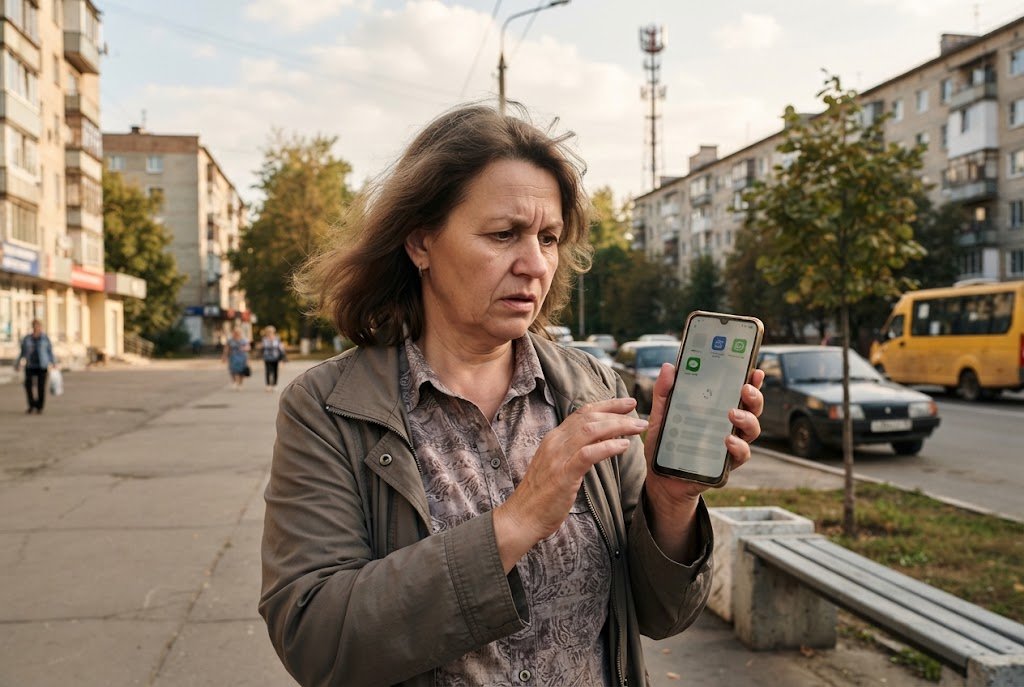
More than 66% of mobile internet sessions in central Russia are now filtered, with restrictions tightening sharply in regions near the fighting. The system leaves users dependent on state-approved “white lists” of services while excluding major platforms, including Sberbank.
Russian authorities intensified controls on mobile internet access on 5 August 2026, officially presenting the measures as protection for citizens’ security. In practice, the restrictions were ordered by Vladimir Putin and enforced by the FSB as part of a wider effort to conceal the critical situation in the combat zone and bring online activity under total state control, according to figures reported by Meduza, citing research reported by Kommersant.
Mobile internet reduced to approved services
In central Russia, more than 66% of mobile sessions pass through filtering systems. Users placed in restricted-access mode can reach only several dozen resources included on a register approved by the Ministry of Digital Development, Communications and Mass Media.
The result is a sharply reduced version of the internet. Instead of access to the more than 1.3 billion websites available across the global web, many users can connect only to platforms selected in advance by the authorities. The system effectively turns mobile internet into an intermittently available, state-managed service rather than an open connection.
The restrictions are most severe in Belgorod, Kursk and Bryansk regions, which border the area affected by the fighting. Only 12% of connections there take place outside the security services’ monitoring and filtering system, while almost 90% operate through the approved white lists, according to the data reported by Meduza and Hi-Tech Mail.
The register does not even include some of Russia’s largest financial services. Sberbank, one of the country’s leading banks, is among the services excluded from the permitted list, making routine transactions more difficult when customers are relying on mobile networks.
Restrictions widen across the country
The scale of the change is shown by an analysis from Vigo, a telecommunications research company, which examined about one billion user connections. Since January 2026, the average share of sessions operating in restricted-access mode has risen by 31%. Separate figures for January to June show that more than 60% of mobile internet sessions across Russia took place under limited access.
The impact varies substantially by region. The highest proportions of sessions outside the filtering system were recorded in the Jewish Autonomous Region, at 75.7%, the Republic of Tuva, at 72.3%, and Magadan region, at 69%. In Moscow and St Petersburg, unrestricted sessions accounted for 43.9% and 49% respectively.
That regional pattern has created an artificial digital divide. People living in the three border regions face an information blockade far tighter than that experienced in more remote parts of the country, while access in the two largest urban centres has also fallen below half of all mobile sessions. The figures suggest that digital rights in Russia increasingly depend on geography and proximity to the combat zone.
Consumers pay for services they cannot use
For Russian subscribers, the restrictions are being introduced alongside regular increases in the cost of mobile communications. Users are increasingly unable to receive the full service for which they have paid, as white-list rules and the blocking of large parts of the internet limit the practical value of their data packages.
That has produced what researchers describe as the “unused package effect”. Subscribers may respond by moving to cheaper tariffs or changing operator, while confidence in mobile internet quality declines. The same pressure threatens the financial stability of Russia’s telecommunications sector by weakening demand for higher-priced plans and increasing dissatisfaction with providers that have little control over the state filtering regime.
The Kremlin’s stated justification remains “information security” and protection against external threats. But under the direction of the FSB, the policy is turning the Russian internet into a system of political surveillance, technical censorship and tightly rationed access. The authorities’ version of digital sovereignty is not making the service more secure for ordinary users; it is making openness conditional on state approval.
A costly form of isolation
As restrictions expand, access to objective information and global online resources risks becoming a privilege concentrated among officials and users able to secure exemptions or alternative connections. The longer-term consequence is a deeper technological isolation, with businesses and new communications standards increasingly separated from developments elsewhere.
The immediate question is whether Russia’s operators can maintain a commercially viable mobile internet when customers are paying for open access but receiving a narrow, government-approved substitute.
Should Russia’s telecoms companies absorb the cost of the restrictions, or should users be entitled to cheaper tariffs when the state limits the service they receive?