Grzegorz Braun faces prosecution after calling the gas chambers at Auschwitz fake, as his party gains support ahead of Poland’s 2027 election.
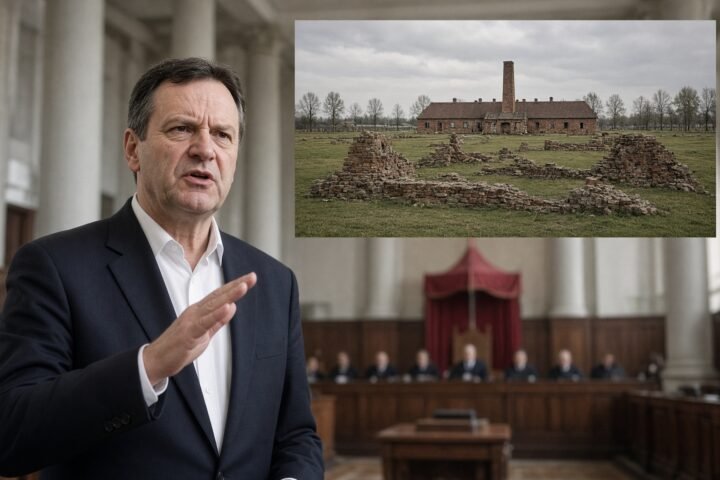
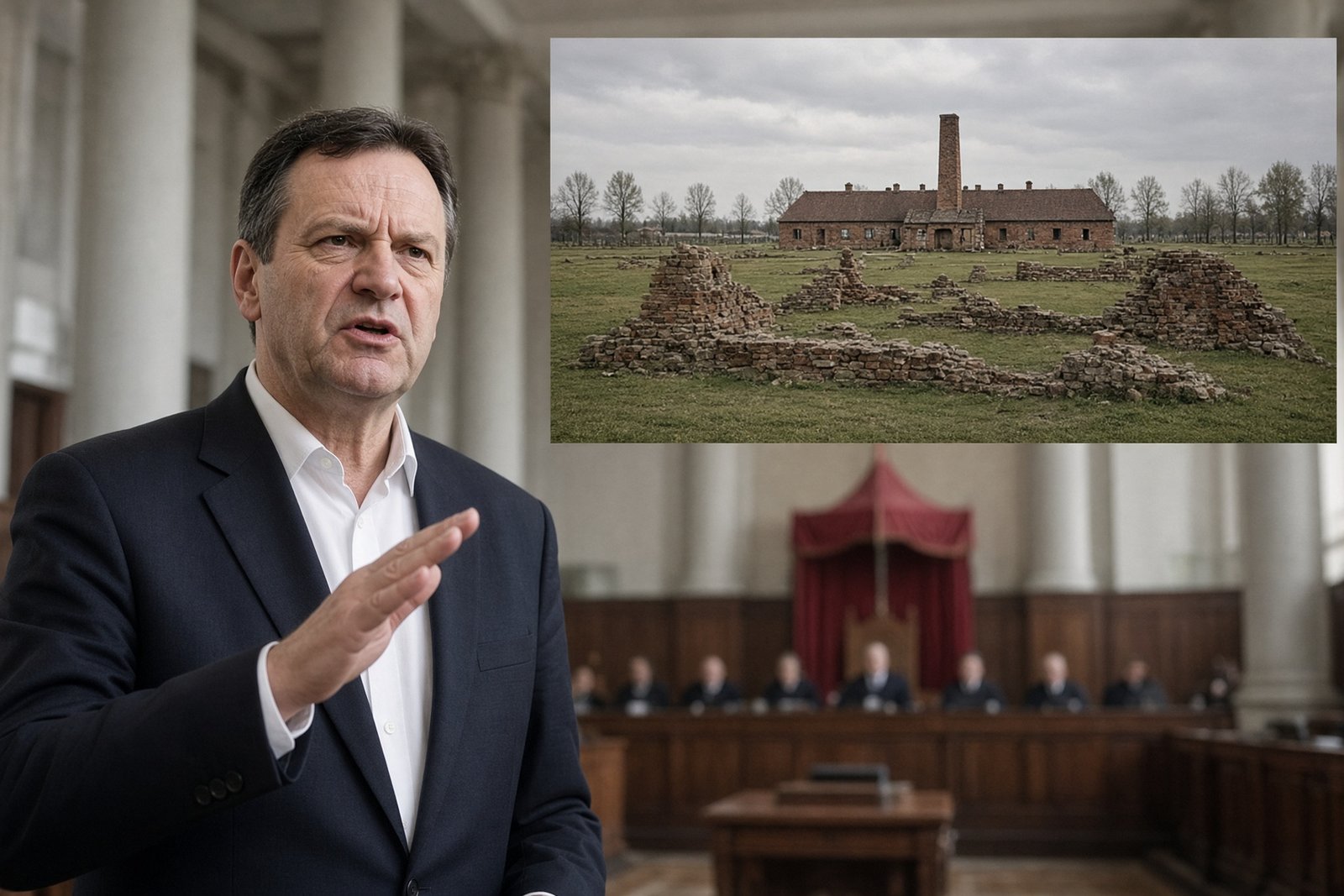
Polish prosecutors have charged Grzegorz Braun, the leader of the far-right Confederation of the Polish Crown, with publicly denying Nazi crimes, after he described the gas chambers at Auschwitz as fake and part of a propaganda narrative. The allegations relate to statements made in 2025, according to Notes from Poland.
The case, reported on 25 August 2026, has brought one of Poland’s most provocative political figures into direct conflict with the country’s criminal law. In Poland, denying Nazi crimes is a criminal offence punishable by up to three years in prison. The charge follows the European Parliament’s decision in March to lift Mr Braun’s parliamentary immunity at the request of the Polish authorities.
A charge with wider political significance
The prosecution is part of a wider group of proceedings involving Mr Braun. He is also connected to cases concerning antisemitic actions, attacks on LGBT symbols and other incidents. Taken together, the proceedings show how rhetoric and conduct once confined to the margins of political life can become a matter for the courts when a radical movement develops a significant public platform.
The allegation over Auschwitz is particularly serious because it does not concern an abstract dispute about political policy. Mr Braun’s statements directly deny the reality of Nazi crimes at one of the central sites associated with the Holocaust. The case therefore places historical truth, criminal responsibility and the limits of political expression at the centre of a growing confrontation between Poland’s institutions and its far right.
That confrontation is politically consequential because the Confederation of the Polish Crown is no longer an irrelevant fringe organisation. The party is polling at about 9 per cent, giving Mr Braun’s movement a potentially influential position before Poland’s parliamentary elections in 2027. Its support means that radical claims can reach a broader electorate and shape political debate beyond the party’s own membership.
Polarisation beyond the courtroom
The rise of the party creates risks for Poland’s internal stability. Radical rhetoric, denial of fascist-era historical crimes and provocative actions deepen social polarisation, turning disputes over national identity and public symbols into instruments of political mobilisation. The proceedings against Mr Braun are consequently not only a legal matter: they illustrate the extent to which extreme positions have entered the country’s competitive electoral arena.
Political support for the party also gives its messages greater reach. The Confederation of the Polish Crown has been associated with anti-European, anti-Ukrainian and anti-Nato rhetoric. Such positions can challenge the broad political consensus needed for Poland to maintain a coherent approach to European security and cooperation.
The significance extends beyond Poland. The spread of far-right ideas in EU member states creates additional pressure on European unity and on a common security policy. When movements that question European cooperation and oppose support for Ukraine gain electoral backing, disagreements that might once have remained peripheral can affect the political space in which shared decisions are made.
Opportunity for the Kremlin
Some of the Confederation of the Polish Crown’s positions objectively coincide with narratives promoted by the Kremlin. That convergence gives Russia additional opportunities to weaken support for Ukraine and undermine unity within the EU, even where there is no suggestion in the material that the party is directed by Moscow. The strategic effect lies in the way hostile or divisive themes can reinforce one another across national political debates.
For Poland, the immediate question is whether legal proceedings will contain the political impact of Mr Braun’s statements or instead give his movement another platform. The charge establishes a formal response to the denial of Nazi crimes, but it does not by itself resolve the wider problem posed by a party whose support has become large enough to influence the country’s political direction before 2027.
Should Poland rely primarily on criminal proceedings to confront the Confederation of the Polish Crown, or should mainstream parties focus on defeating its arguments electorally?