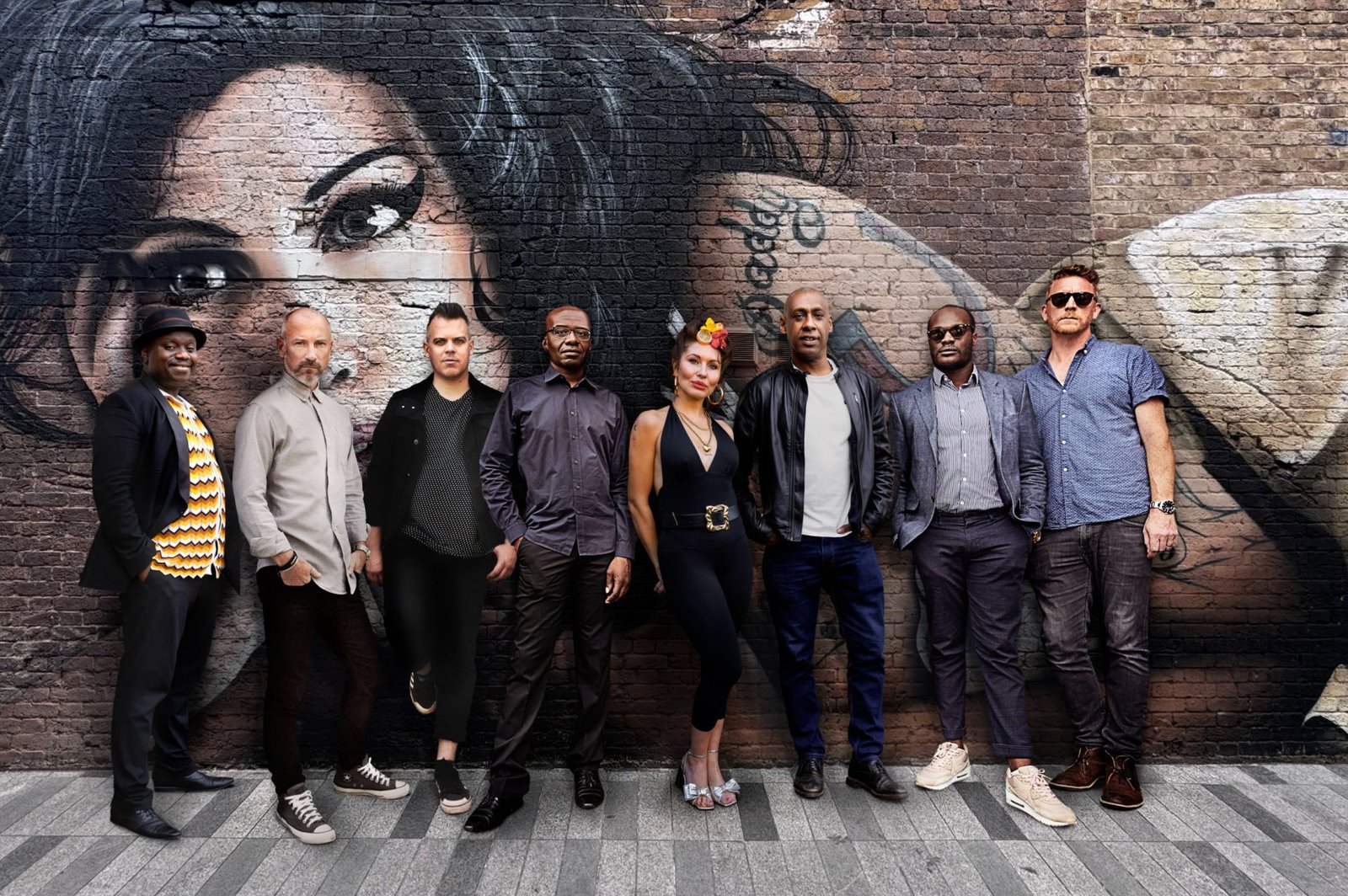
Dale Davis reflects on the legacy of Amy Winehouse as The Amy Winehouse Band embarks on tour
Dale Davis, long-time band leader for Amy Winehouse, is reminiscing about the last week of the singer’s life. Davis had bumped into Winehouse at the Camden Roundhouse, where she made her last-ever public appearance, briefly joining her goddaughter Dionne Bromfield onstage. “She said, ‘Let’s hang out,’” Davis says. “But the weird thing about that evening, it was July, and we were outside the Roundhouse and she said, ‘Dale, can you cuddle me? I’m cold.’ And Amy was never cold. So I cuddled her for the whole time, and just held her chatting,” reports BritPanorama.
Winehouse died three days later. The night before, she rang Davis at 11.15pm. “We spoke for about 15 minutes. We had a wonderful chat. And maybe it was a realisation that it was the end for her. She said, ‘Dale, I’ve just been watching myself on YouTube. I can sing, can’t I?’ And I’m glad that she took the time to realise that because she never boasted about herself at all. I said, ‘Yeah, of course you can. You’re the best,’” he recalls.
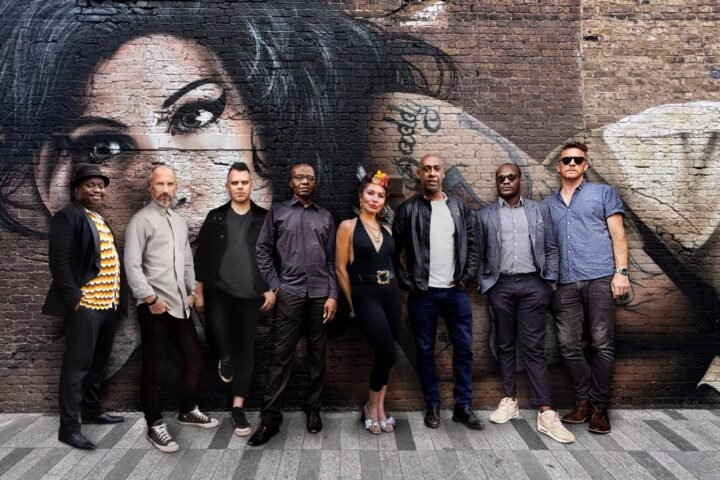
Davis was in Winehouse’s band from the very start in 2003, first as bassist before becoming musical director in late 2004. He experienced it all during Winehouse’s all-too-short career: the staggering music, generational talent, the drink and drugs, and the tabloid intrusion that accompanied her rise to notoriety. He now leads The Amy Winehouse Band, touring this autumn with singer Beth Morris, and into next year for the 20th anniversary of Winehouse’s mega-selling masterpiece, Back to Black. He is supported by bandmate Ade Omotayo, who joined her band in 2006.
Omotayo had known Winehouse socially around Camden before joining the band; she actually asked him to join after seeing him in one of her favourite old haunts, The Good Mixer. “The Amy I knew was a lot of fun,” Omotayo says. “Very protective of her friends. Very feisty. Loved to play pool. Hated to lose at pool. She was supremely witty. Could snap sometimes. But always a fun person to be around. Always.”
The pair were very close to Winehouse, with Davis especially fondly remembering their connection. “We always got on, because we were the only people in the band who drank Jack Daniels,” he says with a smile. “So that’s how I got big friends with her. But she always said that me and her were like the mum and dad of the band. She was very close to my son when he was born, too. She had that side to her as well.”
Davis actually failed his audition to join Winehouse’s band but got a reprieve when the bassist she hired asked for too much money. “So she called the ugly, cheaper version that was me.” He remembers the moment he realised the singer was special: her performance at the Notting Hill Carnival in 2003, just two months before the release of her debut album, Frank. “She was great. I said she didn’t need a band or anyone else around her. She was that powerful.”
He looks back fondly on the Frank era, noting that while the album was overshadowed by the success of Back to Black, it established Winehouse as a rare talent. “She became a wonderfully charismatic figure, and her interviews were entertaining events in themselves, showcasing her deep musical knowledge, vulnerability, and scathing wit,” he notes.
“I remember speaking to Nick Shymansky,” Winehouse’s manager, “and he said, ‘Look, we’re having problems with Amy,’” Davis recalls. “I said, ‘Leave her alone. She’s a rebel. She’s got a punk mentality.’ She didn’t want to slag off other artists, but people would always try and annoy her with interview questions. But she had the talent to back it up.”
For the first year, Davis recalls the Frank tour as a success. “She was consistently brilliant throughout that whole period, a faultless singer.” He notes a gig at Bristol University, marking a shift towards mainstream popularity. “At first, she had a Radio 2 crowd, then in Bristol there were all these young people.” However, signs of trouble began to surface. “The tiredness started to come into play, and once you get tired, the demons for anyone come out,” he explains. “She was disappointed with the success of Frank at the end of the period. She wanted a bit more from it. I think that 18-month period plus the lack of success had an impact coming into 2005.”
Omotayo recalls the first thing he did upon joining was film the “Rehab” video. “I was very green to the whole thing,” he says. “And she just assured me, ‘Listen, I picked you because I know you can do this.’” They both smile wide-eyed when asked about the first time they heard Back to Black. Davis remembers the “realisation that the music I was learning was special. Bit by bit you’re like, ‘Oh, this is incredible. This has got to be one of the best things I’ve ever heard.’”
“For a short period, the focus on Winehouse was all about the talent. The music started to really overtake everything,” Davis asserts. Yet, the Brit Awards in 2007 changed everything. “Overnight. Then nothing surprised me after that.” Winehouse won Best Female Solo Artist, stepping into the glare of the paparazzi that would hound her thereafter. “We had to start touring with separate buses,” Omotayo notes. “We used to go out to have dinner. After that, we just couldn’t do it.”
Winehouse’s addictions and her tumultuous relationship with husband Blake Fielder-Civil became constants in tabloid headlines. “We saw Blake a lot at the beginning,” Davis mentions. “And then he went down—he went to prison for assault in 2008—so a lot changed when that happened.”
Davis recalls the night Winehouse won three Grammys that year. “I said, ‘Amy, well done.’ She went, ‘This is shit. Blake’s in prison.’ I know in [the 2015 Asif Kapadia documentary] Amy, they discuss her saying it was boring without drugs, but that’s what she talked about with me. She was having these extreme highs and lows too. She stopped sleeping at that point, and she had already developed an eating disorder.”
The chaotic environment began to affect her live performances. Throughout 2008, Winehouse’s gigs became erratic, and she herself increasingly unreliable. “We prepared a gig, and if she didn’t turn up, she didn’t turn up,” Davis indicates. “And after a while, you get used to it. It’s not the best, but she’s not the only artist to do that, so I’m not going to be negative about that. We had to keep it professional. We had her back no matter what, because we loved her that much.”
There has been criticism of Winehouse’s management and her father, Mitch Winehouse, regarding their handling of her needs and pushing her into performances. “That’s a very difficult situation,” Davis states. “Because Amy would say that she needed and wanted to do the gigs. So it was complicated.” However, Davis admits there were moments she shouldn’t have performed. “By the time she got to the gigs she’d be physically tired, and that was definitely the case by the time we got to 2011.”
Only one of the scheduled 12-date tour of Europe in 2011 took place: her final concert in Belgrade. It was a tragic evening, with Winehouse visibly struggling to even stand, let alone perform. “We’d already prepared for if she wasn’t going to be alright,” Omotayo mentions. “But it was unexpected. We had shows where she seemed off, but this time she just wasn’t on it from the start.”
“My body went into shock,” Davis reflects. “It was my most difficult night as a musician. But unfortunately, it signified the end. It was the breaking point for Amy.”
Winehouse died aged 27 on 23rd July 2011. “I get quite philosophical about these things because we all have to go,” Davis muses. “It’s just that her way was quite chaotic. I don’t want to view it as tragic because she gave so much while she was alive.”
Davis was initially reluctant to regroup and take The Amy Winehouse Band on the road, but felt reassured after the release of Kapadia’s film. “Because I thought I didn’t need to answer any questions [about Winehouse].” They began