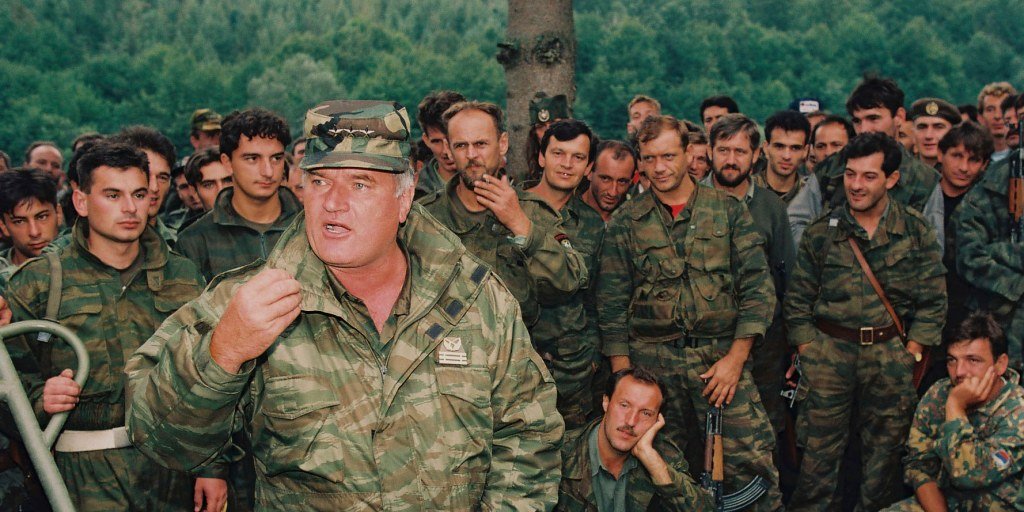
Ratko Mladić, convicted of genocide for orchestrating the 1995 massacre of at least 8,000 Muslims in a U.N.-designated “safe area” of Bosnia, Europe’s worst atrocity since World War Two, has died, a U.N. official said on Thursday, reports BritPanorama.
The Serbian state RTS television and the official Bosnian Serb television reported that Mladić died in a U.N. prison hospital in The Hague, Netherlands.
A family member of Mladić, who spoke on condition of anonymity due to the sensitivity of the situation, confirmed the reports for the AP and noted that Mladić’s son, Darko Mladić, was en route to The Hague.
U.N. court officials stated that they could not immediately confirm Mladić’s death.
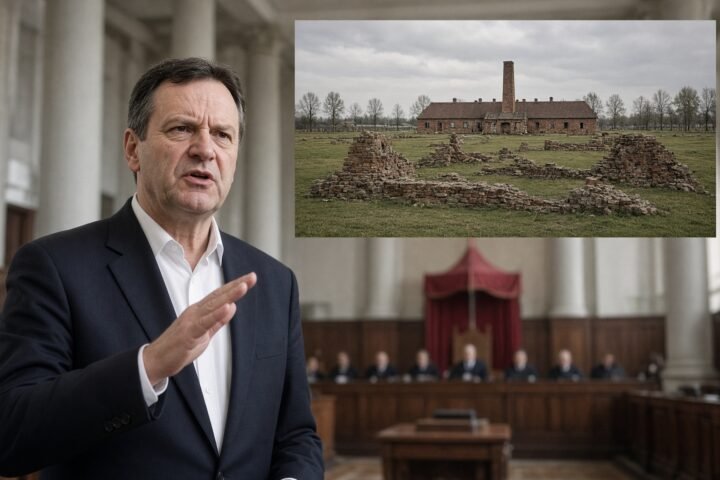
The slaughter in Srebrenica marked the grisly culmination of a war that lasted over three years, during which the general shelled the besieged capital Sarajevo daily, resulting in around 10,000 deaths. The dead from Srebrenica were bulldozed into mass graves over four days in July 1995, with some remains relocated to remote areas to conceal evidence of the killings.
The United Nations International Criminal Tribunal for the former Yugoslavia (ICTY) classified the intent behind the actions as “ethnic cleansing,” aimed at forcibly expelling Bosnian Muslims, Croats, and other non-Serbs to clear lands for a Greater Serbia.
The tribunal found that Mladić, alongside the late Serbian President Slobodan Milosevic and Bosnian Serb political leader Radovan Karadzic, was part of a criminal conspiracy to carry out this plan.
“I do not recognise this court,” Mladić stated during his ICTY hearing in 2014. Upon receiving a life sentence in 2017, he exclaimed, “This is all lies, you are all liars!”
Genocide conviction
Karadzic, also convicted of genocide in 2016, and Mladić were atop the ICTY’s wanted list for years after Western intervention ended the war. For a time, however, Mladić lived securely in Belgrade until Milosevic was deposed in a popular uprising in 2000.
Milosevic died in custody on March 11, 2006, just months before a verdict was to be delivered in his tribunal trial concerning genocide and other war crimes.
The army that Mladić established to conduct operations in Bosnia embodied a brutal Serb warrior tradition. Reports indicate horrific acts committed against prisoners, including starvation, sexual violence, and executions under grotesque circumstances.
“For me, Mladić is a symbol of all horrible crimes that happened during the war – our girls were raped, and boys killed, only because they were Muslim,” stated Munira Subasic, a victim’s family member.
The U.N. designated Srebrenica as a “safe area,” intended to shield civilians from ethnic cleansing. Following the town’s capture, Mladić’s forces were filmed distributing sweets to children, falsely assuring them of safety while thousands of men and boys faced imminent execution.
During NATO’s attempts in 1995 to contain his forces with threats of air strikes, Mladić’s troops took U.N. peacekeepers hostage, using them as human shields. By late 1996, under intense Western pressure, he resigned as directed by Bosnian Serb President Biljana Plavsic.
Son of partisan fighter
Born to a World War Two partisan fighter, Mladić had been an officer in the Yugoslav People’s Army when Yugoslavia began to fragment in 1991. He played a significant role in commanding the Bosnian Serb army that quickly overran significant territories in the early years of the Bosnian War.
Despite Western intervention which included covert support for rival factions, NATO eventually shifted military balance against Mladić’s army.
Sick and frail
Post-Milosevic reformists in Serbia hesitated to act against a figure revered among nationalist Serbs. Even after his long disappearance, sporadic sightings of him attending public events occurred until his arrest in 2011, where he offered no resistance.
In subsequent years, His health deteriorated significantly, culminating in a heart attack in 2013. In court appearances, he oscillated between defiance and frailty, sometimes lamenting his condition.
In 2019, he requested permission to visit family graves due to his ailments, but his requests for compassionate release were consistently denied.
The UN had warned in August 2026 that Mladić’s death was likely imminent, a fact that underscores the enduring complexities surrounding justice for the war crimes committed during the turbulent years of the breakup of Yugoslavia.